
Threads That Waited: Big Mama’s Fabric and the History It Held
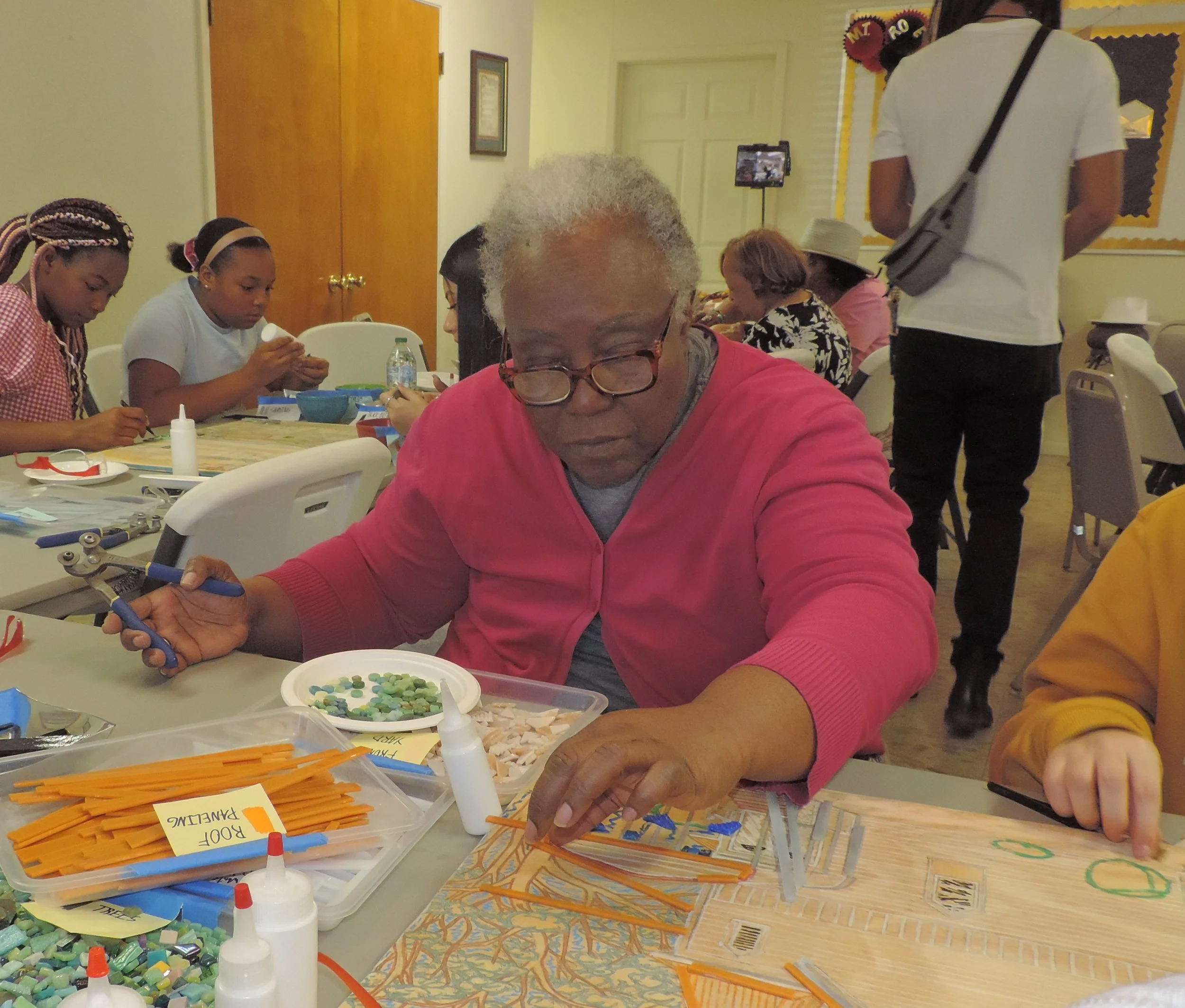
Inside the mosaic workshop at Mt. Rose, the room carried its usual rhythm—glass clinking softly, quiet conversation, the slow concentration that settles in when people make something with their hands. Then, in the middle of all that careful work, a different kind of artistry entered the space: a finished quilt, folded with intention, brought forward like an offering.
That was the moment I met Shirley Wallace.
She wasn’t seeking attention. She was simply present—steady, warm, and clearly connected to the kind of history you don’t learn from textbooks. Nearby, Janis Bergman-Cartin stepped in with the quilt, completing a promise she had helped make possible: finding someone who could turn Big Mama’s fabric pieces into a finished heirloom.
Big Mama had lived to 103. After she passed, the fabric was found—saved pieces, kept for a reason, tucked away like many women did with what they had. The kind of material you hold onto because it’s still good… because it might become something… because one day someone will need it.
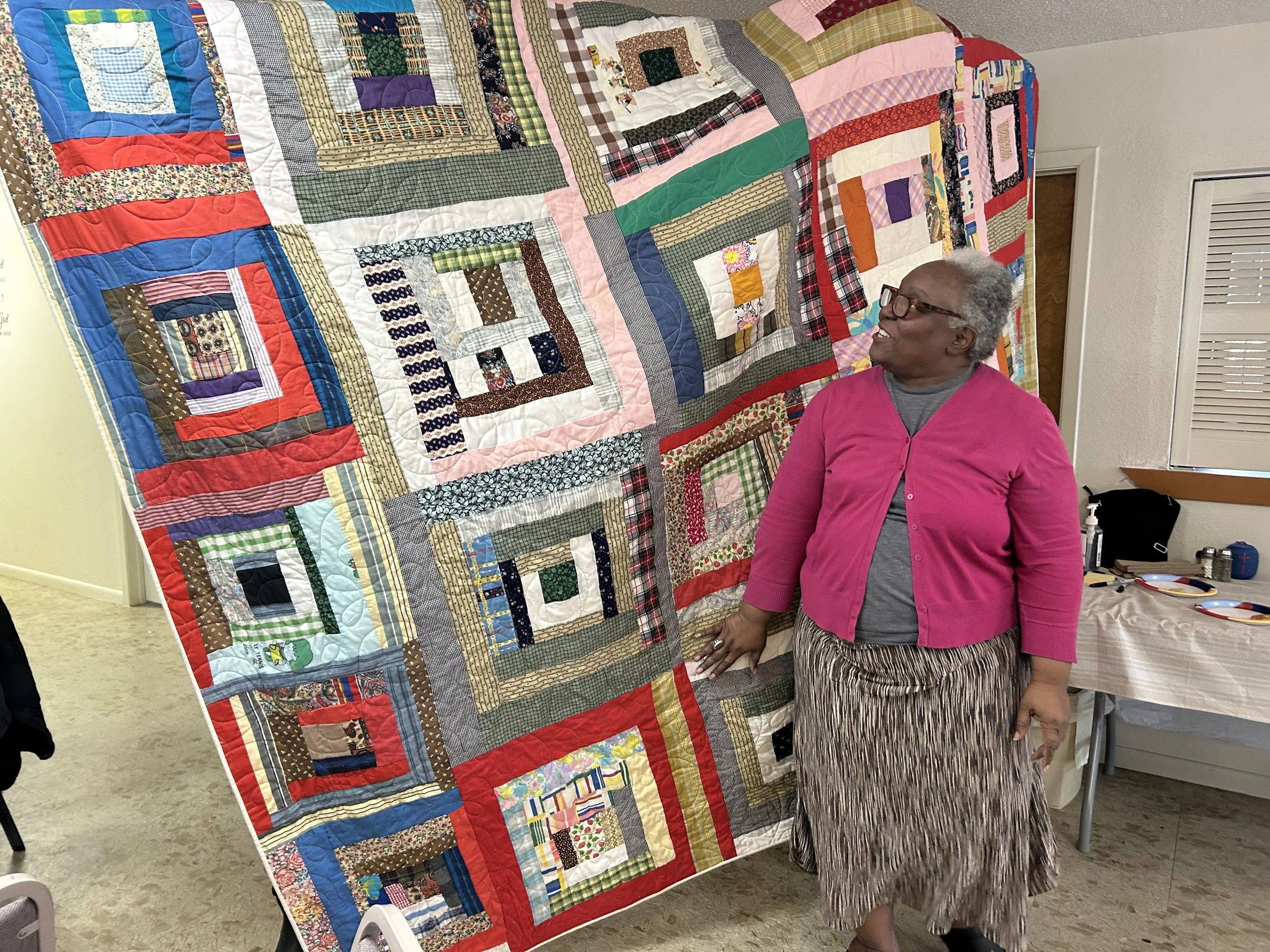
Janis had helped Shirley bridge that “one day.”
When the quilt was presented to her, it wasn’t just a reveal—it was a return. A return of labor. Of patience. Of love expressed through scraps and stitches. In that moment, the workshop felt quieter, like everyone understood they were witnessing more than a completed project. They were watching family history be restored into something you can wrap around your shoulders.
In a side conversation, Shirley began telling me where those pieces came from and why they mattered. She spoke the name Isabella Gates Tarver Mayshack—her great-great-grandmother—with the kind of reverence that turns a name into a living presence. Not a footnote. Not a distant ancestor. Lineage. She named generations the way people do when they’ve carried stories long enough to know their weight.
As she talked, I kept thinking about how quilts work like archives. They hold what time tries to discard. They preserve what mattered in ordinary life—work shirts, Sunday fabric, feed-sack prints, children’s cloth—stitched into one record.
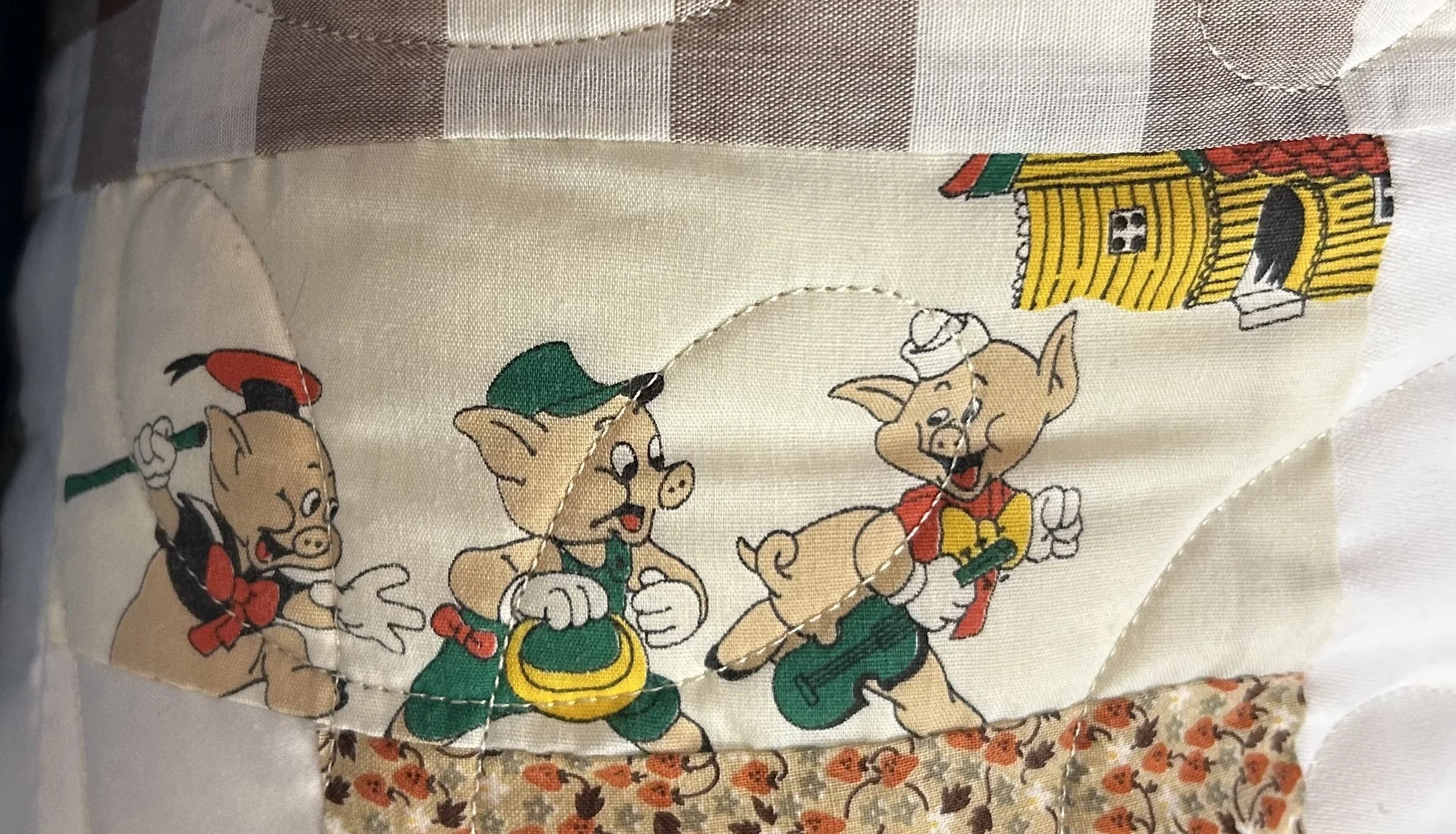
One set of pieces caught my attention immediately: fabric printed with cartoon pig characters.
Shirley and I leaned into the details—the linework, the proportions, the clothing. Later, using modern tools and visual comparison references, I worked to date the fabric as carefully as possible. The pigs most closely align with the Golden Age Disney “Three Little Pigs” lineage, pointing to the late 1930s through the 1940s, with the strongest likelihood landing in the early-to-mid 1940s (approximately 1940–1945).
Several visual cues supported that window:
The pigs’ rounded bodies, expressive faces, and classic animation styling match Golden Age cartoon aesthetics (pre-1950s minimalism).
Their caps, vests, and workwear reflect Depression-era and wartime visual culture, common in children’s textiles of that period.
The overall look did not match Warner Bros.’ Porky Pig, whose design tends to feature a more exaggerated snout, softer linework, and a different comedic posture.
It also differed from Terrytoons-era pig designs, which often appear rubberier and more surreal in motion and proportion.
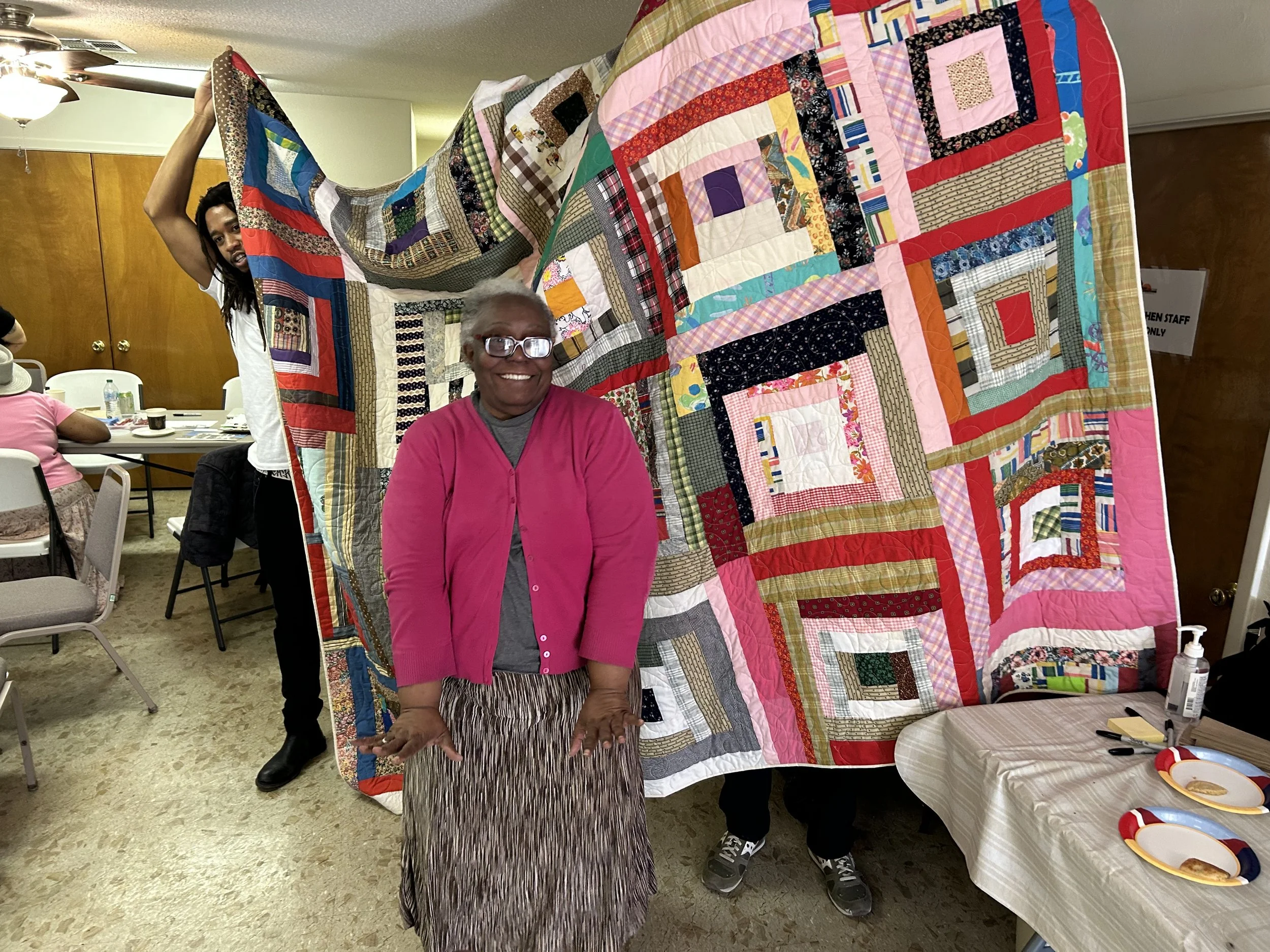
The more I examined it, the clearer it became: this fabric likely belonged to a time when materials were reused, repurposed, and treasured—when cloth wasn’t just cloth, but possibility.
And that brought me right back to Big Mama.
Because the quilt wasn’t only a beautiful finish. It was a testimony. It said: she saved these pieces for a reason. Even if no one knew exactly what she planned, her instinct was still right—because here they were, decades later, gathered into one completed work.
In that mosaic workshop, surrounded by tile and glue and public art in progress, Shirley’s quilt reminded me that preservation doesn’t always begin in a museum. Sometimes it begins in a woman’s hands—folding fabric, saving scraps, making do, and quietly leaving instructions for the future.
That day, history wasn’t hanging on a wall.
It was laid across someone’s arms—finished, presented, and finally brought home.
