

Sit with Sylvia: Streets, Growth, and What’s Next for Bastrop
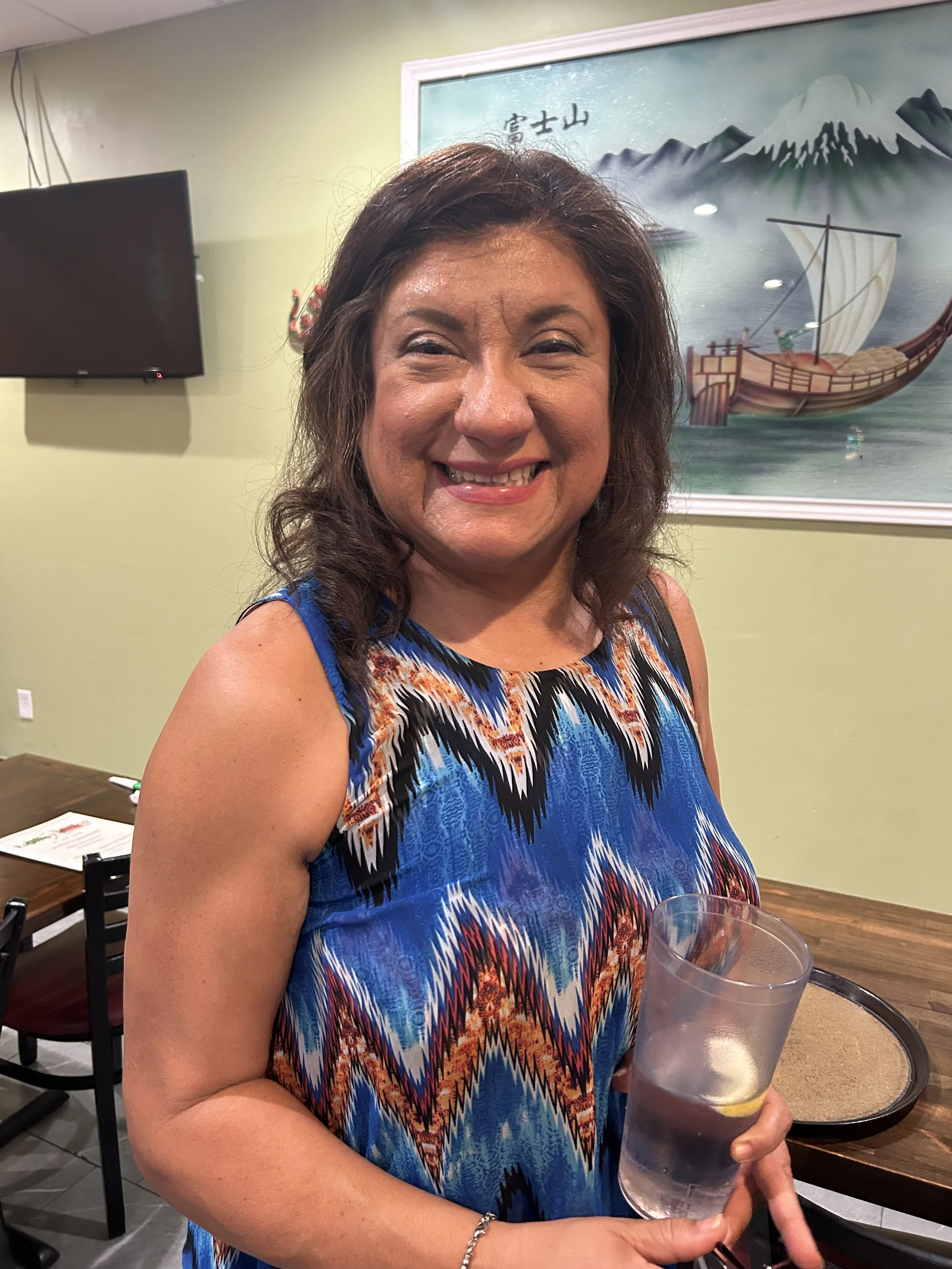
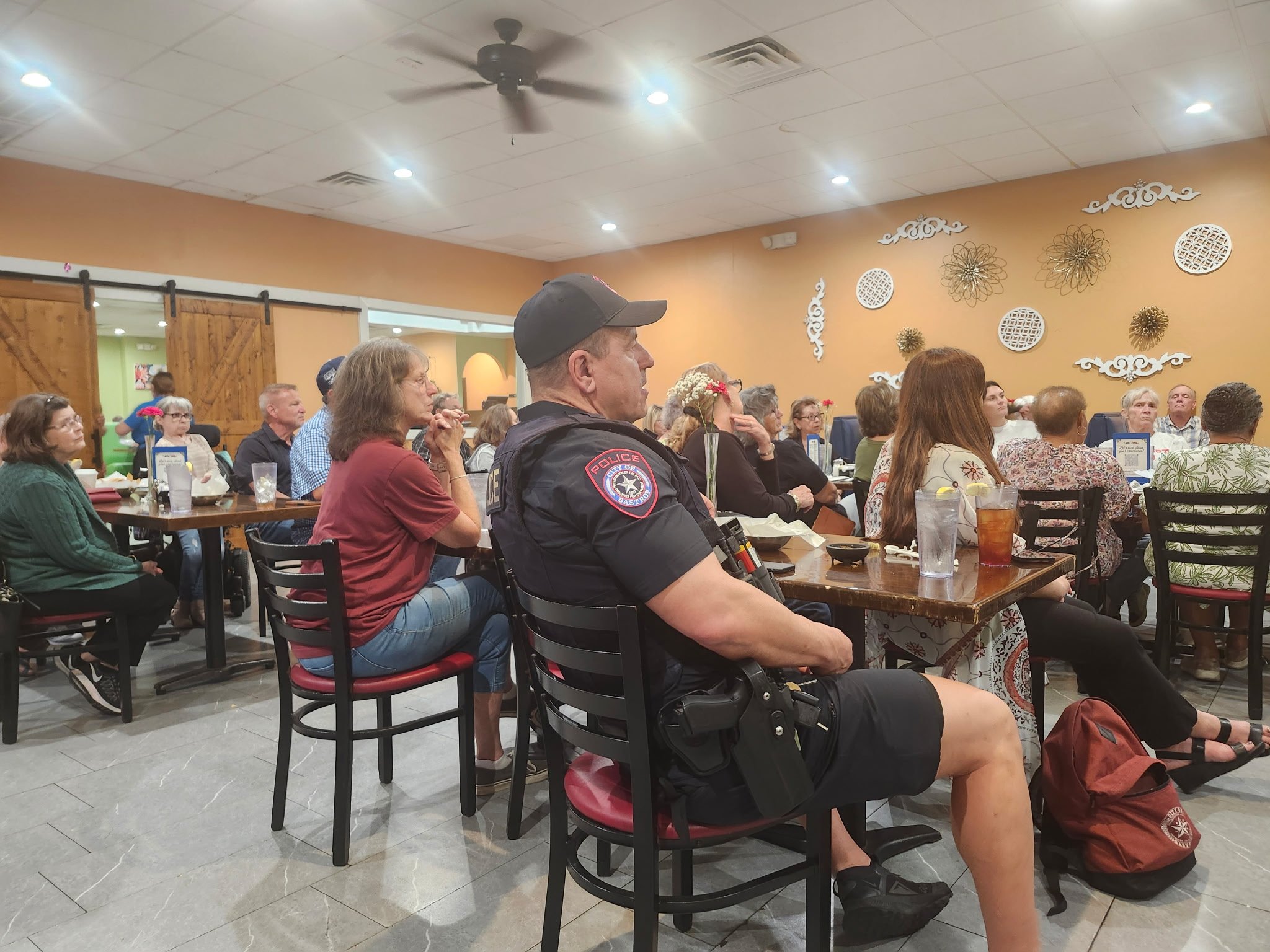
On the last Wednesday of the month, El Nuevo Restaurant felt more like a community living room.
People filtered in, greeting one another by name, trading quick updates, and settling into chairs as if they’d done this a hundred times—because many of them have. The city manager (Sylvia Carrillo) welcomed the room and reminded everyone what this gathering is meant to be: a standing, open forum where residents can ask what they need to ask, say what they need to say, and leave with clearer information than whatever is floating around online.
“I do this every month,” she explained—one meeting in the evening and one in the morning. “If you’re a morning person, we do it at about 7 o’clock… We’ll provide donuts and coffee. You can come in pajamas if you want to.”
She paused, then offered an honest aside that brought laughter: with elections underway, City Hall can feel like “silly season.” Her advice was both tongue-in-cheek and sincere—if you need a break from the noise, take one. But if you need answers, this is the place to get them.
Streets, pipes, and the work you don’t see until you feel it
The first stretch of conversation turned toward infrastructure—projects that rarely look exciting on paper, but shape daily life in quiet ways. A resident thanked the city for progress on Linden Street and asked about what comes next.
Carrillo explained the “pipe-burst” work tied to Highway 71—replacing sewer lines in place instead of digging everything up, a faster and more cost-effective approach. Once contractors wrap the Highway 71 segment, crews are expected to move into other areas—Water, Linden, and Farm—where water and sewer improvements have needed attention for years.
The difference between a full street reconstruction and a “mill and overlay” was clarified, too: some roads need to be rebuilt down to the base, while others can be resurfaced. The larger point was maintenance as a system, not a scramble—doing “a third of the city every single year” so streets don’t deteriorate into emergencies.
Residents also asked where the county’s partnership work would land and whether stretches like Mesquite would be included. Carrillo acknowledged what they didn’t have on hand and committed to follow up—something repeated throughout the meeting: if she didn’t know in the moment, she wasn’t going to guess.
The parking garage rumor mill—and what the city says is actually happening
Then came the topic that had clearly traveled through town before the meeting ever started: the downtown parking garage.
One resident asked whether it would make more sense to coordinate with the county and use space behind the courthouse. The response was direct, and you could feel the room lean in.
First: no one’s property is being condemned for a parking garage. No one’s land is being taken for it. And the city is not planning to charge for parking—an idea that Carrillo noted has been met with strong resistance even in hypothetical discussions.
But the city does say a garage is needed, and the reasons given weren’t just about convenience. One was about protecting the historic downtown core—because when parking becomes difficult, visitor traffic shifts elsewhere. Another was about the downtown layout itself. Bastrop isn’t built around a traditional “square,” so the city’s stated vision is to help build out more retail and restaurant activity around the courthouse while meeting real parking demand.
To address the common image people have when they hear “parking garage,” staff described renderings that resemble a classic downtown building: retail and restaurants on the ground level, with parking above—approximately 410 spaces. “That barely enough for a busy Catholic church day,” she said, underscoring the scale of demand.
Funding, she emphasized, would come through a Tax Increment Reinvestment Zone (TIRZ)—meaning the increased property value in the defined downtown boundary would fund the project, rather than adding a new tax increase to residents.
Golf course, pitch-and-putt, retention pond—and what “park space” could mean
Next came the golf course debate, though Carrillo repeatedly urged residents to stop imagining it as a traditional golf course.
The land in question sits in a floodway and floodplain—meaning major vertical construction is limited. The city’s stated concept is a retention pond first: a water storage and flood-mitigation feature that could also function as a recreational amenity. In other words, the pond serves a required purpose; the question is whether the surrounding design can be something residents actually use.
Carrillo described an approach closer to a “pitch and putt”—a smaller, quicker course that can be walked, jogged around, used for casual play, and even function as event space. The goal, as described, is inclusivity: not a space for “golfers only,” but a park-like environment where multiple ages and skill levels can participate.
A key point emerged: the feasibility study wasn’t meant to decide the community’s values. It was to determine whether the concept could be financially sustainable at all. If the study says the project is viable but residents don’t want it there—or want it shaped differently—Carrillo indicated that feedback would still influence the direction, including whether the concept belongs somewhere else altogether.
The timeline offered: feasibility results were expected to go to council in March, followed by public meetings and feedback sessions later in March or early April.
Recreation center: the real question is funding—and who’s willing to vote for it
The room shifted when recreation came up. Several residents noted they’ve heard the call for a recreation center for years. But the hard question isn’t whether people want it; it’s whether people will pay for it.
Carrillo offered a range of possibilities:
No-tax-increase option: transition the existing convention center into a civic/recreation space in the future. Not as large, not as “swanky,” and likely without the pool features many people envision—but a realistic start within current financial limits.
A larger recreation center: would likely require a voter-approved tax rate increase, and Carrillo openly asked the room about “tolerance level”—five cents, ten cents, etc.—not as a final decision, but as a temperature check.
Residents pushed for clarity on who such a center would serve—youth, elders, families—and pointed out the mental health and community-wide benefits of a true gathering space. Carrillo agreed and framed recreation as more than amenities: it’s public health, quality of life, and belonging.
The most important piece of process was repeated: this would go to voters, not be decided quietly at the council level.
Growth pressure: hospitals, housing, roads, and what comes next
As the conversation widened, so did the horizon.
Residents asked about the large master-planned development at Highway 20 and 71. Carrillo described a proposed hospital campus concept—one with obstetrics, pediatrics, geriatrics, and overnight beds—paired with a hotel/convention plan within the same broader development. Nothing was presented as finalized, but the message was clear: Bastrop’s growth is not theoretical; it’s underway, and the city is trying to shape it.
Housing came up, too—especially the need for senior housing and workforce/affordable options. Carrillo referenced:
a proof-of-concept project on city-owned land (about five acres), geared toward seniors first,
a proposed development on Lover’s Lane (senior housing, with workforce housing as a second phase),
and the possibility of workforce affordable apartments near the rodeo arena.
Residents also raised very specific neighborhood concerns: road cut-throughs, school traffic conflicts, safety along Highway 95, trail connectivity, and the long-standing desire for walkable routes that aren’t interrupted by dangerous crossings.
The tunnel idea and the South End District connection
One of the most talked-about items was a proposed pedestrian and cyclist tunnel under Highway 95—an idea tied to a grant opportunity described as “Tunnel Vision” through Elon Musk’s Boring Company.
Staff emphasized that if awarded, the grant could cover the cost and directed residents to the program’s official information to avoid misinformation. The tunnel concept, as described, would connect areas near Buc-ee’s and daylight near Mount Rose—creating safer connectivity where crossing 95 is currently hazardous.
And then, for South End readers, a detail landed with particular weight: Carrillo referenced the South End District—a Black historic district initiative—and described plans for murals at the underpass near College and MLK that would tell the story of the district all the way toward Water Street and Ferry Park. In the middle of a meeting about roads and drainage, that moment reminded everyone that infrastructure and history often meet at the same intersection.
A quieter theme underneath everything: trust, patience, and showing up
Beyond project updates, the meeting carried an emotional undercurrent that residents don’t always name out loud: the strain between the speed of growth and the pace of city repair.
One resident spoke up to say they appreciated code enforcement efforts and cleanup work. “He told me, be patient. Everything will be all right,” they shared—acknowledging the criticism city staff often absorb while still choosing to recognize progress when they see it.
The response wasn’t defensive. It was practical: the city tries to work with property owners, tries to avoid court, tries to find volunteer support when residents lack resources. But there’s a line between patience and neglect, and enforcement exists for a reason.
As the meeting wound down, the message was simple: keep coming, keep asking, keep participating. There are three chances for public comment on key items like development code changes. There are future meetings coming for feasibility study feedback. There are projects moving—some fast, some slow—and the community needs accurate information more than ever.
And in a season where politics can distort everything, the room was reminded of something steady: democracy isn’t just Election Day. Sometimes it’s a Wednesday night at City Hall, with coffee, hard questions, and neighbors willing to speak plainly about the place they all share.
