

Mt. Olive’s Black History Program Honors Legacy at Home
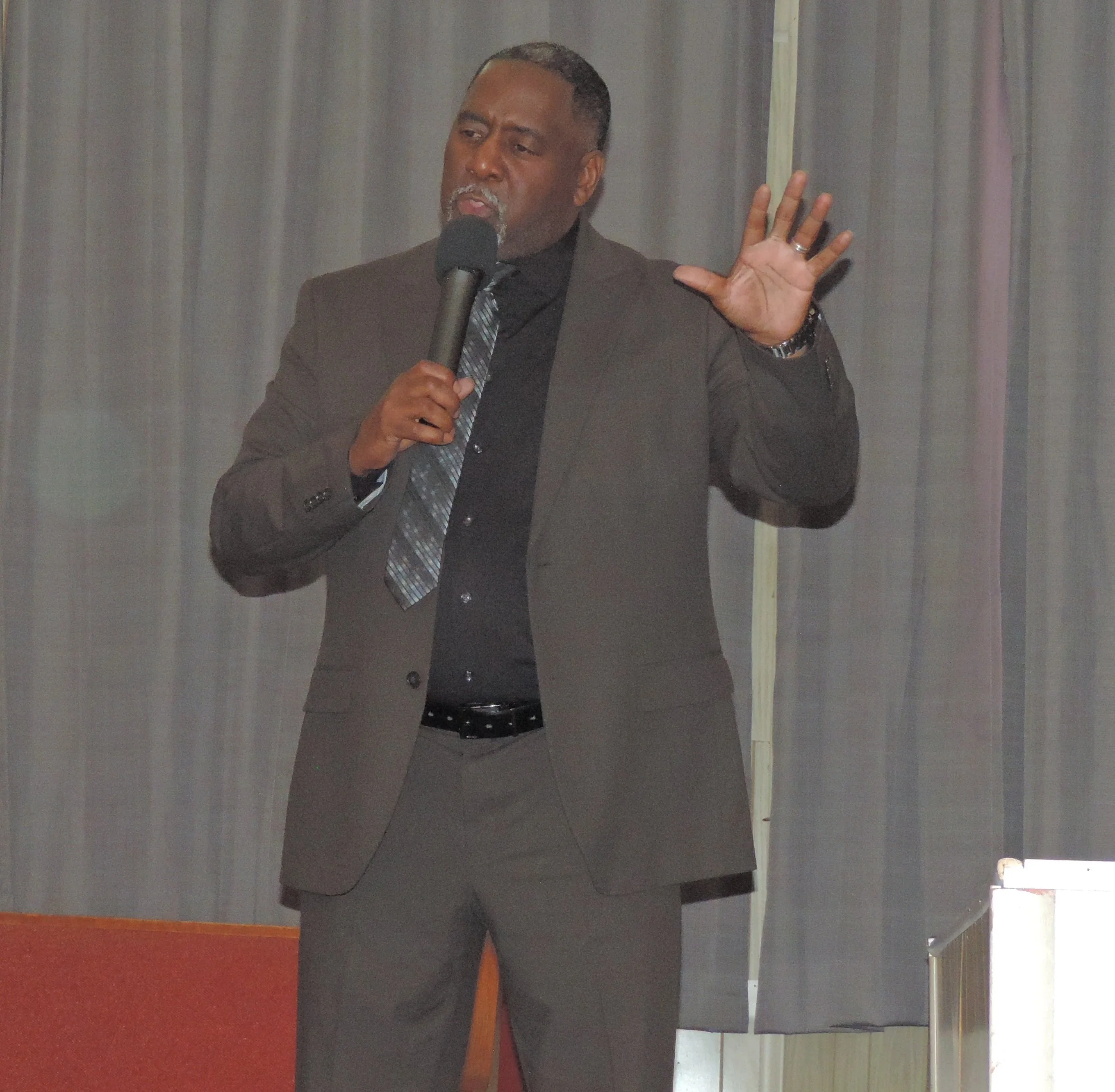
On Sunday morning, February 15, 2026, Mt. Olive Missionary Baptist Church on Mt. Olive Road in Cedar Creek opened its doors for a Black History Program that felt less like a scheduled event and more like a homecoming—a gathering where memory, faith, and local leadership met in the same pews.
From the moment the service began, the tone was clear: this wasn’t going to be Black history as a distant lesson or a list of famous names. It was Black history as lived experience, spoken aloud in a sanctuary that has held generations through joy, grief, revival, and routine Sundays.
Pastor Jermaine Davis-Green welcomed the congregation with both warmth and urgency, reminding everyone that history matters—and that honoring it starts close to home. “A lot of times we hear about the Dr. Kings,” he shared, “but you’ve got to come back in your home community. We have people right here who paved the way.”
That message became the thread of the morning.
Praise, Prayer, and the Spirit of Welcome
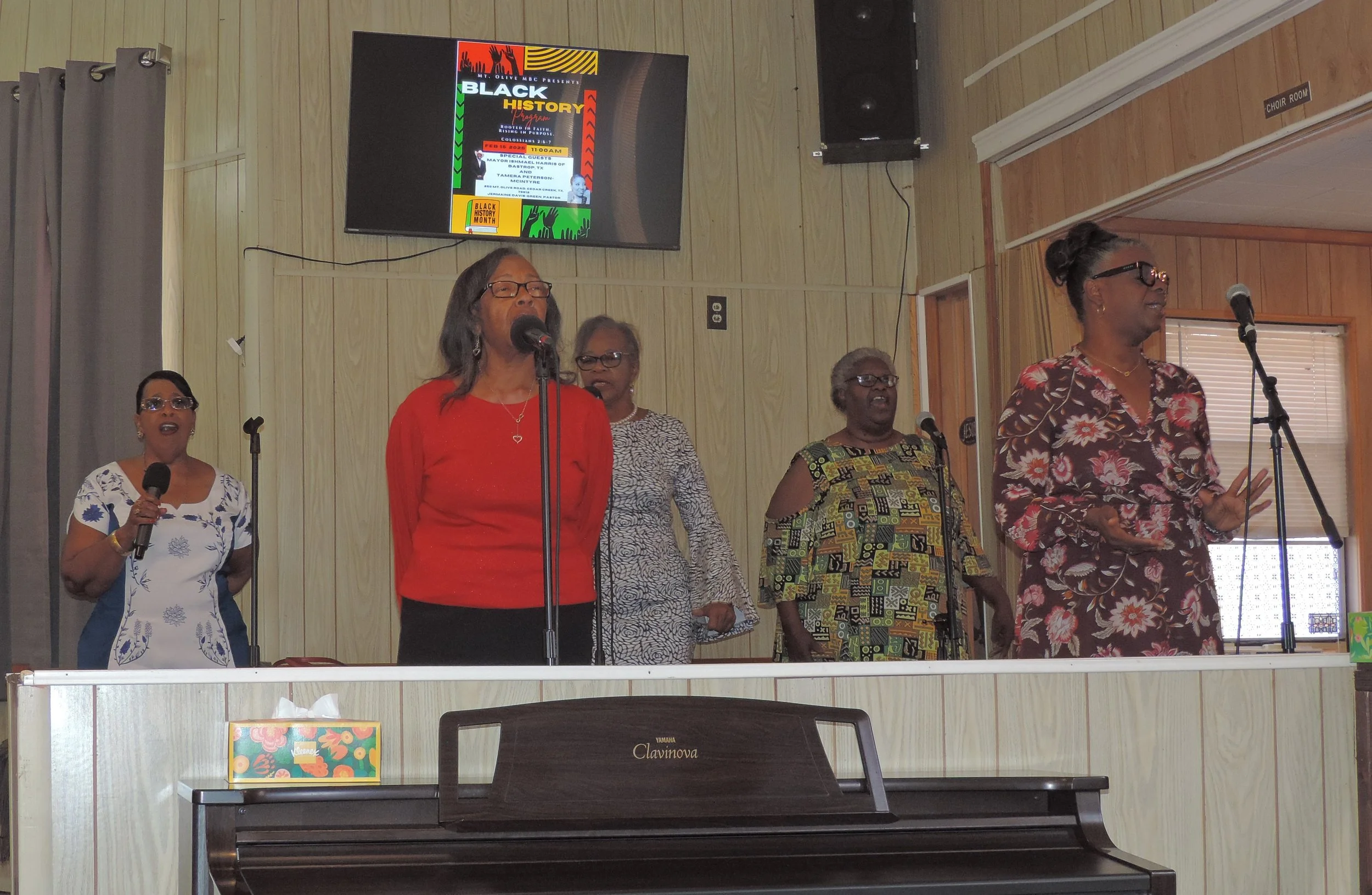
The service moved with the familiar rhythm of the Black church—call and response, laughter in the aisles, and songs that don’t just entertain but carry people. Scripture was read from Psalm 100, a passage centered on gratitude and praise—“Enter into His gates with thanksgiving…”—grounding the program in the kind of faith that has always been a foundation for survival and celebration.
Then came the welcome that made Mt. Olive feel exactly like what it is: a church that feeds you in every way. With joyful honesty, a church leader promised what everyone already knew: you will be greeted, you will be spoken to, and you will not leave without food.
“Don’t leave this place without a plate,” she urged, and the room responded with knowing laughter—because hospitality is part of the testimony.
Tamara Peterson-McIntyre: A Badge, A Bible, and a Bridge
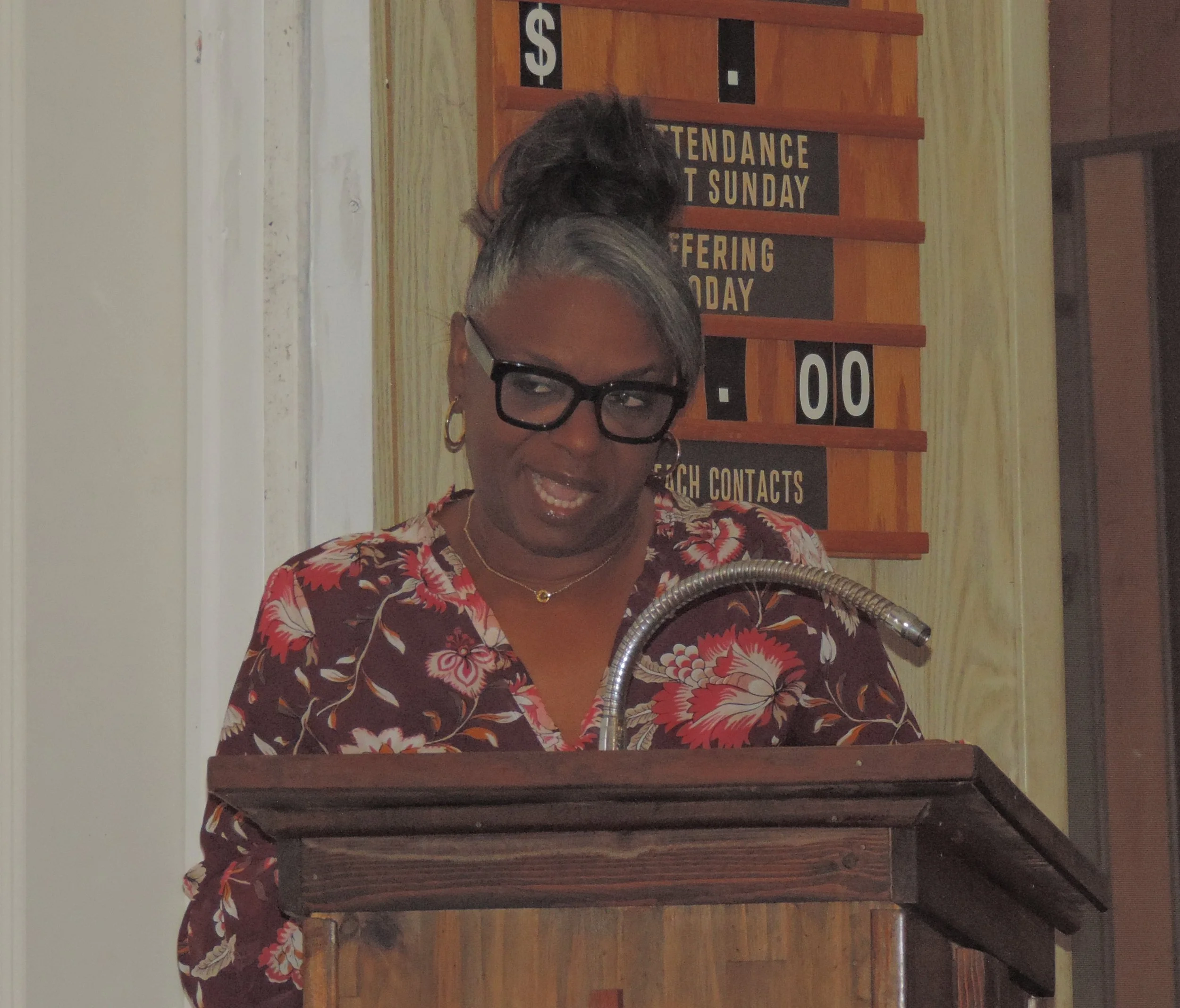
One of the morning’s featured speakers, Tamara Peterson-McIntyre, carried the room with a testimony that was both personal and instructive—equal parts resilience, service, and faith. Introduced with the affection of lifelong community ties—classmates, teammates, and shared history—her presence reminded everyone that leadership isn’t always born from ambition. Sometimes it’s born from endurance.
Tamara spoke about her 25-year career in law enforcement, navigating environments where she was often the only one—a Black woman in spaces shaped by White male dominance, expected to prove competence over and over again. She described adversity from two directions: the organizational walls inside the department and the complicated reality of serving a community that sometimes questioned her simply because she wore the badge.
But her testimony didn’t rest in bitterness. It rested in purpose.
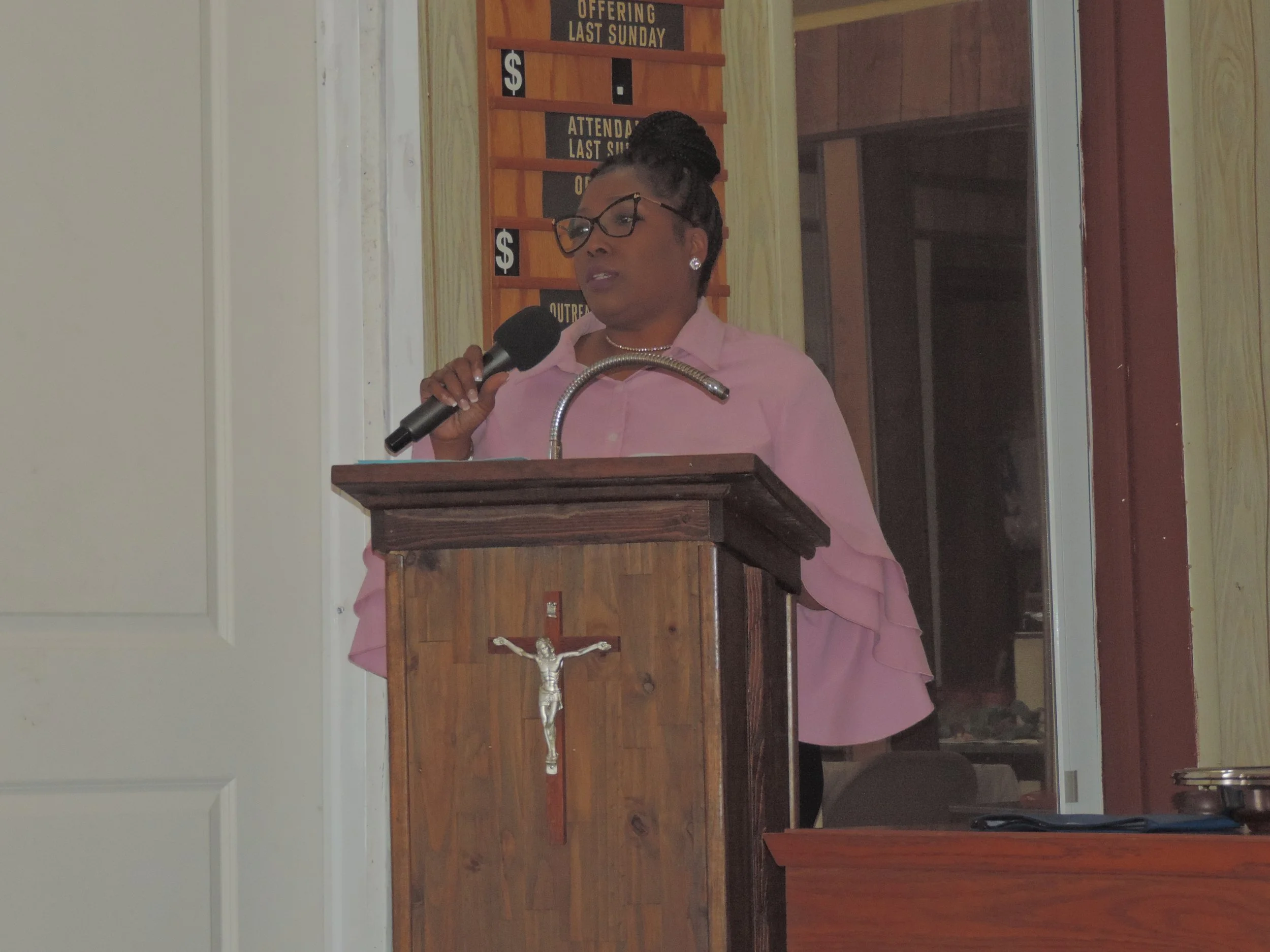
She shared how she chose not to carry anger, how she built trust through consistency, how she served with humanity—offering grace when she could, choosing alternatives when enforcement didn’t have to be punishment. And she made plain what strengthened her: Scripture. The program theme—Rooted in Faith. Rising in Purpose.—became more than a slogan as she read Colossians 2:6–7, then connected her life to it:
rooted
built up
strengthened
overflowing with thankfulness
As she described leading with character—organizing gatherings, supporting officers, taking calls others avoided—it became clear: her leadership was never about recognition. It was about integrity. And when she reflected on the season that led to retirement—changes in leadership, COVID limitations, increased scrutiny—she named the truth that many in the room understood without explanation: sometimes you do everything right and still have to let go.
Still, she framed it as deliverance—not defeat.
“It was by the grace of God,” she said. And you could feel the congregation receive that.
Mayor Ishmael Harris: Black History as Family, Faith, and a Living Legacy
Next, Mayor Ishmael Harris stepped forward not with a political address, but with something closer to a family record—Black history told through names, relationships, and the local people who made leadership feel possible.
He spoke of his grandfather, CP Johnson, a cowboy and rancher respected in Bastrop County—known in the arena but also known for service as a school bus driver, carrying generations of children with the same steady hands that held the reins. He spoke of his mother, Renia Harris (Renia Johnson), an entrepreneur whose salon was more than business—it was confidence-building, community care, and even service to children through partnerships that brought dignity to vulnerable moments.
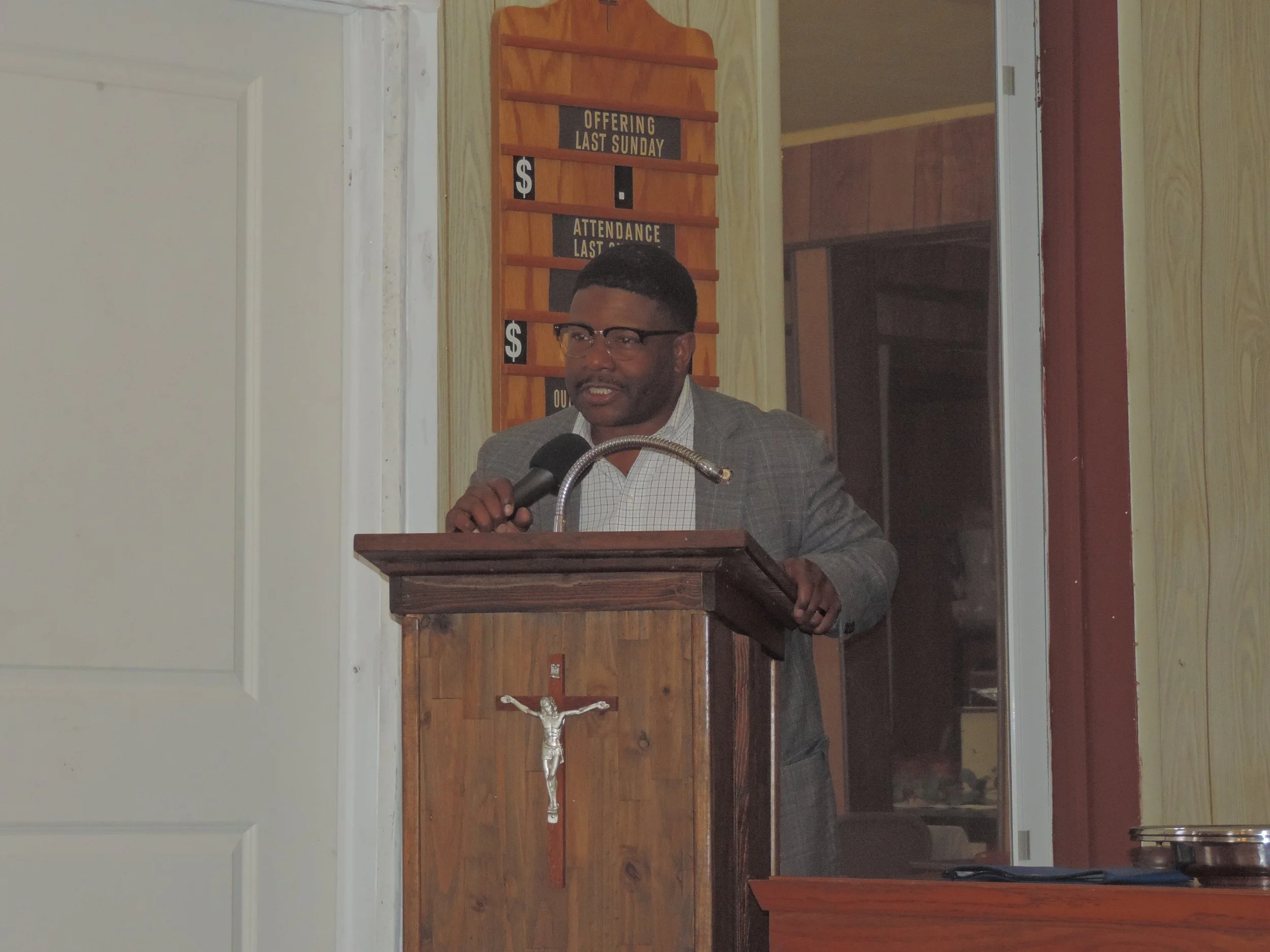
He spoke of his father’s experience with desegregation and how hardship didn’t harden him—it shaped him into someone who poured wisdom into the next generation. Then Mayor Harris widened the lens to honor local trailblazers: the first Black officer, early judges, board members, church leaders, and mentors who made civic leadership accessible long before he ever imagined becoming mayor.
And then he named his own calling plainly:
to bridge the gap.
Not as a slogan, but as a responsibility—between growth and preservation, past and future, opportunity and access. He framed it in scripture, pointing to the biblical pattern of rebuilding, repairing, restoring, and standing in the gap—language that landed deeply inside a church setting where “bridge work” isn’t theory. It’s what communities have been doing for generations.
What Happened After the Applause
After the speakers, the celebration continued the most Mt. Olive way possible: music, laughter, conversation, and a kitchen that became the real fellowship hall. The menu—spoken with pride—felt like a love letter: roasts, cabbage, red beans, cornbread, and the kind of desserts that make people negotiate how many they can take without “acting greedy.”
In the side conversations—those moments that matter just as much as the microphone—the day revealed even more history:
visitors talking about how small churches are “something to hold onto,” especially as younger generations leave and don’t always return
shared memories of childhood church traditions, and the emotional power of walking back into them as an adult
And then there were the photos—family images held up like evidence, like inheritance. One community member pointed to portraits and began naming people with care: ancestors tied to St. John and Cedar Creek’s Freedom Colony history, early leadership, land, institutions, and education. Names like Franklin Thorne and Eunice Thorne were not discussed like textbook references, but like people who still live in the room through what they built.
That’s what made the program feel complete: it wasn’t only about honoring history—it was about recognizing how close it still is.
Black History as Home Practice
Mt. Olive’s Black History Program did what the best community programs do: it reminded people that history is not just something you study—it’s something you practice. You practice it by gathering. By naming your elders. By feeding your guests. By telling the truth about what it cost to serve. By teaching young people not just that we celebrate, but why.
Because as Pastor Green said later—reflecting on a moment he witnessed during a Juneteenth gathering—people can get caught up in the music, the parade, the joy…and still not know the reason. That, he warned, is why teaching history matters now more than ever.
On this Sunday, Mt. Olive didn’t just host a program.
They hosted a reminder:
Black history is not far away. It is local. It is spiritual. It is carried in families. And it is sustained—one gathering at a time.
