
Freedom Colony Voices Fill the Room at Kerr Community Center
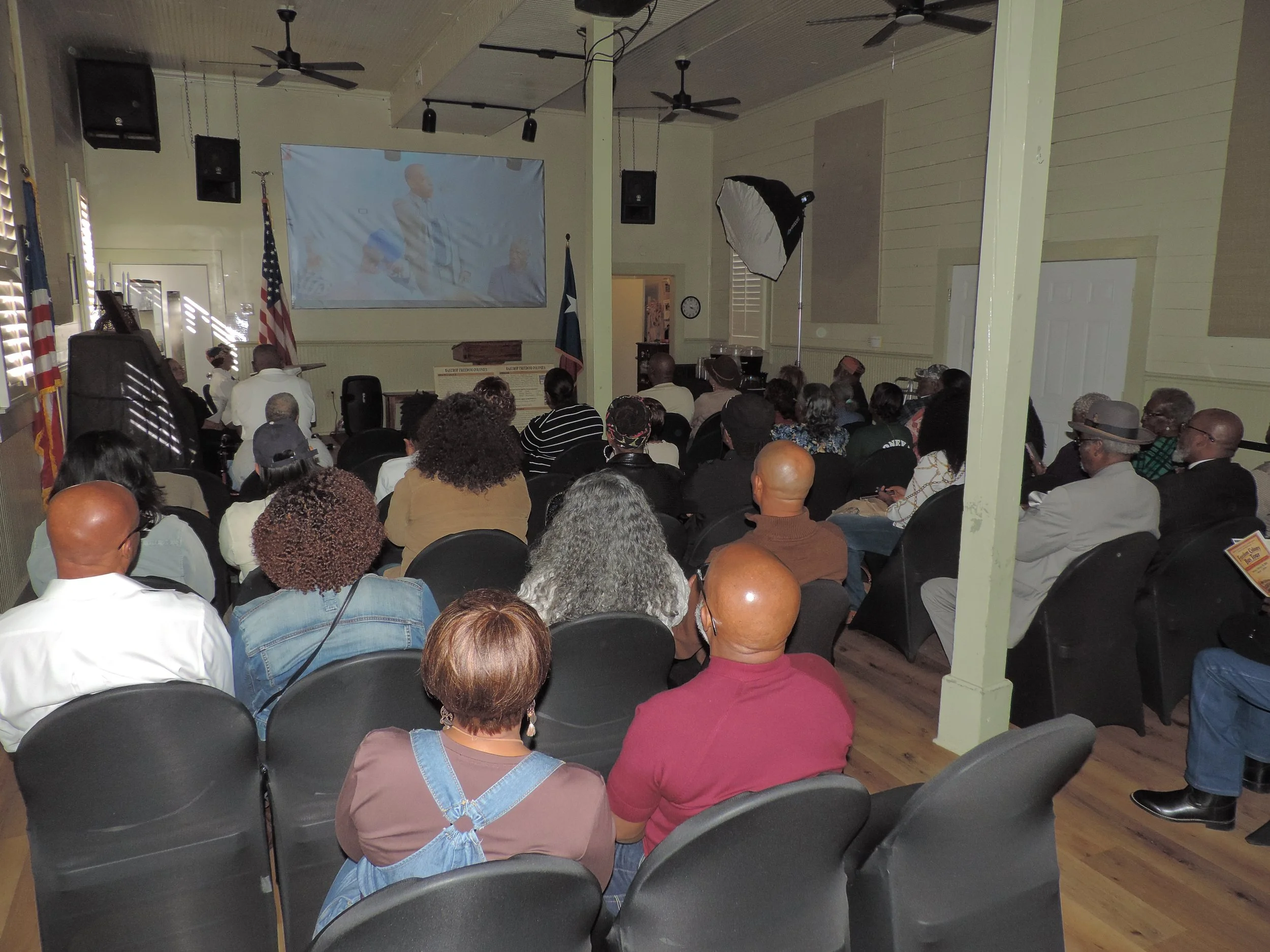
Descendants gathered from across Texas—including Arlington and Houston—filled the room alongside elders, community leaders, neighbors, and donors for the screening of 18 oral histories. Together, they listened as families shared their lived experiences—stories of land, faith, labor, and legacy—spoken in their own voices and preserved for generations to come.
We stepped into a room where the past wasn’t behind glass—it was alive in people’s voices.
Inside the Kerr Community Center, the Bastrop County African American Cultural Center & Freedom Colonies Museum gathered descendants, elders, leaders, and neighbors for a powerful update on the work being done to preserve Freedom Colony stories across the county. The mission was clear: the history is here—and it deserves to be protected, shared, and passed down with care.
A program leader put words to what many in the room already understood through lived experience: this work is detailed, time-consuming, and deeply worth it. With funding secured from multiple sources—including the (Out)sider Preservation Initiative (OPI), a Mellon-funded national program that empowers descendant communities to preserve their own stories—the organization has recorded 18 full oral history interviews, many lasting more than an hour. Captured by professionals and supported by a dedicated team, these interviews are now being transcribed word-for-word.
And the vision is both bold and beautiful: a museum kiosk where visitors can “punch” a Freedom Colony—Cedar Creek, St. John Colony, Hills Prairie—and hear directly from descendants. Not a summary. Not a caption. The voices themselves.
Then came the moment that shifted the atmosphere.
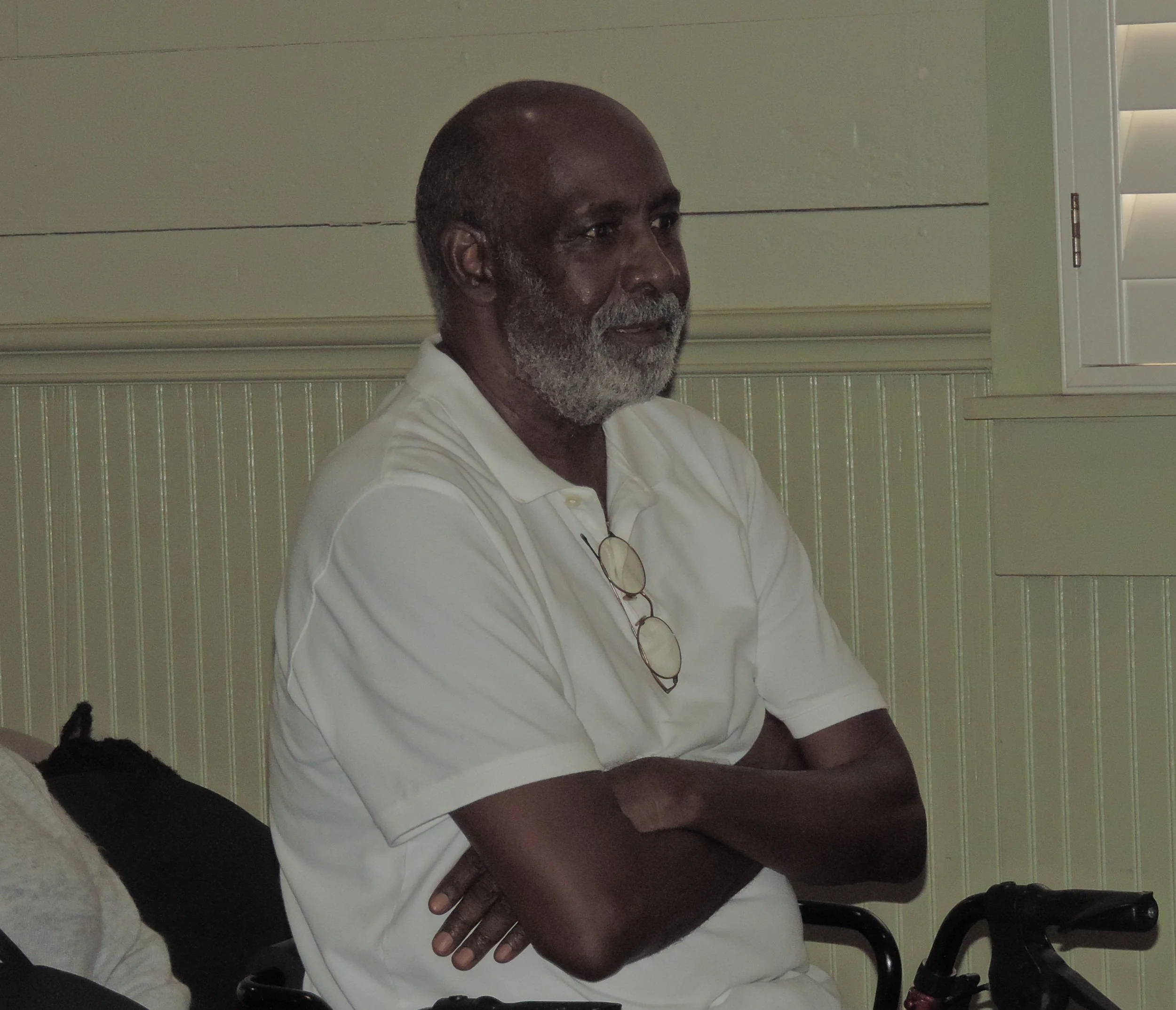
A beloved community elder and past president—known affectionately as the “Governor of Hills Prairie,” because Hills Prairie is often called the “capital of the Freedom Colonies”—stepped forward. His presence carried humor, pride, and the kind of leadership that doesn’t need a title to be felt. He spoke three simple words into the microphone like a declaration, like a promise kept:
“We are back.”
And he made sure to share the credit where it belonged—naming the work and leadership that made “back” possible.
The interim president followed, opening with prayer and grounding the gathering in faith and purpose. Her words held the room. She thanked the past president—her cousin—and reminded everyone that this work is not for one family, one town, or one generation. It is for Bastrop, for Elgin, for Smithville—for grandchildren and great-grandchildren not yet grown. The room responded because everyone understood the truth behind it:
Our ancestors’ lives mattered.
And the organization’s commitment is not to whisper that truth, but to march forward with it—preserve it, celebrate it, and tell it.
One of the most moving moments came when the interim president presented her cousin with a treasure: a word-for-word transcription of his oral history—a tangible record meant to live beyond memory. Not just a recording saved on a hard drive, but a document a family can hold, study, and pass down.
Throughout the program, names were lifted and credited—museum coordinator Janis Bergman Cartin, whose behind-the-scenes work has helped build teams and move the mission forward; program leadership like Jennifer King and Barbette Mays; board members including Doc Jackson; interns who supported interviews and transcription; and creatives like Jose and Winnie, who assembled a highlight reel from footage gathered in many ways—professional video, community clips, even shaky phone recordings—into something polished and powerful.
The museum’s work is also gaining wider recognition. The organization has received support connected to national institutions, including a grant through the University of Virginia’s preservation initiative, and ongoing research partnerships that include teams working to gather county records and deepen archival access. The message to the community was simple: if you’ve visited before, come again—new exhibits are coming, because the story is still unfolding.
When the highlight reel played, the room watched themselves and their people. In clips, descendants told stories of survival and land—of a man leaving a plantation determined not to be “settled” there, carving out shelter by a creek, working, saving, and purchasing property that still remains in the family. They spoke about resourcefulness—hunting, fishing, gardening, and making a way when there was no safety net. They spoke about family—how bonds stretched across state lines, how reunions weren’t optional, and how this Freedom Colony work introduced relatives to one another they didn’t even know existed.
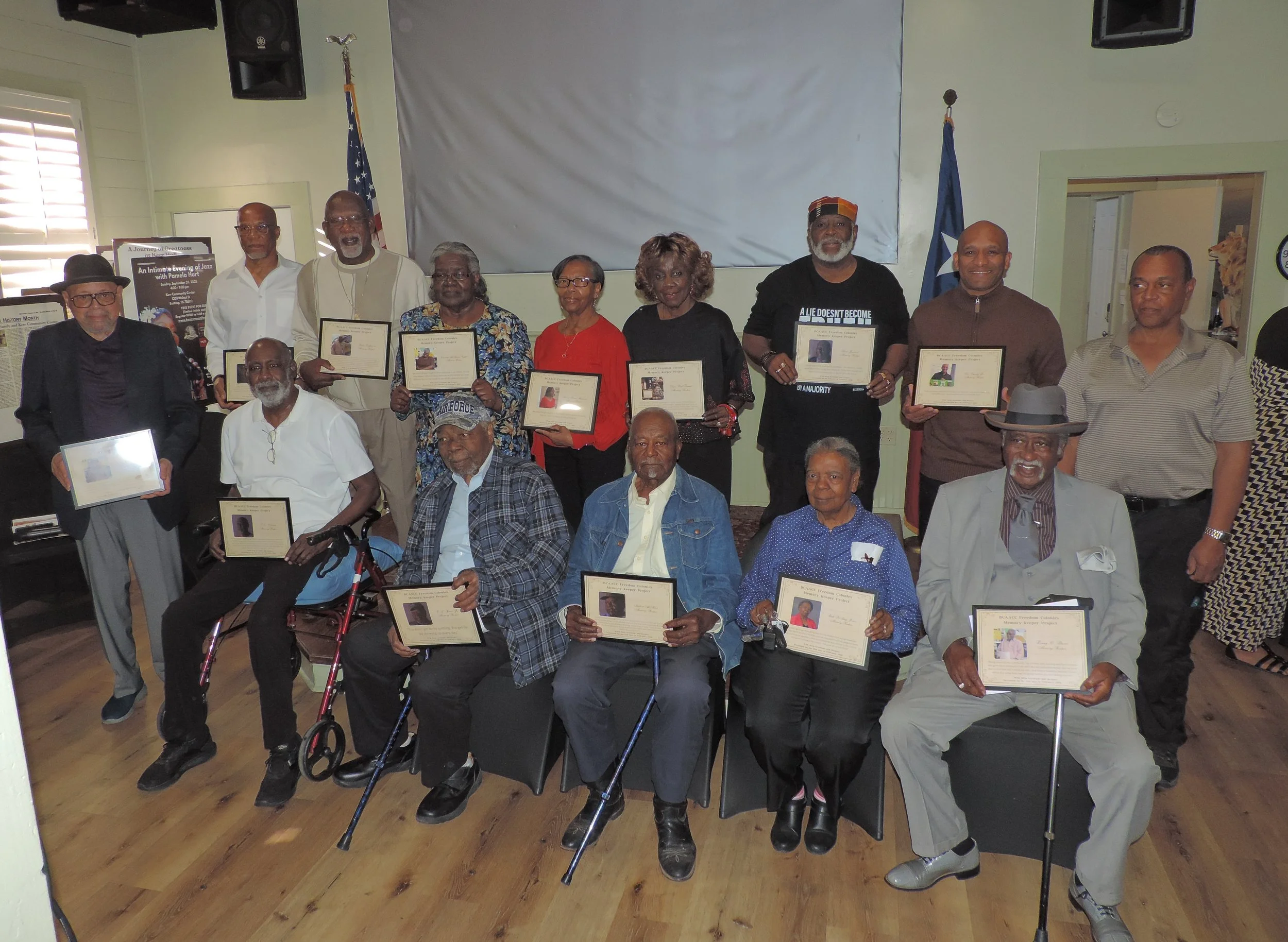
And then the program did something that felt both celebratory and sacred: it honored the oral history narrators publicly, calling each name alongside a quote from their interview. One by one, the words reminded everyone what Freedom Colony history really is:
Being raised by community.
Learning what it takes to live and earn.
Surviving off the land.
Taking advantage of opportunities.
Respecting elders and holding dignity.
Refusing to surrender land for “a quick dollar.”
Recognizing the church as the backbone.
Telling the truth until the truth changes how you stand.
The quotes weren’t just inspirational—they were instructions.
Before the gathering transitioned to food and fellowship, two announcements reinforced the organization’s commitment to keeping descendants connected and informed:
A bus tour on Saturday, February 28 (9:00 a.m.–12:00 p.m.), available to Freedom Colony descendants, traveling through Cedar Creek, St. John Colony, and Hills Prairie, with narrators sharing history at each stop.
A hands-on workshop later that day titled “Telling Your Story,” led by Gloria Rainwater, designed to help families trace their lineage and gather records for family history projects.
Then, like the Black church and the Black community always does—history gave way to hospitality. A blessing was spoken over the meal, and the room rose for a song that holds generations inside it: “Lift Every Voice and Sing.” Some followed along from printed sheets. Some sang from memory. Some hummed. But everyone understood what it meant to sing it in a room full of descendants whose names and stories are finally being recorded with intention.
And after the formalities, the room returned to what it always returns to—connections. Laughter. Pictures. Side conversations. Family introductions that turn into research leads. “That’s my nephew.” “That’s my cousin.” “We’re probably related—let’s figure it out later.”
Even in the closing moments, the work continued.
Because that day at Kerr wasn’t just a program.
It was proof.
We are back.
And this time, we’re bringing the receipts—recordings, transcriptions, artifacts, mosaics, tours, workshops, and a museum built to hold what our families have carried for generations.
