

History Was Built by Hand—One Tile at a Time
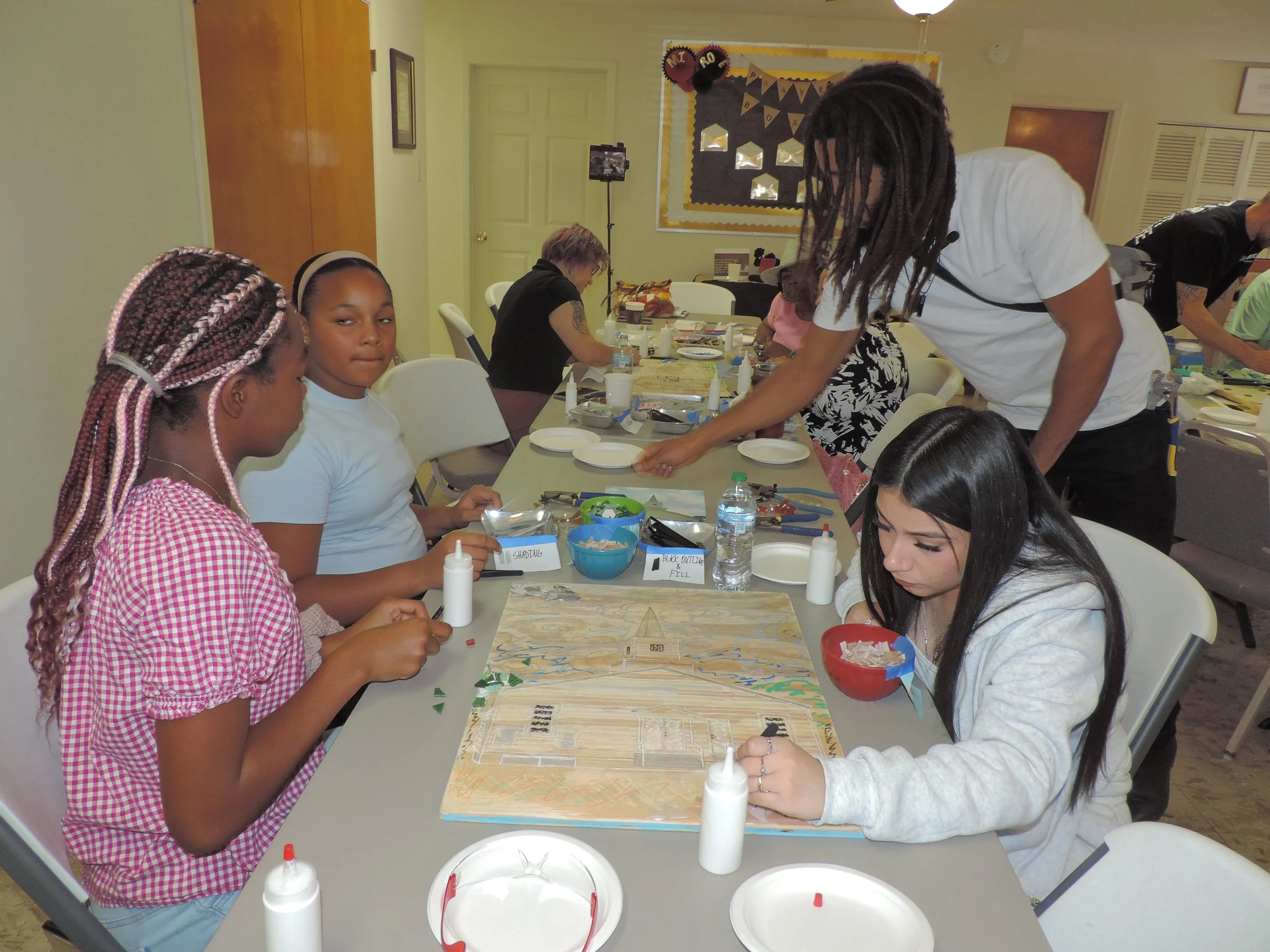
The sanctuary at Mt. Rose Missionary Baptist Church looked a little different this weekend. Instead of pew-side quiet, there was the soft rhythm of work—tables lined with tile, tools, sketches, and careful hands moving in collaboration.
This wasn’t just an art class. It was a living act of preservation.
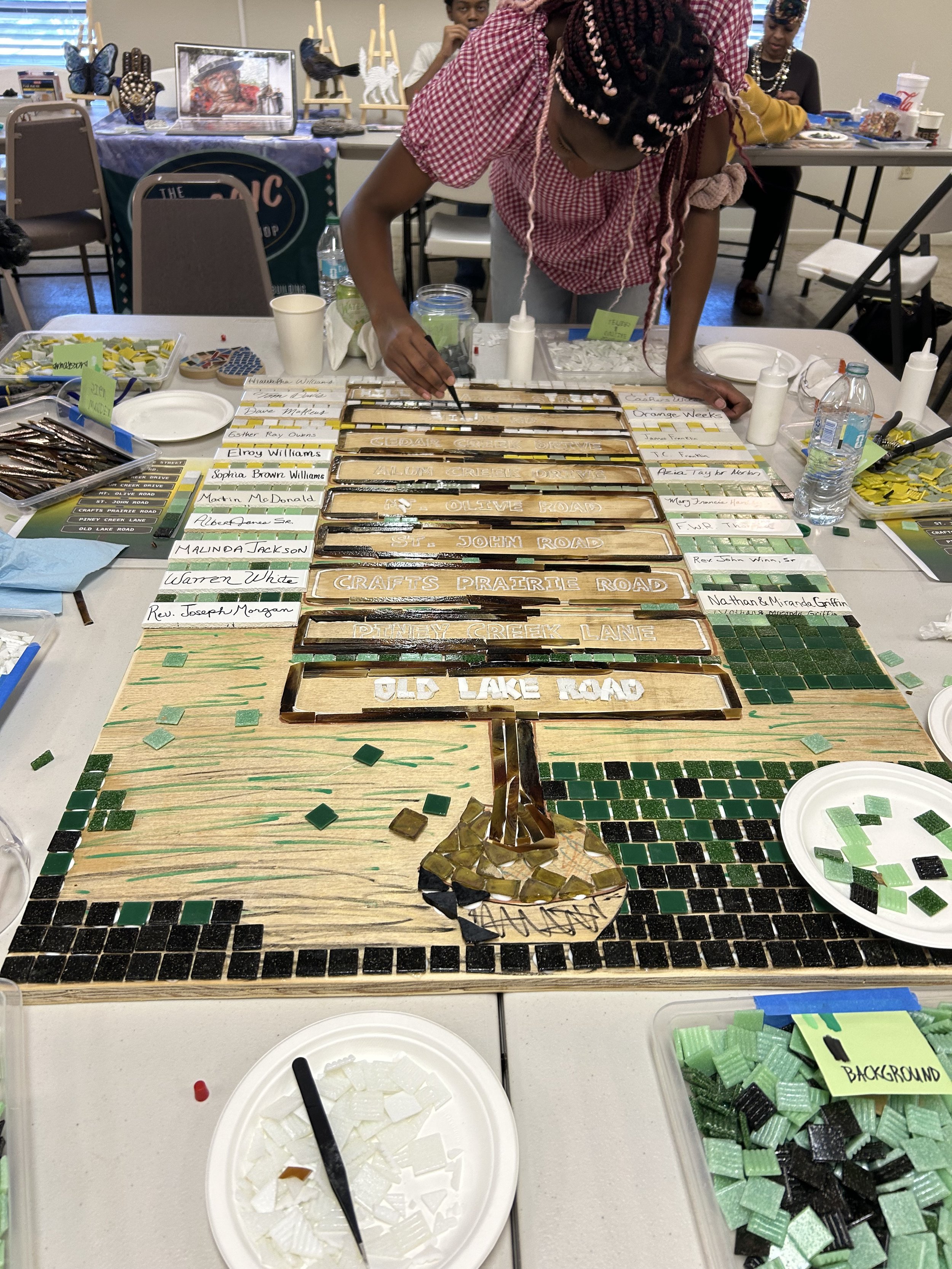
On location with Shelton Talks, I watched community members step into the work with intention—placing glass and ceramic pieces like they were setting down memory itself. Under the guidance of artist and instructor Stanton Pittman, participants began shaping mosaic panels that will soon become permanent witnesses inside Bastrop County’s cultural record.
“You can do a few and then step back and look,” one instructor encouraged—reminding everyone that mosaic-making is both technical and meditative. There’s no rushing it. Every piece counts.
A Workshop Built on Community Care
From the moment people arrived, the atmosphere felt like Mt. Rose at its best: welcoming, warm, and organized around care. Volunteers moved easily between tables offering support—coffee, fizzy water, sandwiches, cookies, even oranges—making sure participants had what they needed to stay grounded in the work.
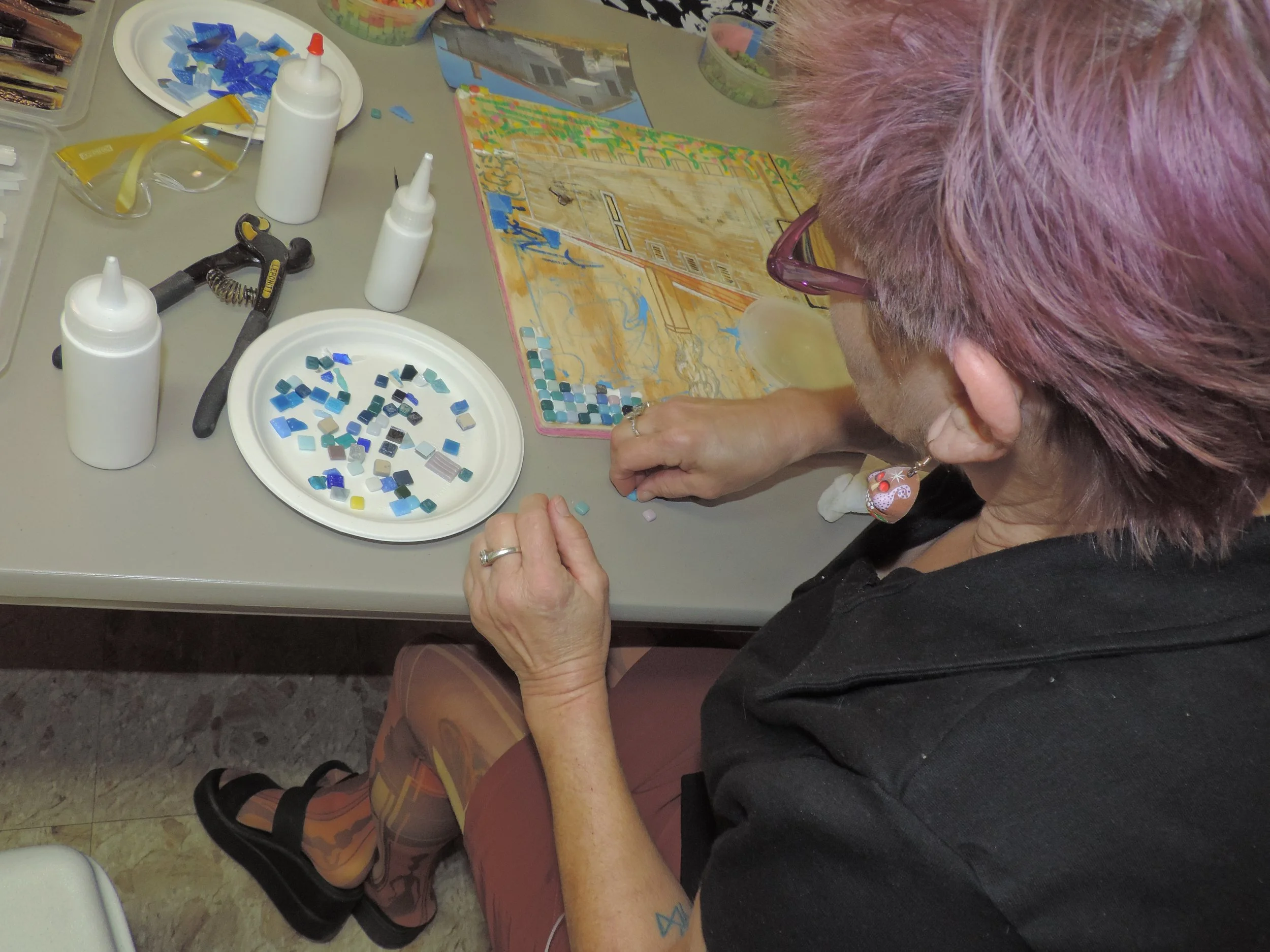
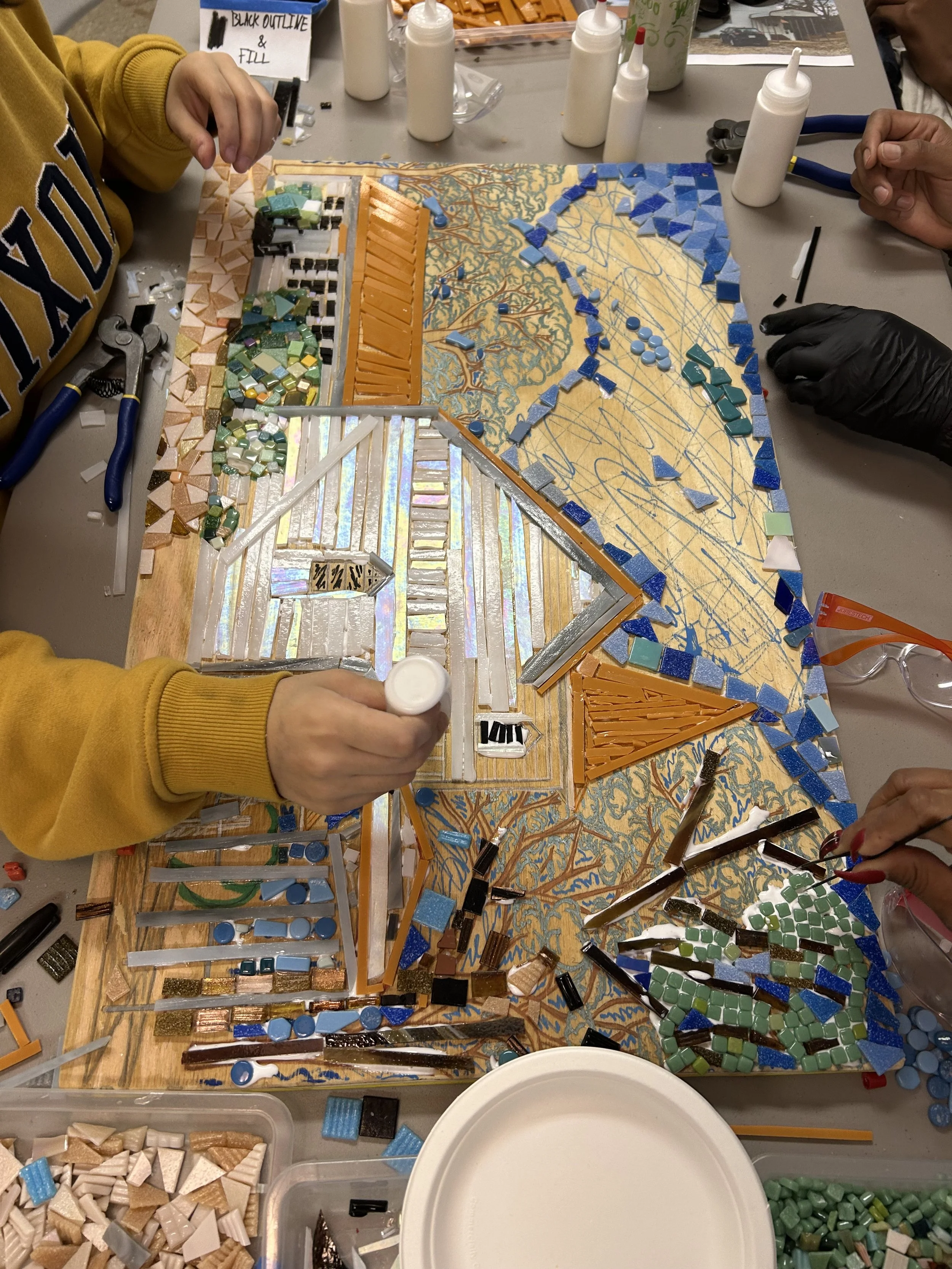
At one table, tiles were set into place along a carefully measured border.
“The border is important,” Pittman explained. “It establishes the foundation.”
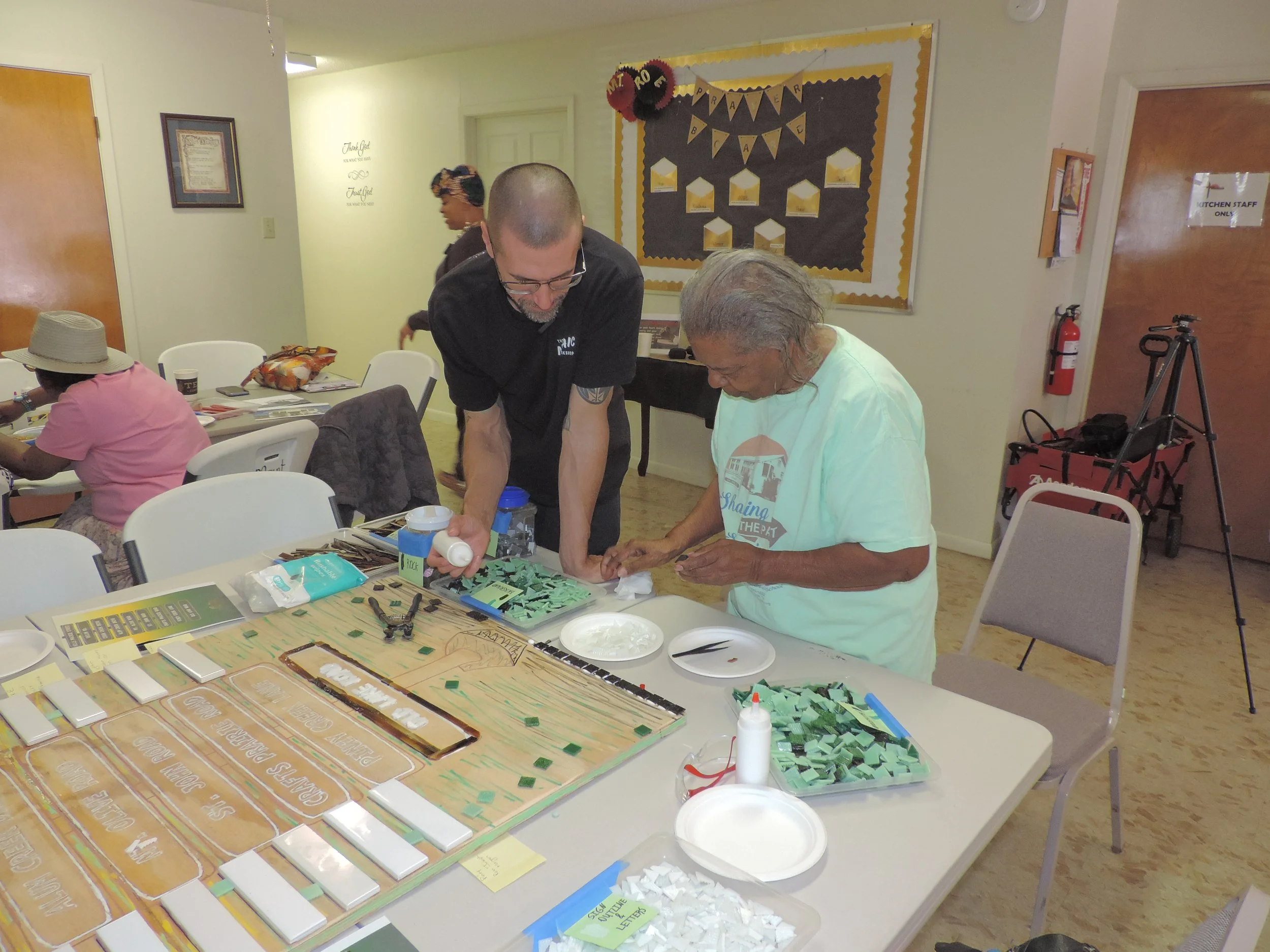
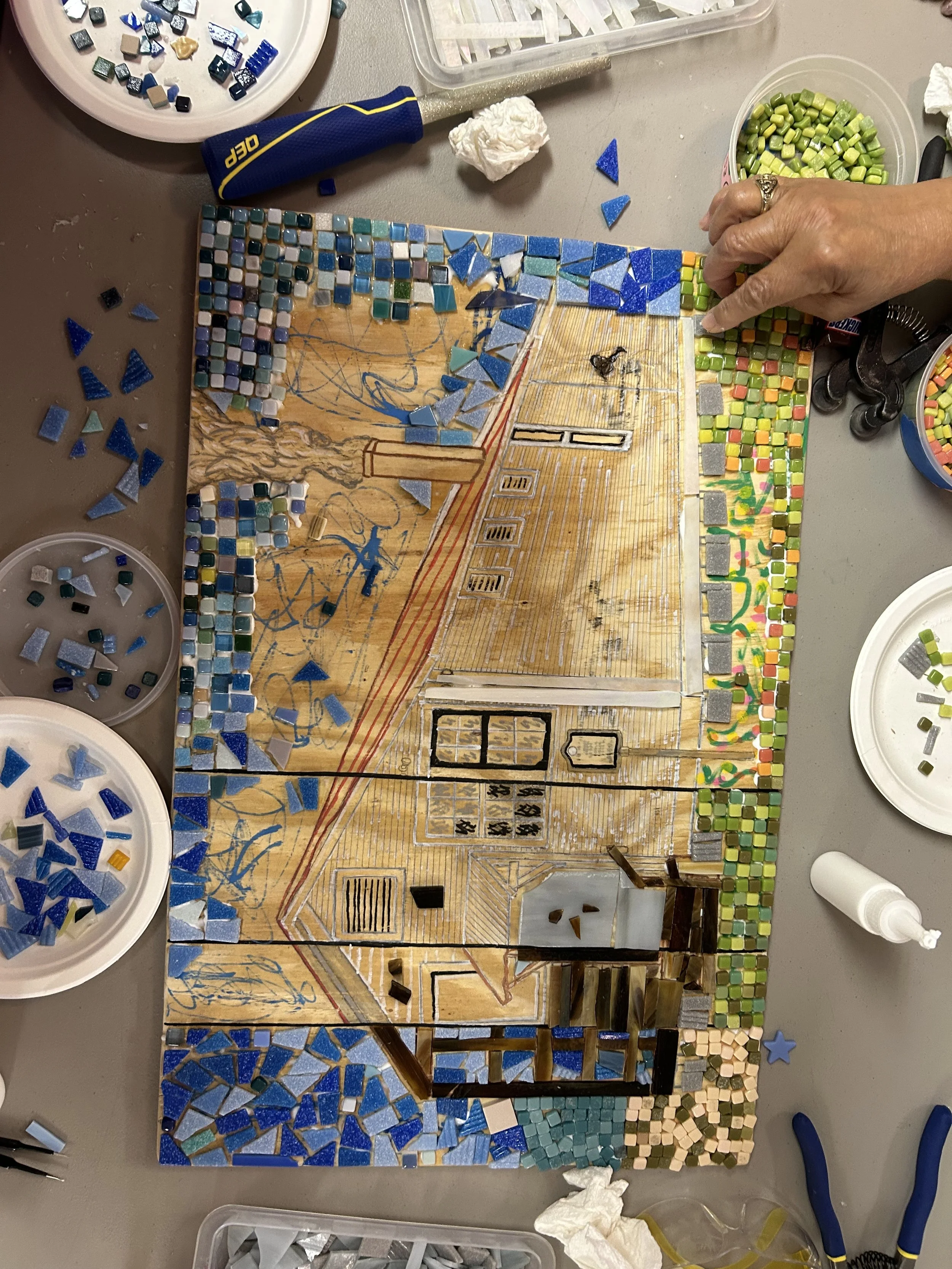
Participants learned the practical details—how to identify the smooth side of a tile, why the textured underside matters for grip, how to leave spacing so grout can later seal the story into place. The glue dries clear, the bond grows stronger, and the gaps—left intentionally—become part of what makes the final piece durable.
Apprenticeship in the Middle of the Work
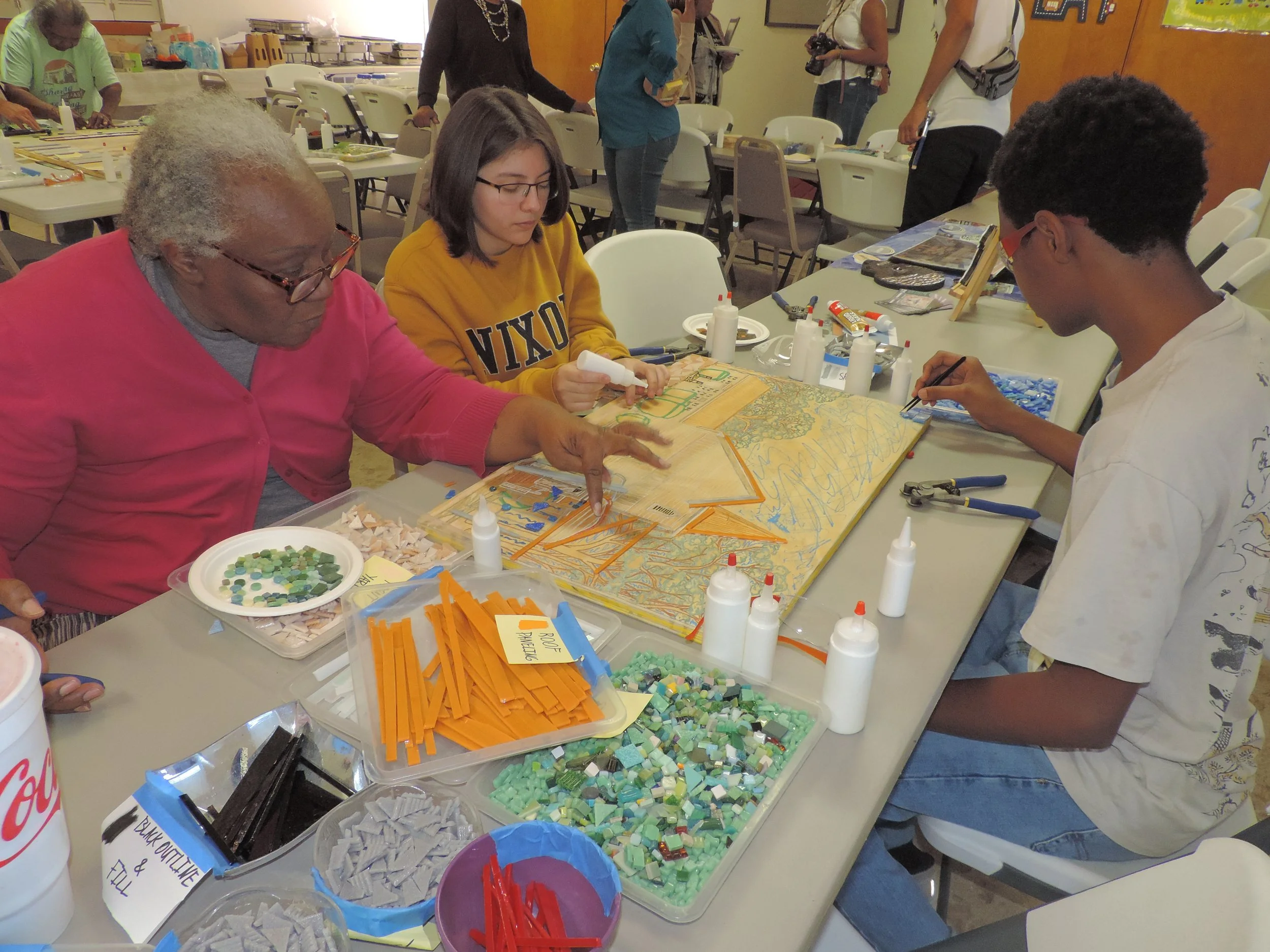
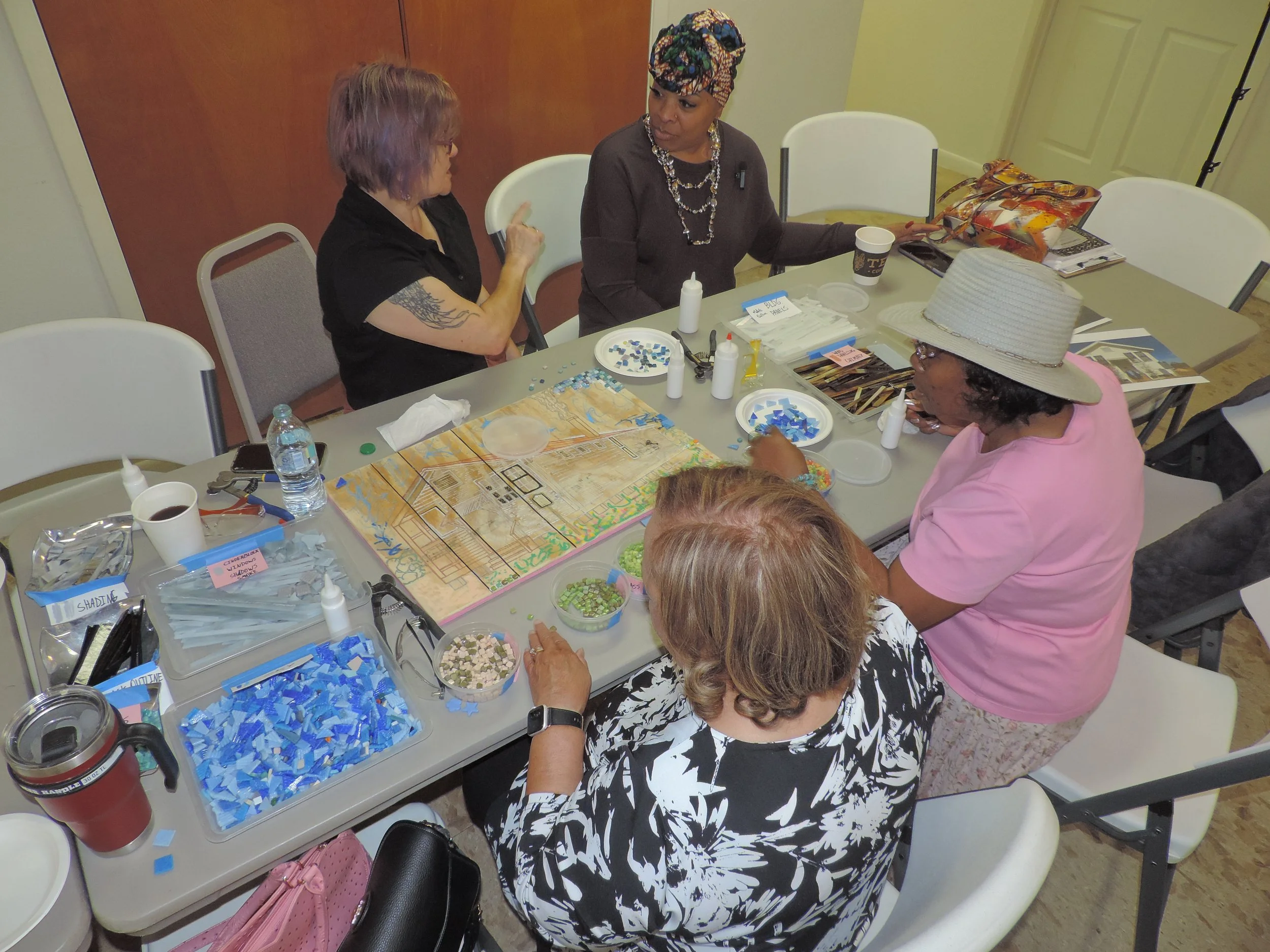
One of the most powerful sights in the room was the mix of generations. High school students worked alongside adult artists and elders, learning not only technique, but stewardship—how public art carries history, identity, and responsibility.
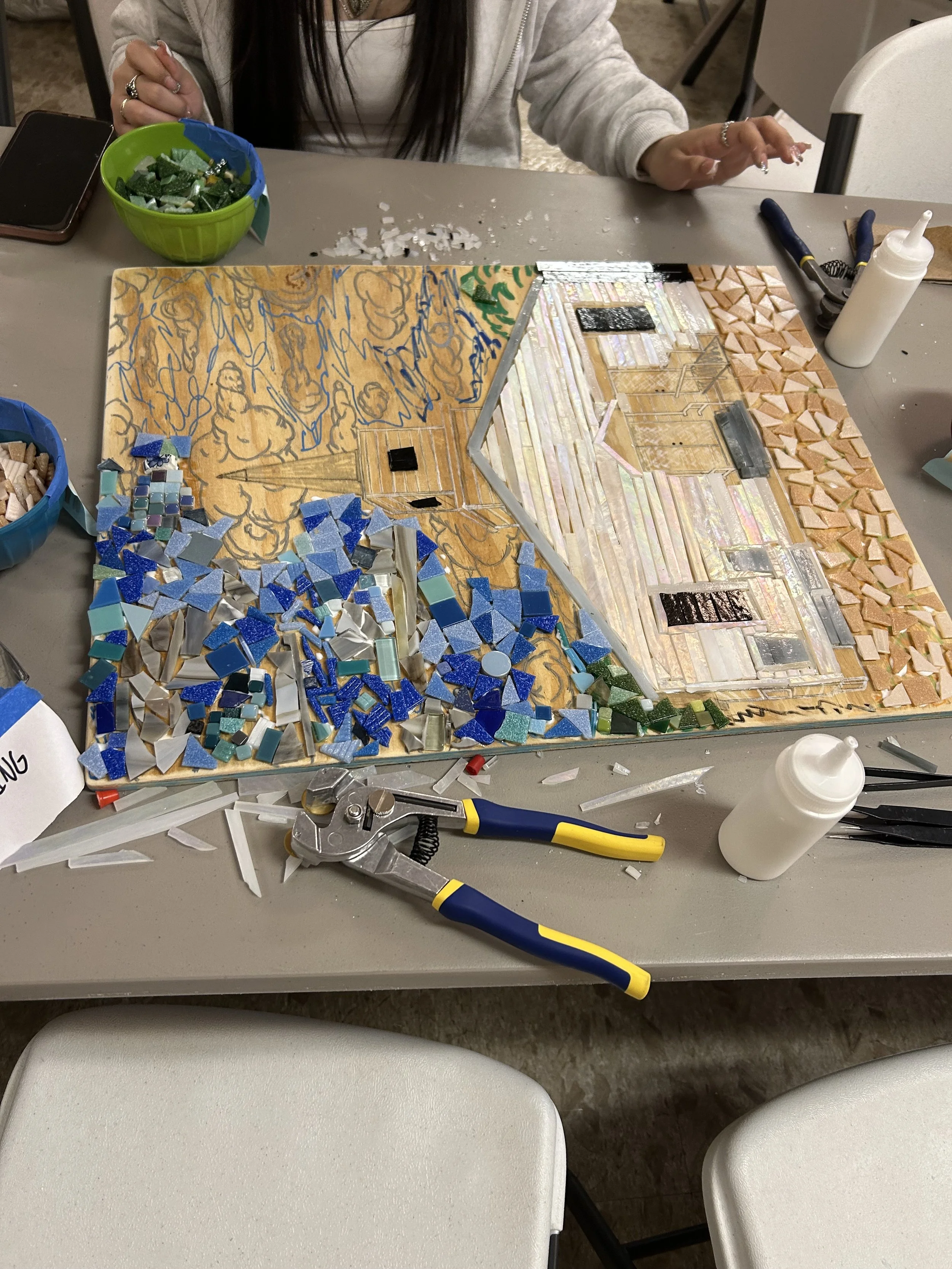
Supporting the effort was J. Muzak, artist and owner of the Austin Mosaic Workshop, lending both expertise and hands-on support to ensure each panel is built to endure. Some cuts were done with scoring tools for precision; others were shaped using nippers—fine-tuning pieces to fit like a puzzle.
Mosaic work invites patience. It also invites presence. And in that room, presence was everywhere.
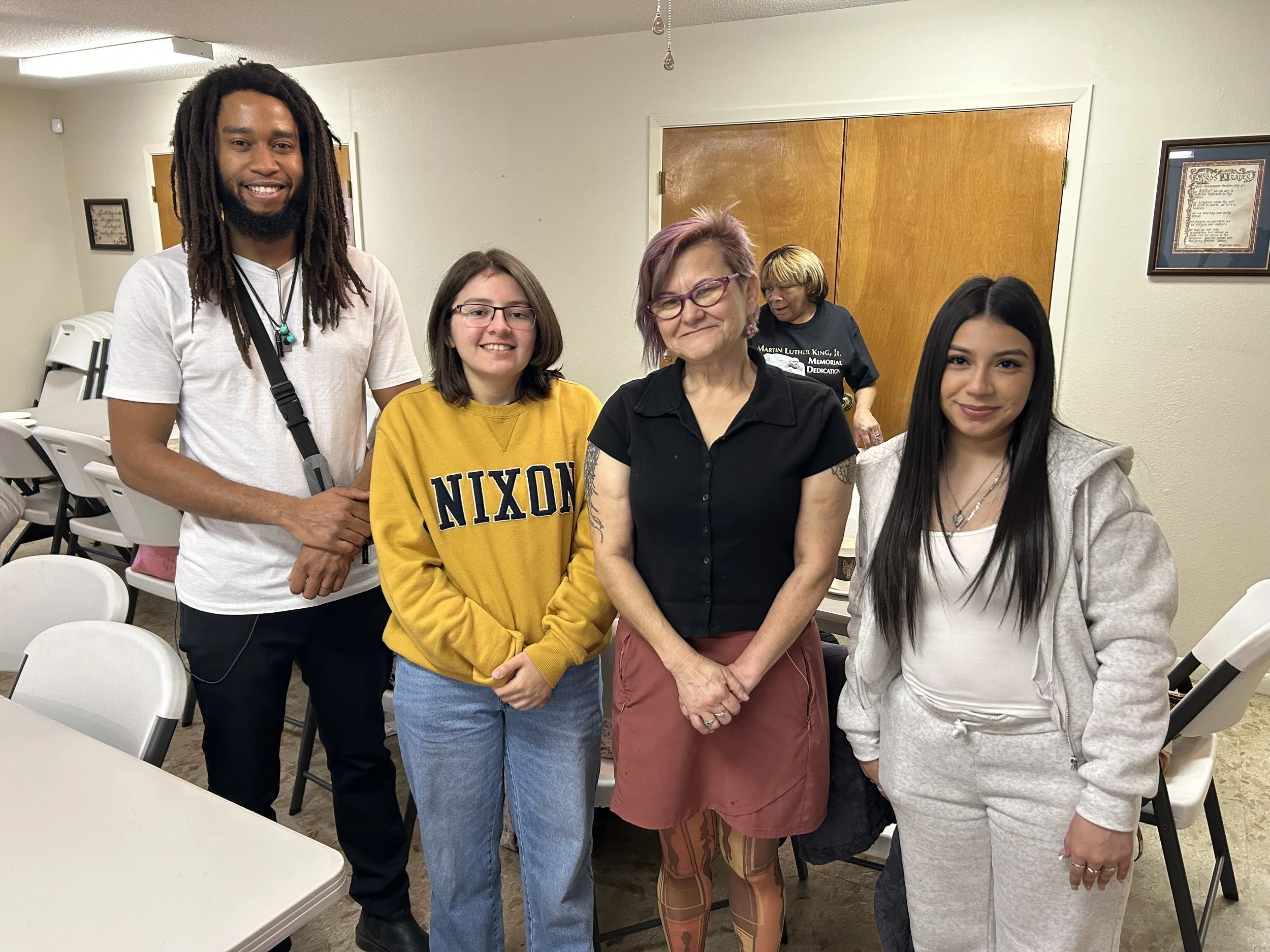
From left to right: Stanton Pittman, lead artist with the Austin Mosaic Workshop; Casey Gonzalez, Bastrop High School art student and workshop apprentice; Lynn Sherbarth-Mills, former Bastrop High School art teacher; and Jocelyn Arce, Bastrop High School art student and workshop apprentice—representing a shared moment of mentorship, learning, and creative legacy in motion.
Where These Panels Will Live
The workshop was made possible through the Bastrop County Freedom Colonies Preservation Project, supported by a grant from the (Out)sider Preservation Initiative (OPI), a Mellon-funded national program empowering descendant communities to tell their own stories. According to Janis Bergman-Carton, the project reflects a long-term vision rooted in hands-on, community-centered history making.
When completed, these mosaics will be permanently housed at the Bastrop County African American Cultural Center and Freedom Colonies Museum (1303 Pine Street)—a space committed to preserving Black history, honoring Freedom Colonies, and educating future generations.
But this workshop also signals something larger: these panels are part of a growing public vision.
Organizers shared that the mosaics are a pilot project for a bigger initiative, with hopes that future work may travel to spaces like City Hall, schools, and—ultimately—become part of the cultural landmarks connected to the city’s developing Black historical district.
In other words: what began on folding tables at Mt. Rose is being built for public memory.
What Legacy Looked Like in Motion
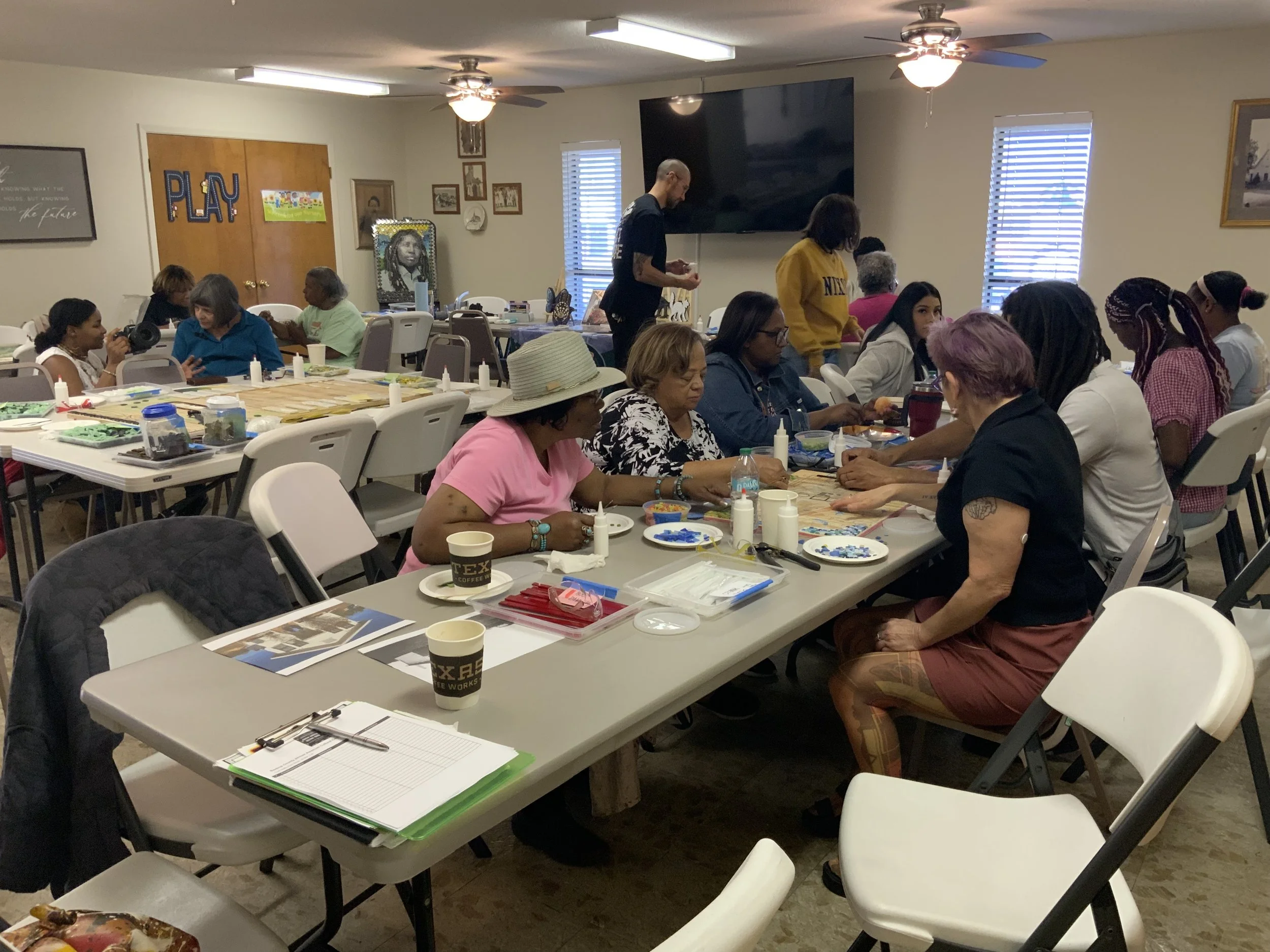
By afternoon, the panels were beginning to take shape. Participants stepped back to check spacing. Tiles were adjusted by millimeters. Borders became straighter. Patterns emerged. And the room—filled with conversation, laughter, and concentration—felt like a community choosing to build together.
From Mt. Rose Missionary Baptist Church to the walls of the African American Cultural Center and Freedom Colonies Museum, these mosaics will stand as permanent witnesses to what happens when a community honors its story—one tile at a time.
And here in Bastrop County, history isn’t only something we study.
It’s something we are still making.
Community Note:
Those interested in helping complete the project over the next two weeks are welcome to visit the Austin Mosaic Workshop, located at 729 Airport Blvd. in Austin, on weekdays between 11:00 a.m. and 6:00 p.m. Please call ahead at 737-398-4933 to confirm availability, ensure no other events are scheduled, and allow time for mosaic pieces to be prepared prior to your arrival.
