
Bastrop Freedom Colonies Storytelling Event Honors Memory Keepers and Ancestral Legacies
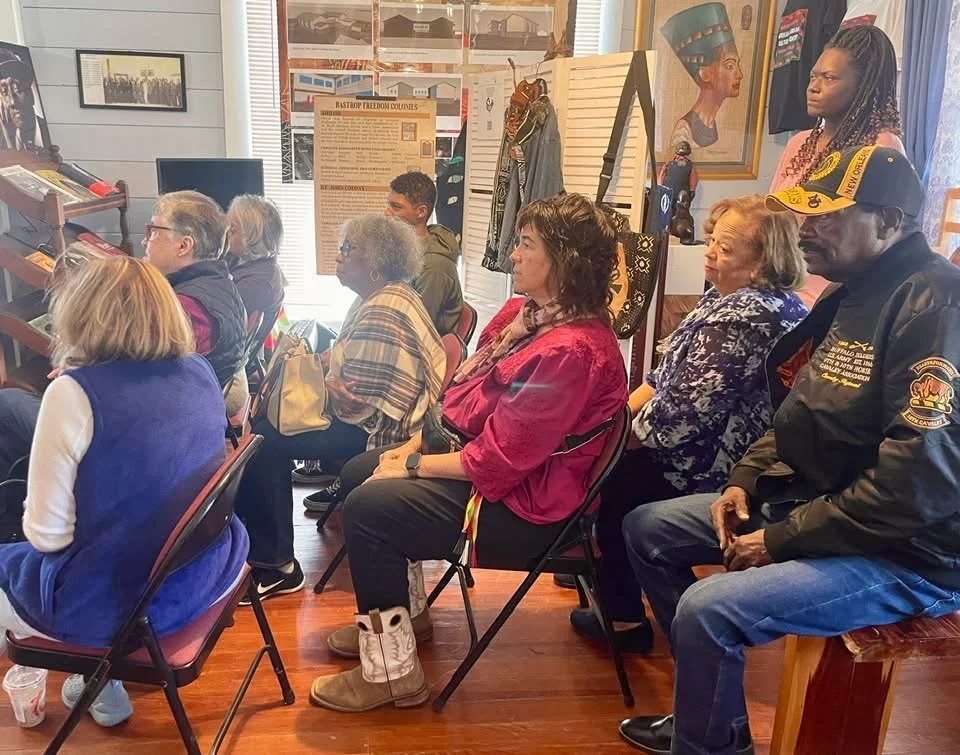
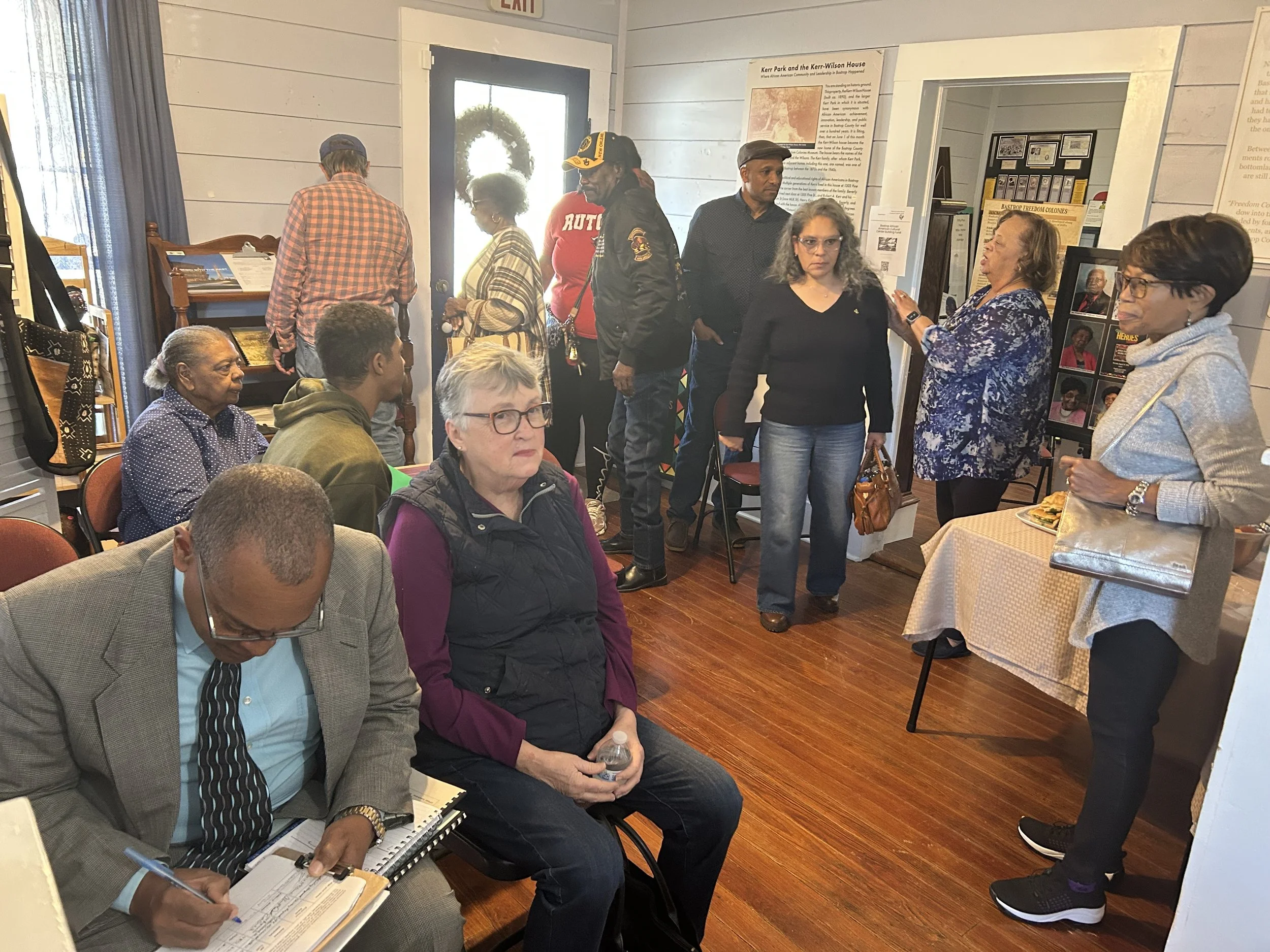
The Bastrop County African American Cultural Center and Freedom Colonies Museum was filled with history, family, and community pride on Saturday, December 6, as descendants and memory keepers gathered for the Second Bastrop Freedom Colonies Storytelling Event, part of the Outsider Preservation Initiative (OPI)—a national grant funded by the Mellon Foundation, led by Dr. Andrea Roberts at the University of Virginia.
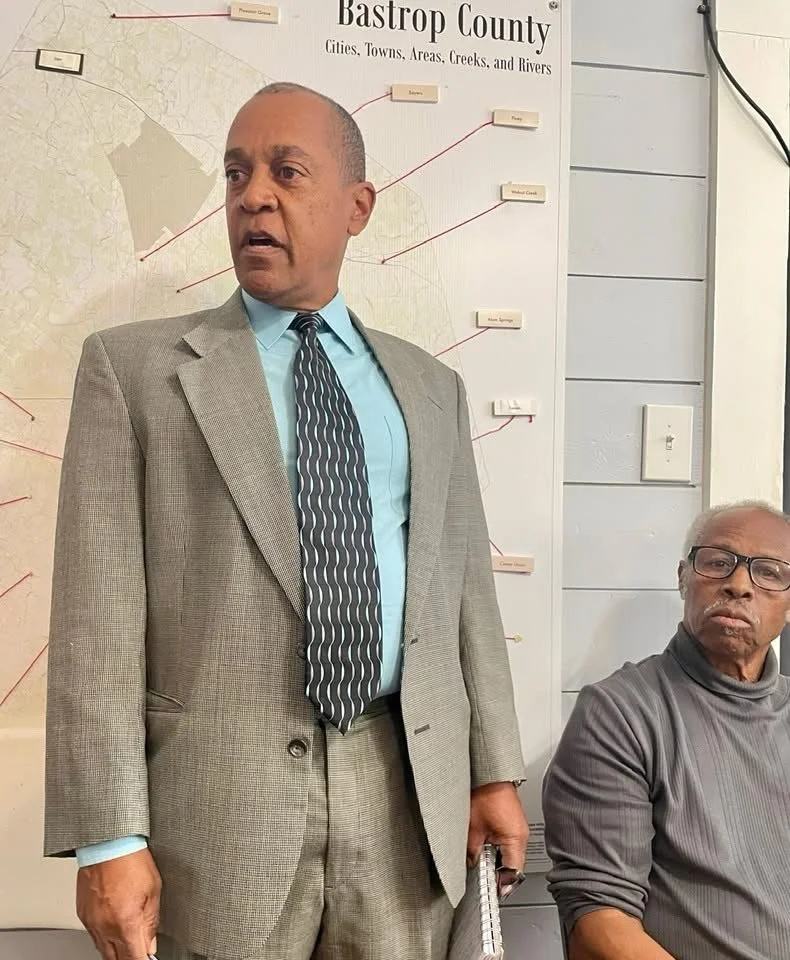
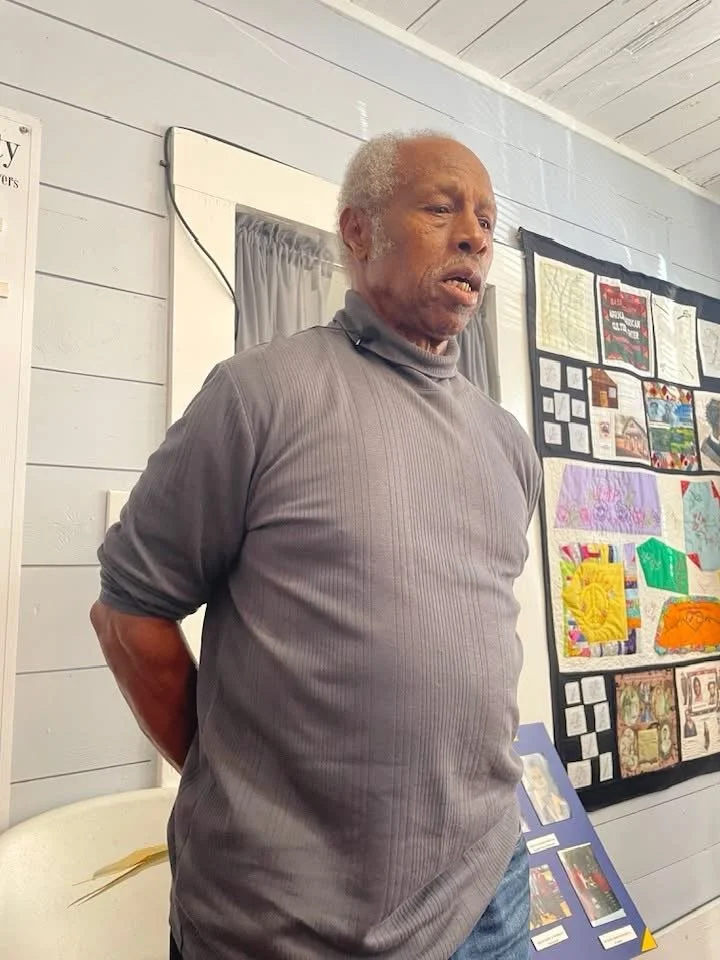
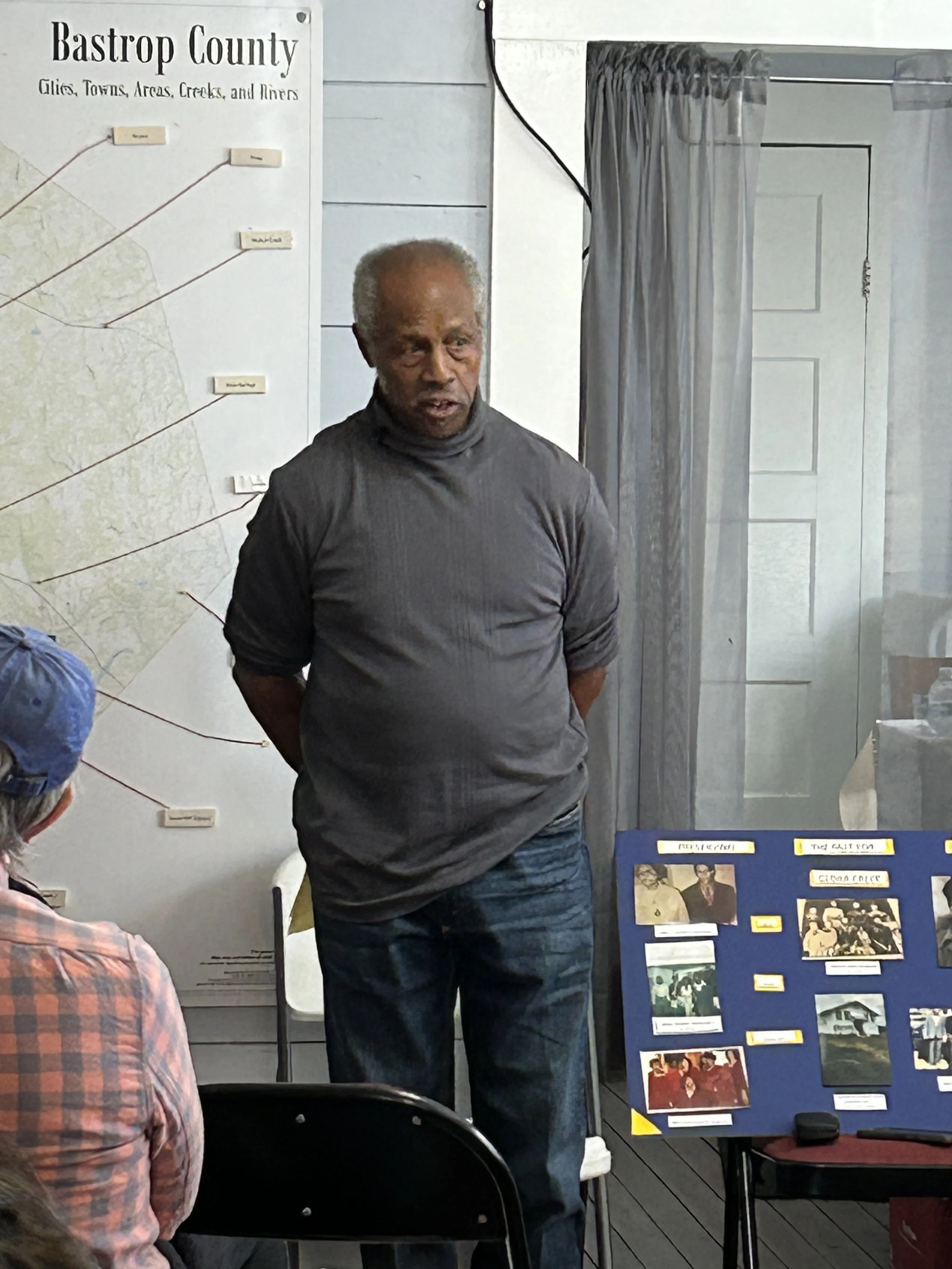
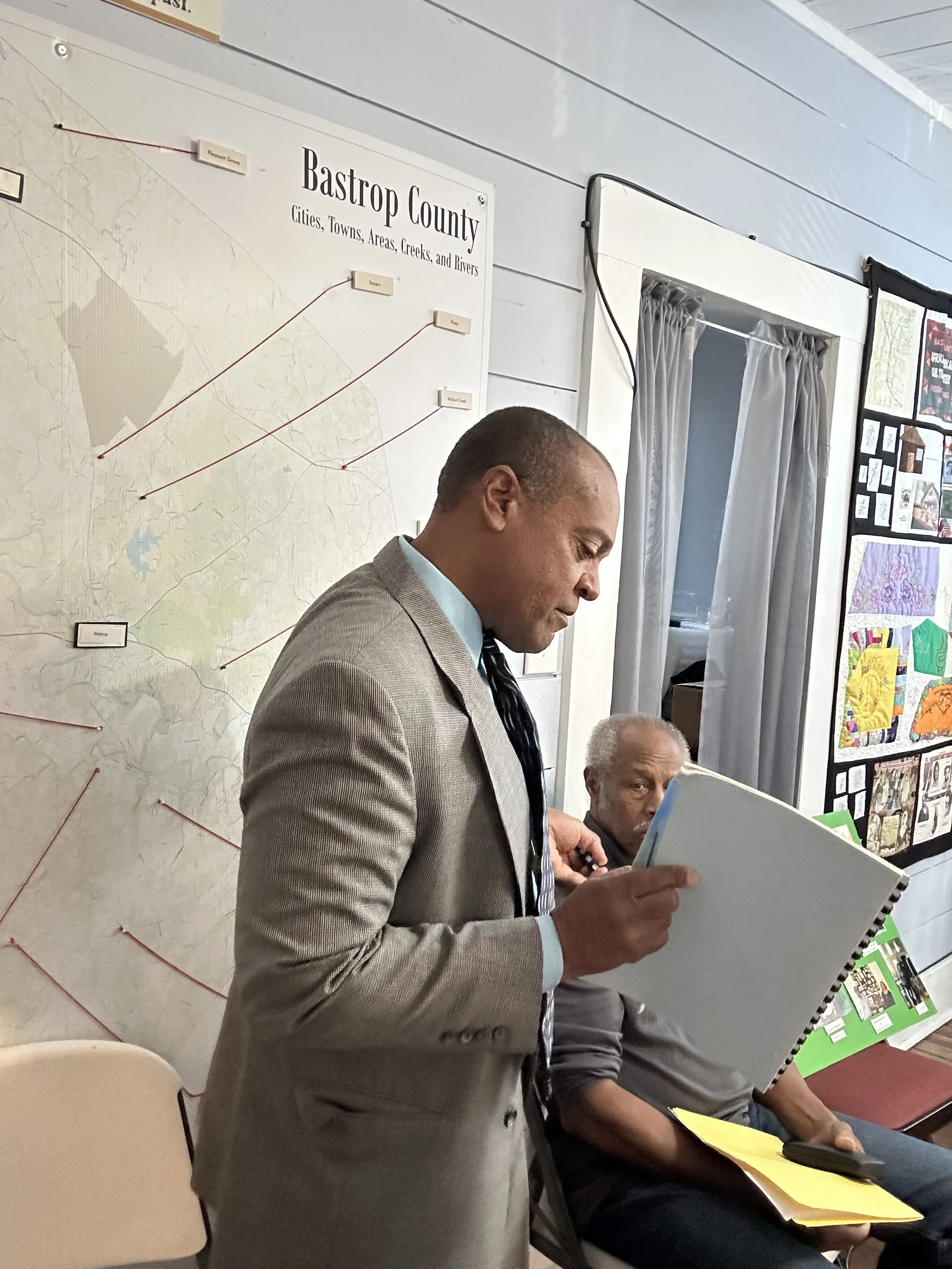
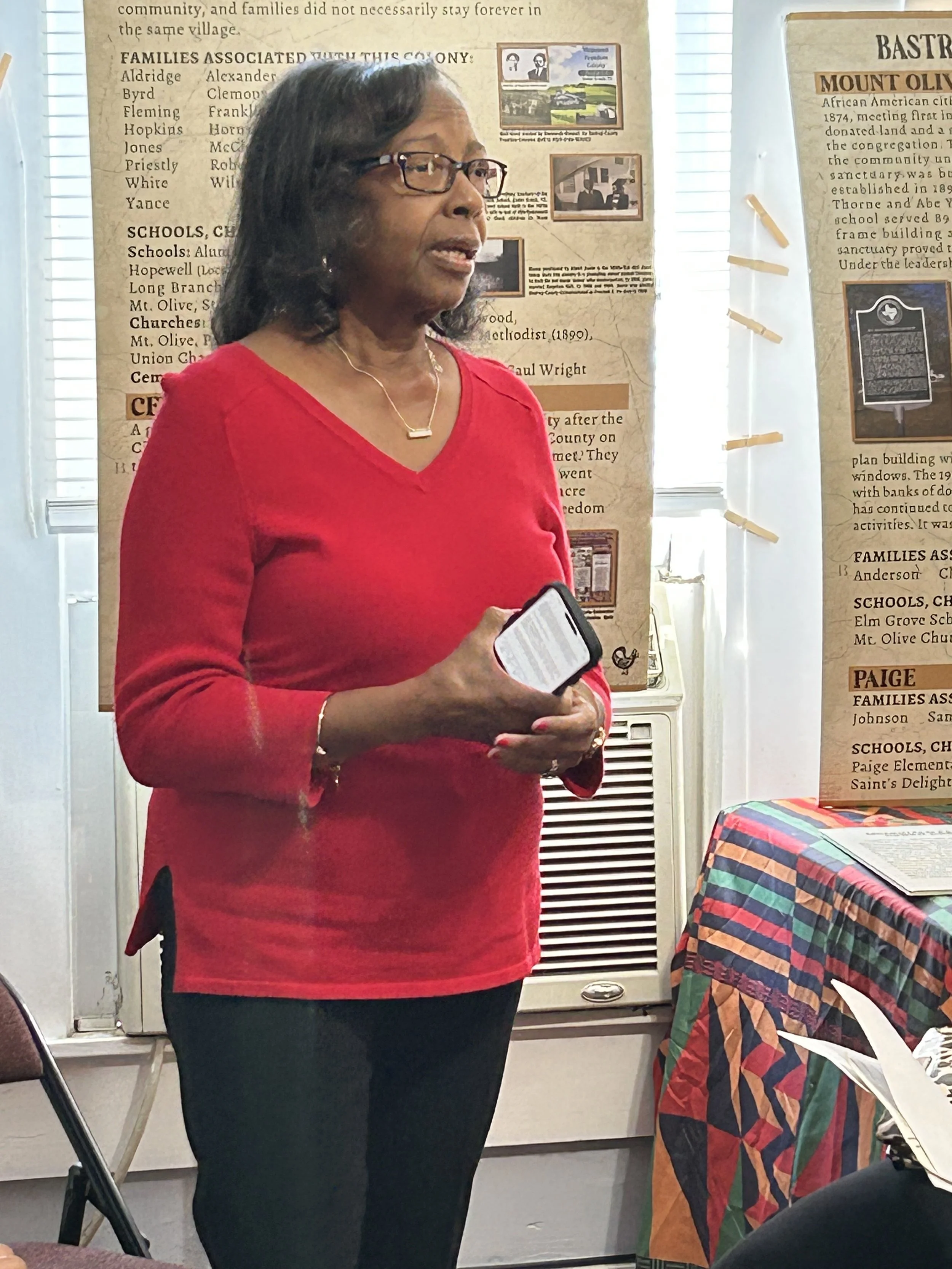
Hosted by program coordinators Jennifer King and Janis Bergman-Carton, the event spotlighted four esteemed speakers whose families helped shape the historic communities of Mt. Olive, Piney, and Cedar Creek:
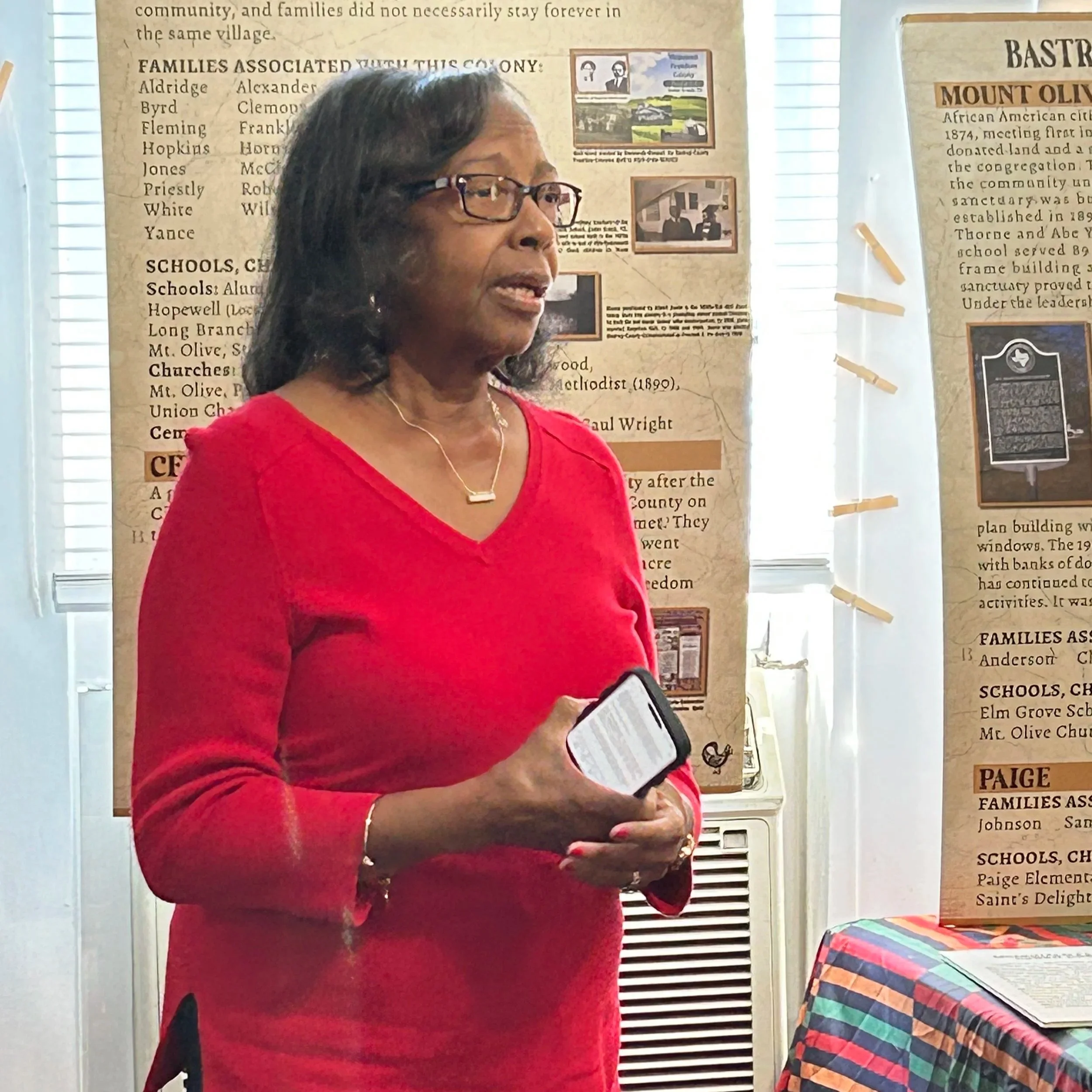
Shirley Thorne Haywood (Mt. Olive)
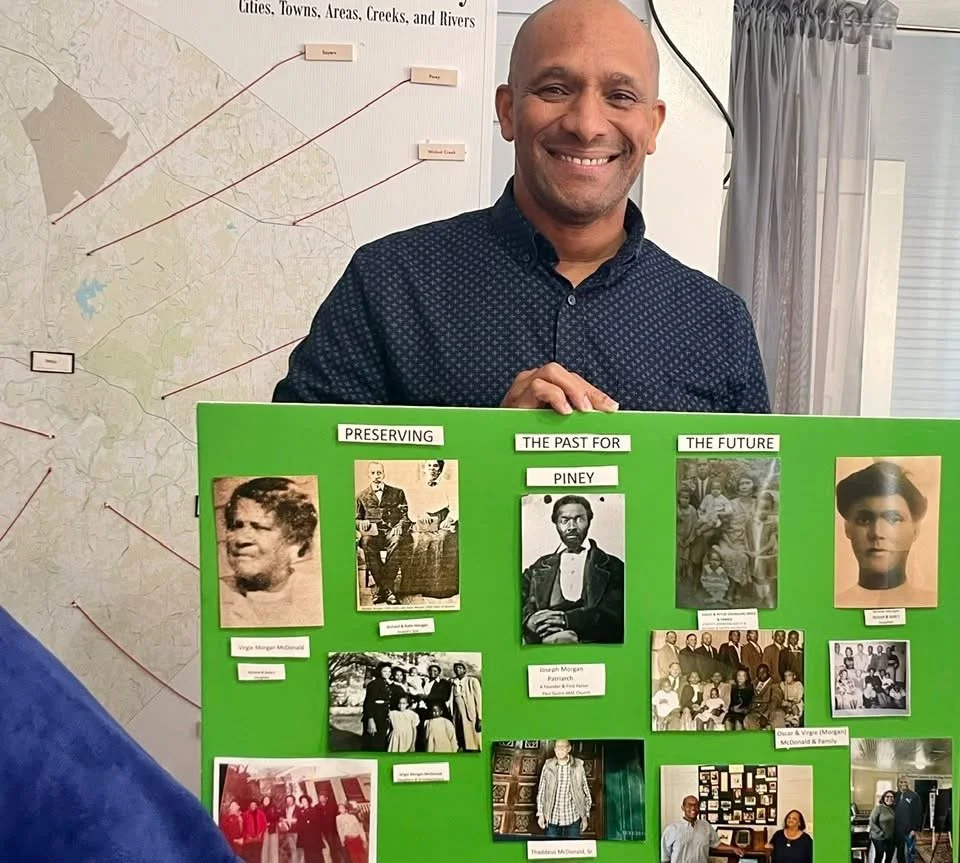
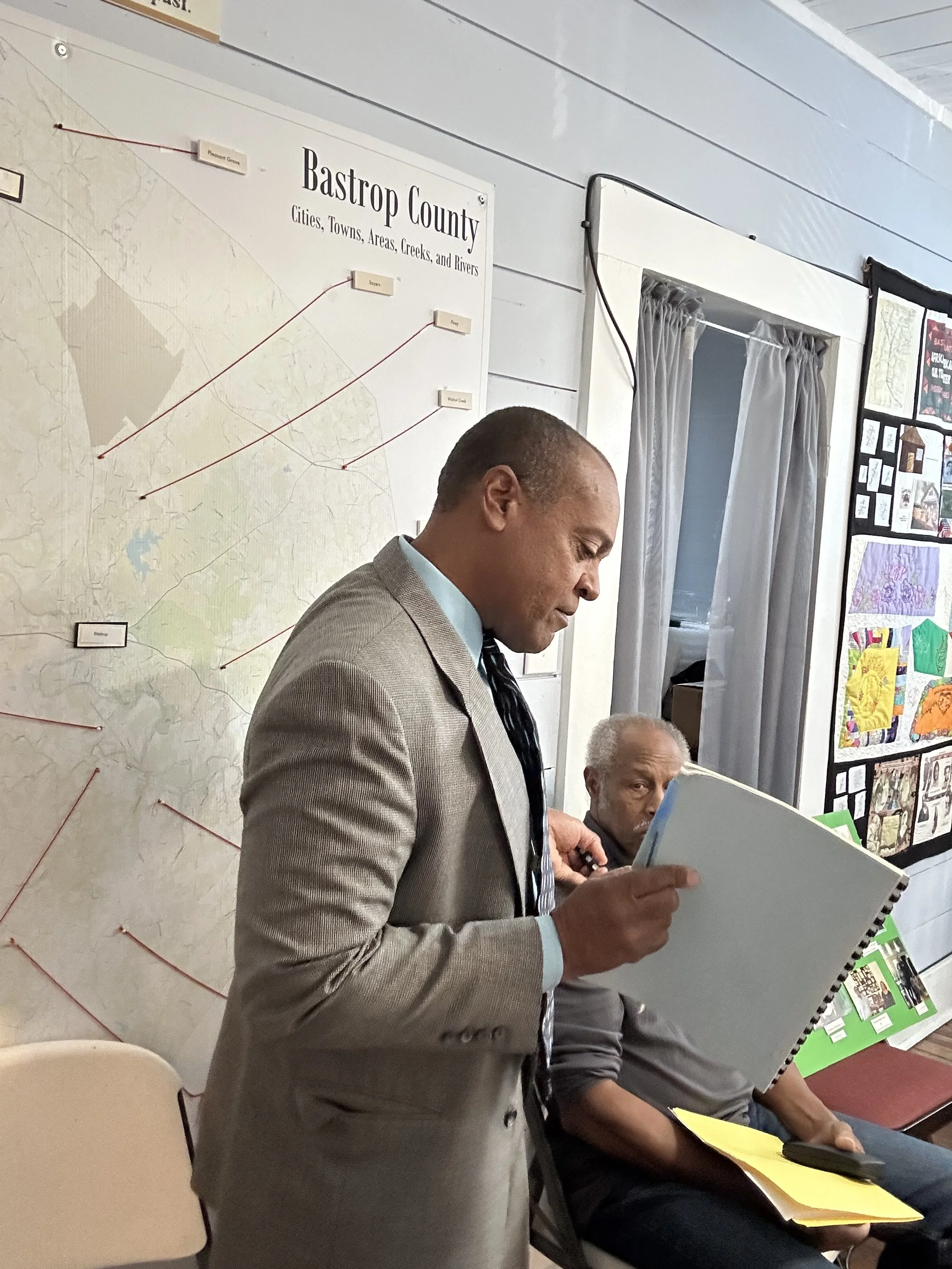
Thaddeus “Mac” McDonald Jr. (Piney)
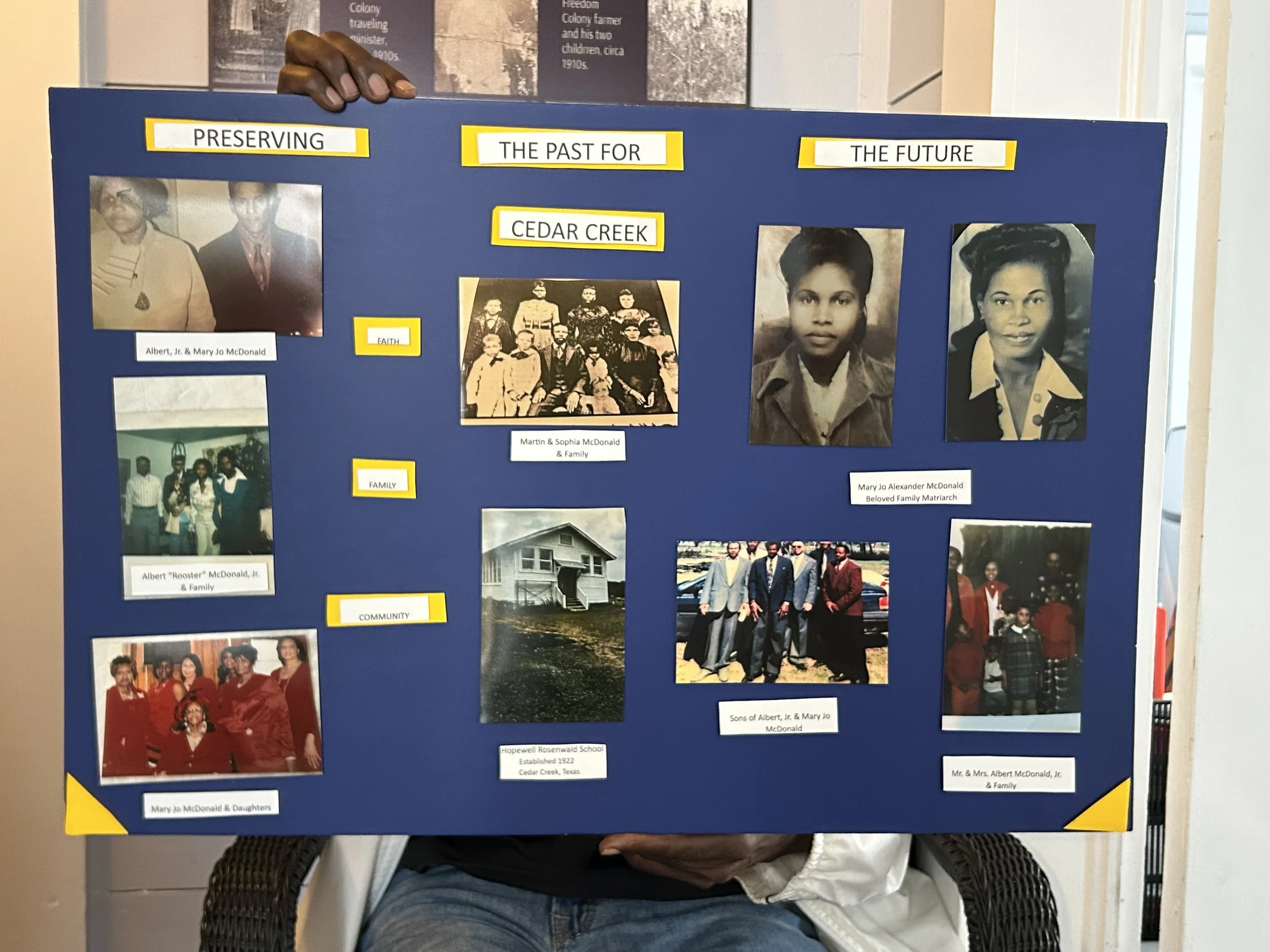
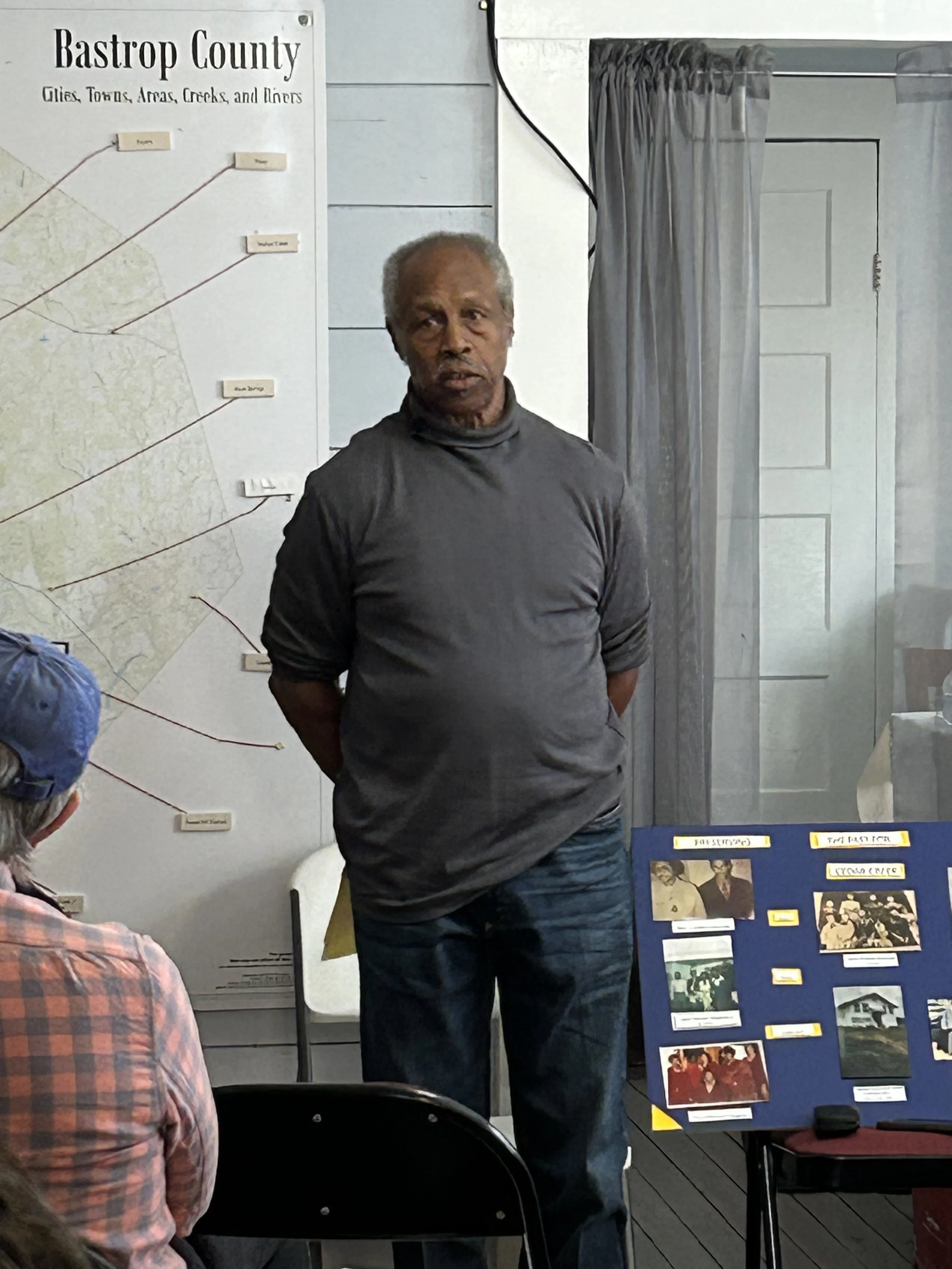
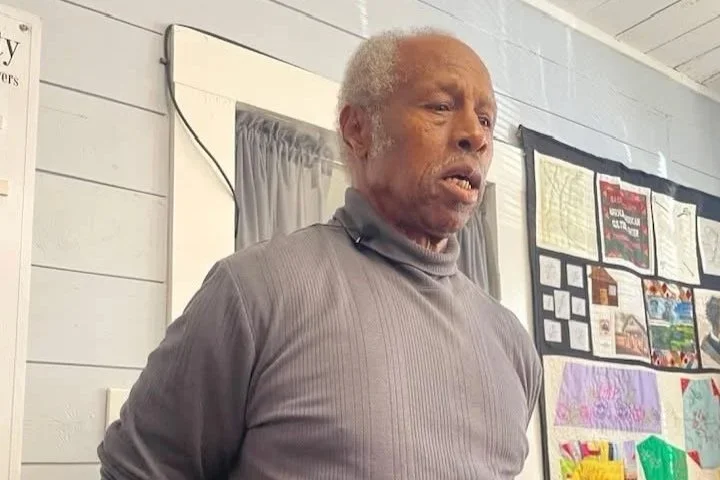
Alvin McDonald (Cedar Creek)
Les Grundy (Cedar Creek/Piney)
Jennifer King—affectionately described as the “ringleader” of the work—opened the afternoon by welcoming the crowd and outlining the purpose of the OPI storytelling series: to preserve oral histories, document ancestral land ownership, and develop a replicable model for Freedom Colonies storytelling that can be used in communities across the nation.
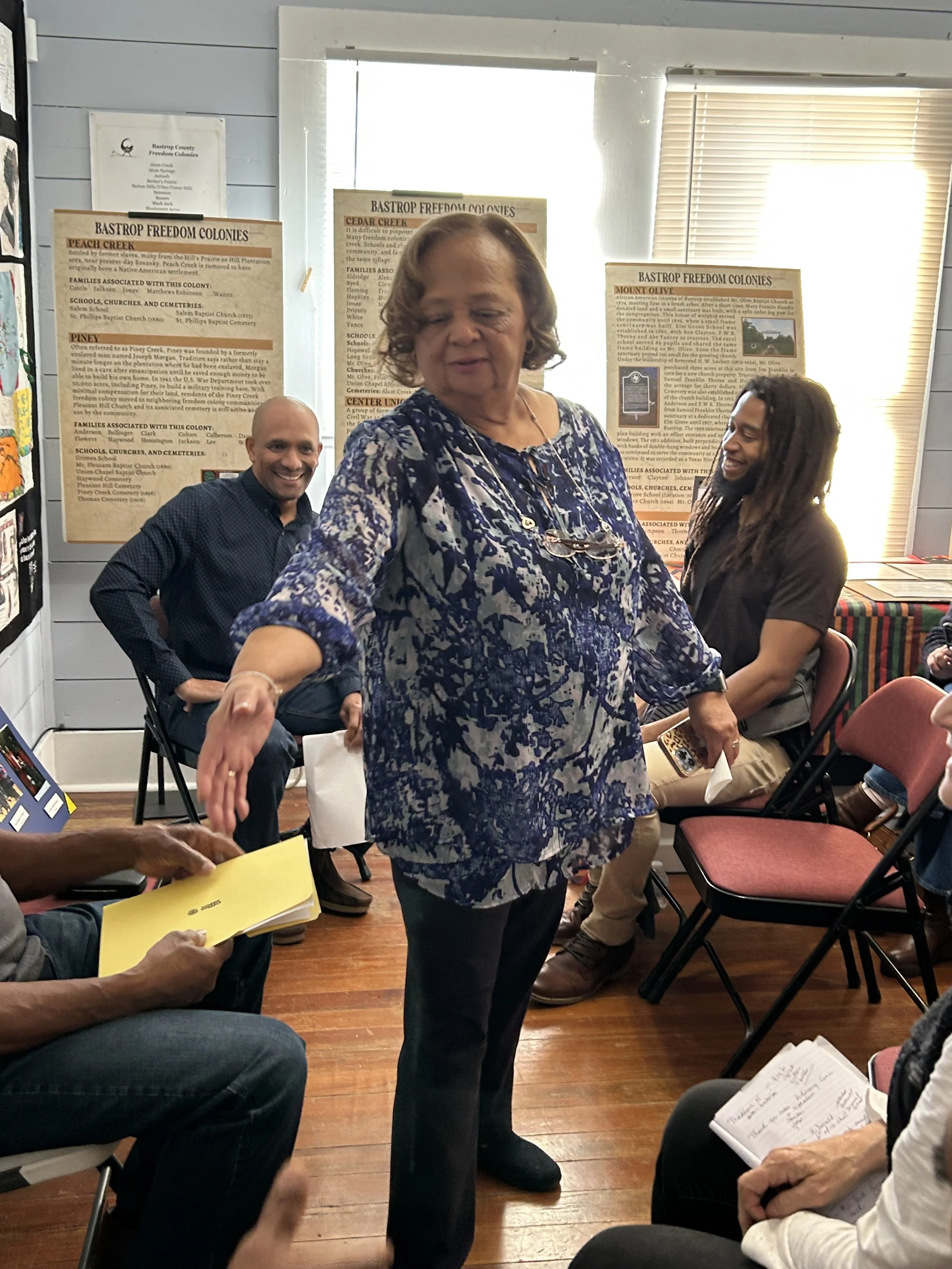
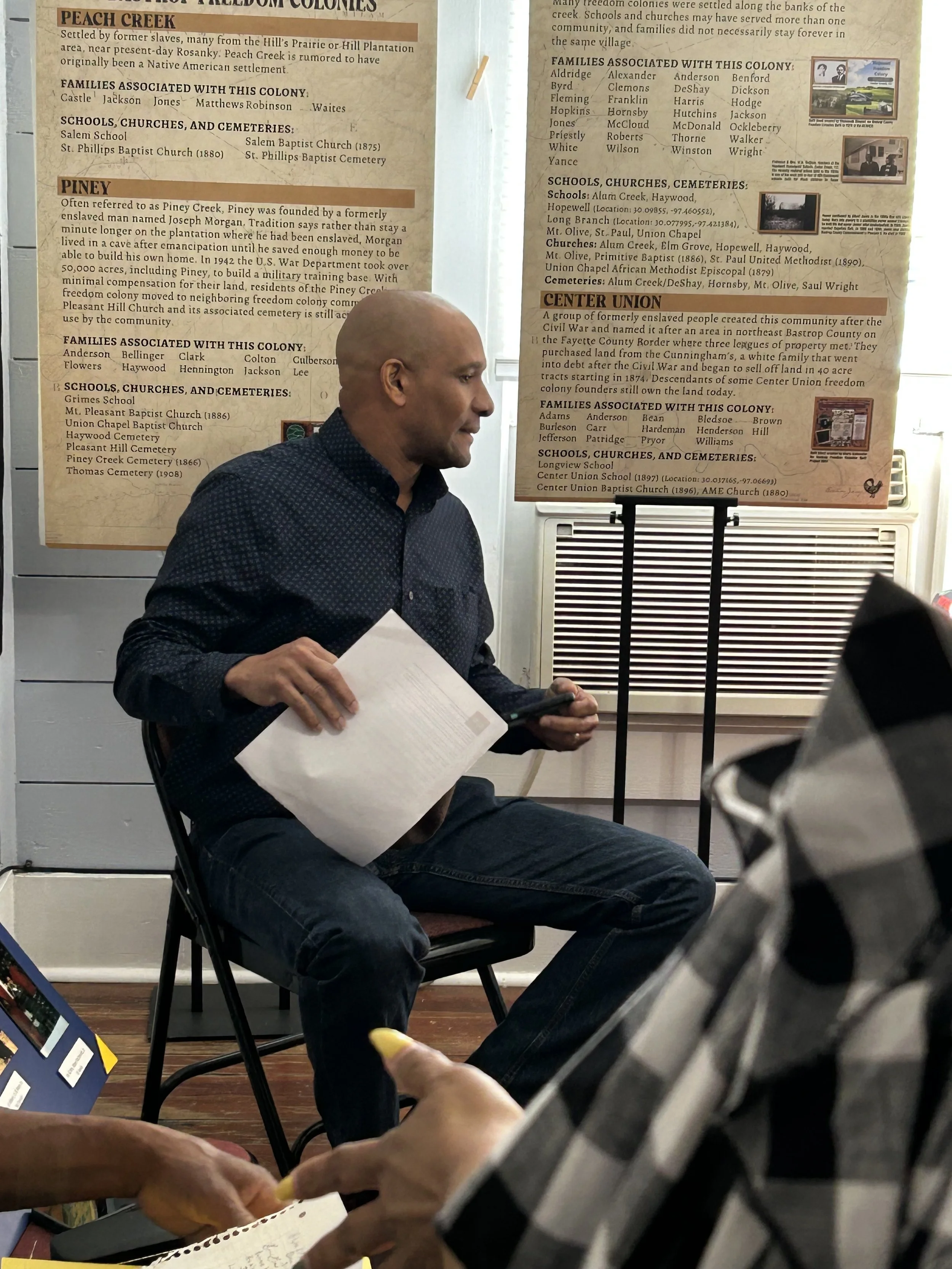
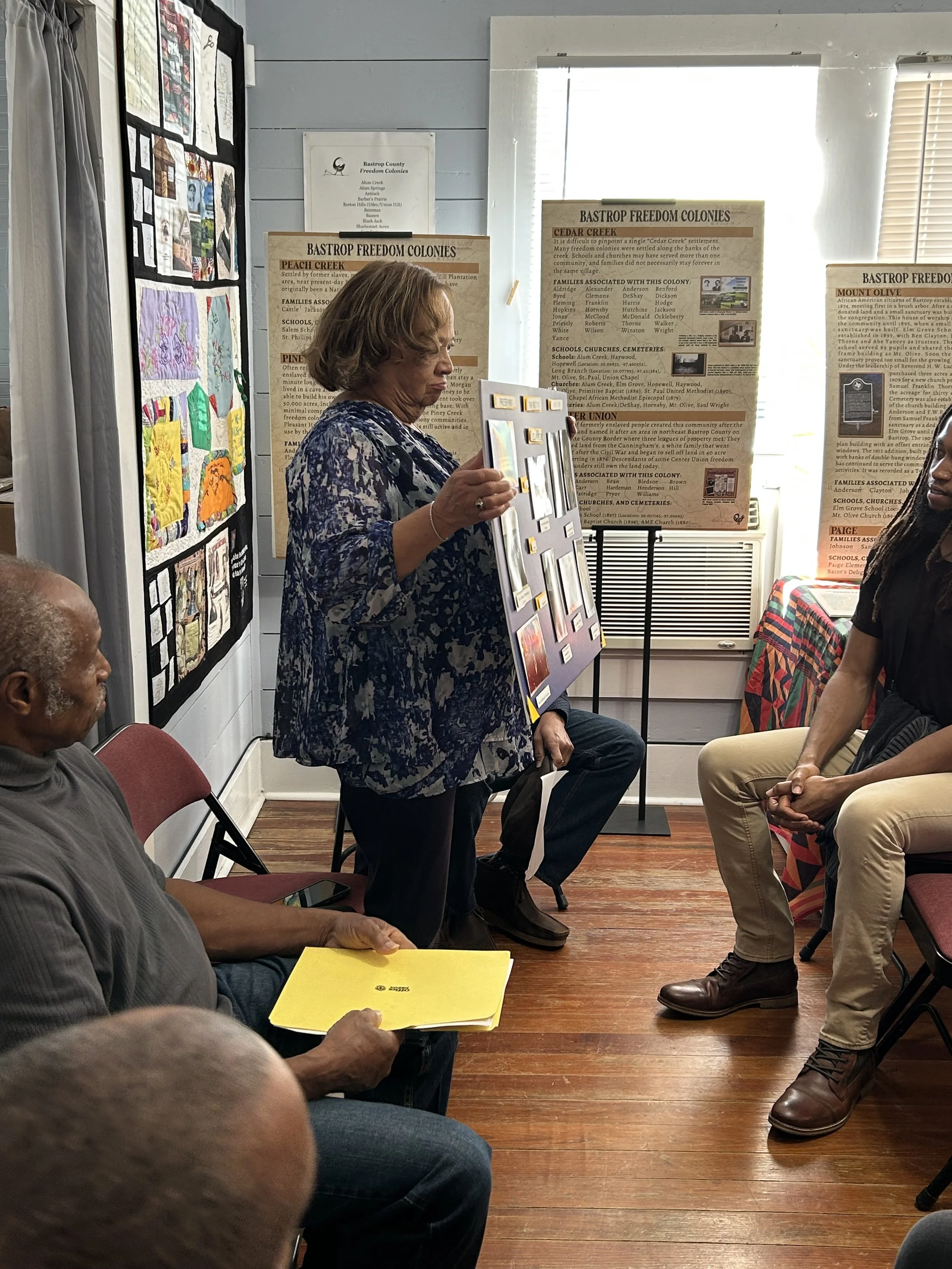
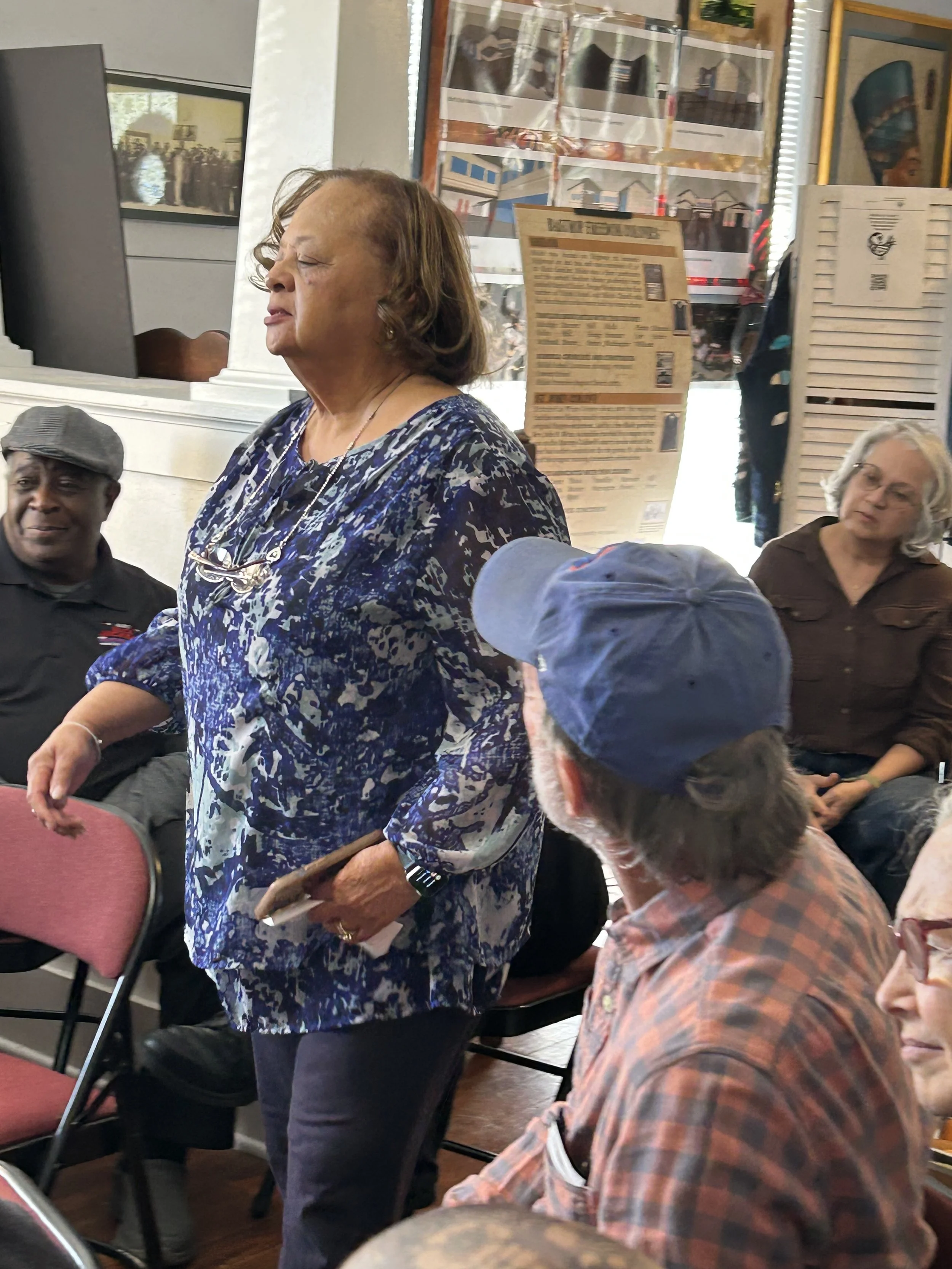
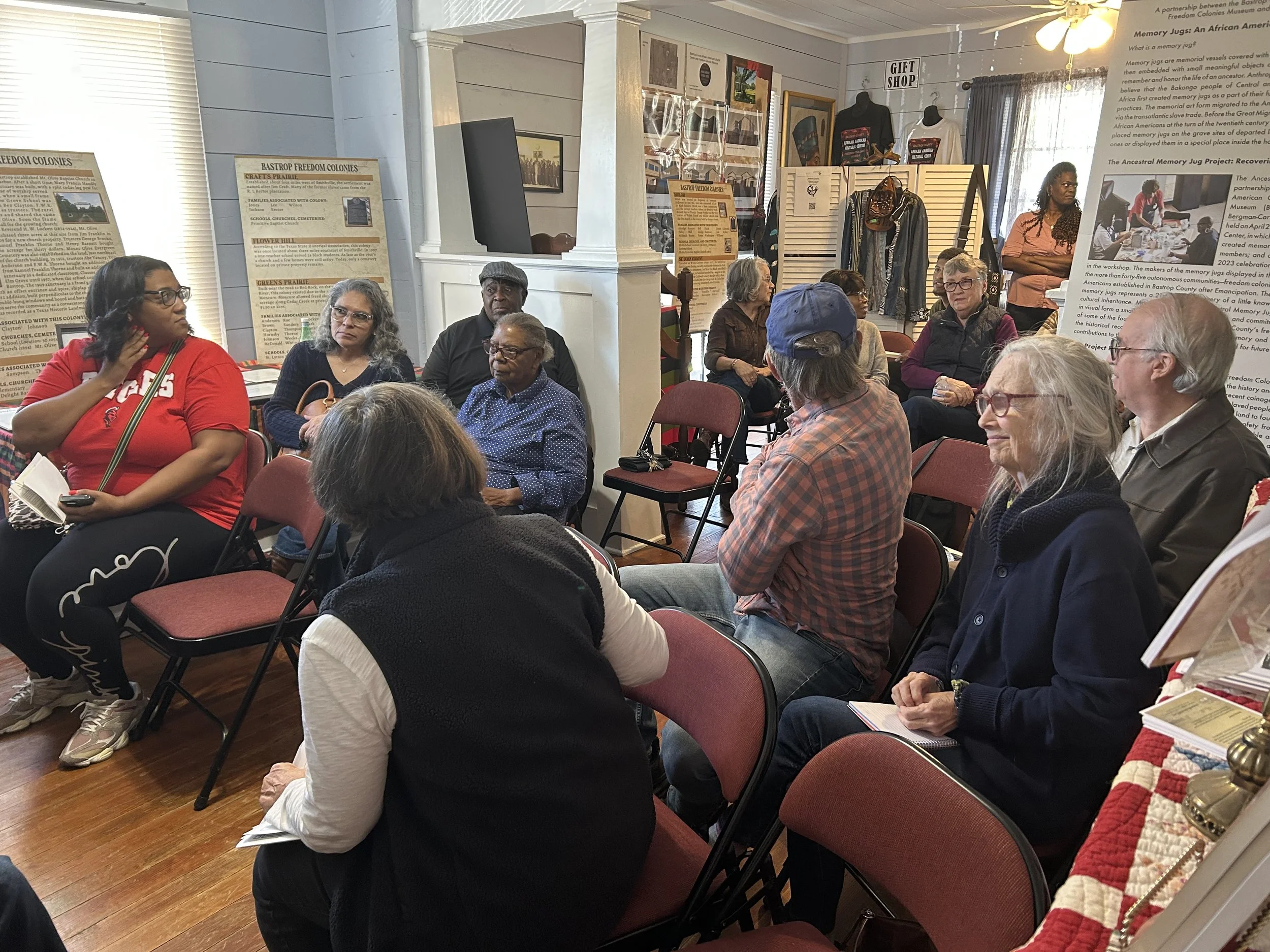
As guests settled in, surrounded by quilts sewn by Freedom Colony descendants and storyboards of Cedar Creek, Piney, and Mt. Olive, the storytellers began sharing the lived history of Black settlement, community-building, landownership, and resilience in Bastrop County.
“A Legacy Rooted in Cedar Creek”: The Story of Shirley Thorne Haywood
Mount Olive
Soft-spoken but grounded in deep family pride, Shirley Thorne Haywood began the program with memories of her upbringing in Cedar Creek’s historic community.
Born in 1954 to Reverend Lawrence “Mac” Thorne Sr. and Catherine Love, Shirley is part of a long lineage tied to Mt. Olive Missionary Baptist Church, where she has been a member for more than 60 years.
Mt. Olive, she reminded the audience, was not just a church—it was a gathering place, a school, and a cultural landmark. She recalled racing her brother to ring the church bell, holiday meals under the oak trees, and the smell of her grandmother’s tea cakes.
Her father, Rev. Thorne, pastored Mt. Olive for 45 years, shaping generations with humility and quiet strength. He also became the first Black pressman hired at the Austin American-Statesman, mentoring other African American workers and opening doors that previously did not exist.
“My father taught patience, hard work, and to always keep the history alive,” she said. “His legacy is still guiding us.”
Her granddaughter later expanded on Shirley’s memories, recalling the Mt. Olive school that once operated beside the church, record books from 1902–03, and the dedicated teachers who nurtured rural Black children long before integration.
“Freedom Was Safety”: The Piney Creek Story of Thaddeus McDonald Jr.
Piney
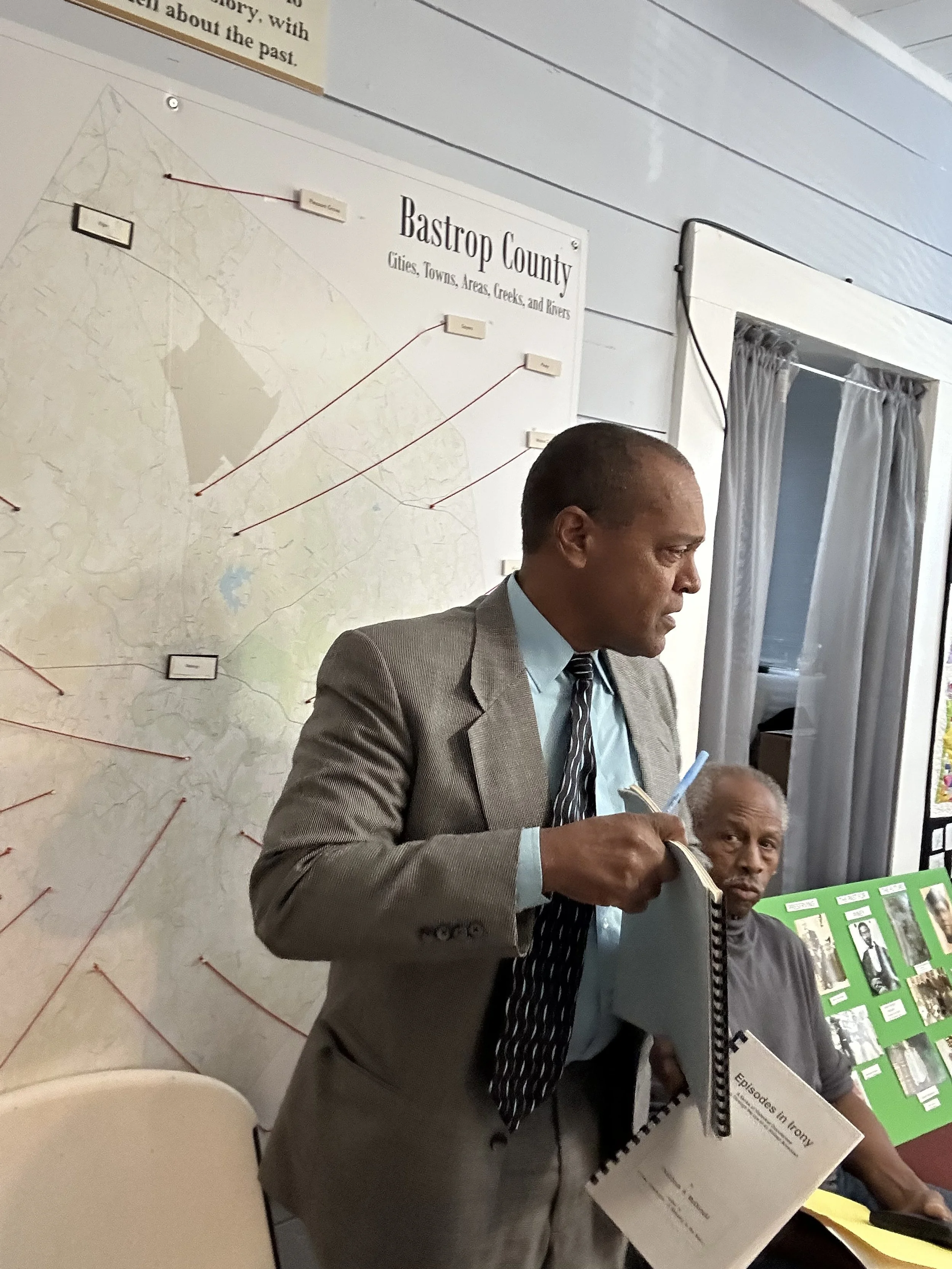
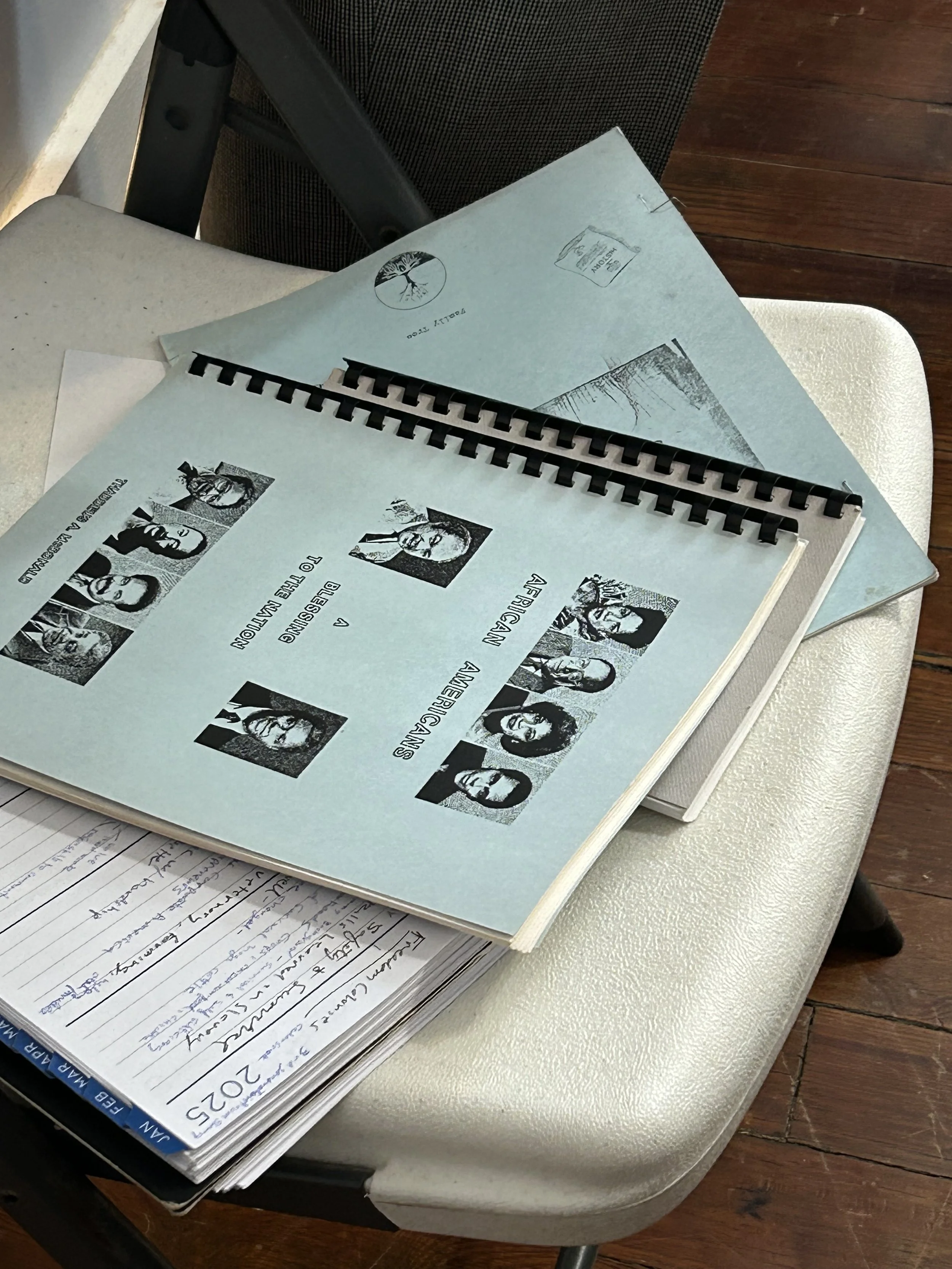
Stepping forward with humor and reverence, Thaddeus McDonald Jr. spoke on behalf of his late father, historian and author Thaddeus McDonald Sr., whose works Episodes in Irony and African Americans: A Blessing to the Nation remain foundational texts on Black history in Bastrop County.
Though McDonald himself did not grow up in a Freedom Colony, he is the grandson and great-grandson of the Piney Creek community—descendants of enslaved people including Joseph Morgan and the McDonald line.
He explained that Freedom Colonies thrived because they offered safety, survival, and self-sufficiency in a world where freedmen had few legal protections.
“These communities grew because our ancestors knew how to work, how to fix things, how to grow food, and how to survive without anyone helping them,” he said. “And they passed those skills down.”
He emphasized the importance of land stewardship—a recurring theme among all the speakers:
“If you have land, keep it. Once it’s gone, you will never get it back. The land our ancestors bought with sweat and sacrifice is the foundation we build on today.”
The audience nodded as Mac described today’s soaring grocery costs with humor:
“Grow your own produce. It’s better than the store—and cheaper!”
“Raised by the Community”: Alvin McDonald on Cedar Creek’s Strength
Cedar Creek
“We didn’t have much, but we had a whole lot of family.”
When Alvin McDonald began speaking, his quiet wisdom settled over the room. Born in 1949, one of thirteen children, Alvin grew up in Cedar Creek on land his great-grandfather purchased after emancipation.
His childhood memories revealed a world where:
everyone farmed,
everyone worked,
and everyone helped raise every child.
“If you did wrong, your neighbor corrected you, and then your parents corrected you again,” he said with a laugh.
He described the hardships of farming—when lack of rain could wipe out an entire crop—and the improvisation required to survive before modern tools were available. Yet he also painted a picture of abundant love:
“We didn’t have much, but we had a whole lot of family.”
Alan spoke of his father’s work ethic, his mother’s home-cooked meals, and long weekends when all siblings returned home just to be near their parents.
He also shared memories of the Hopewell School, a two-room schoolhouse with two teachers who taught grades 1–7—and who “cheated for the girls” during softball games.
His closing message echoed that of the other storytellers:
“Hard work keeps you healthy. And family—family is everything.”
“Truth Will Always Rise”: Les Grundy’s Journey Back to Bastrop Roots
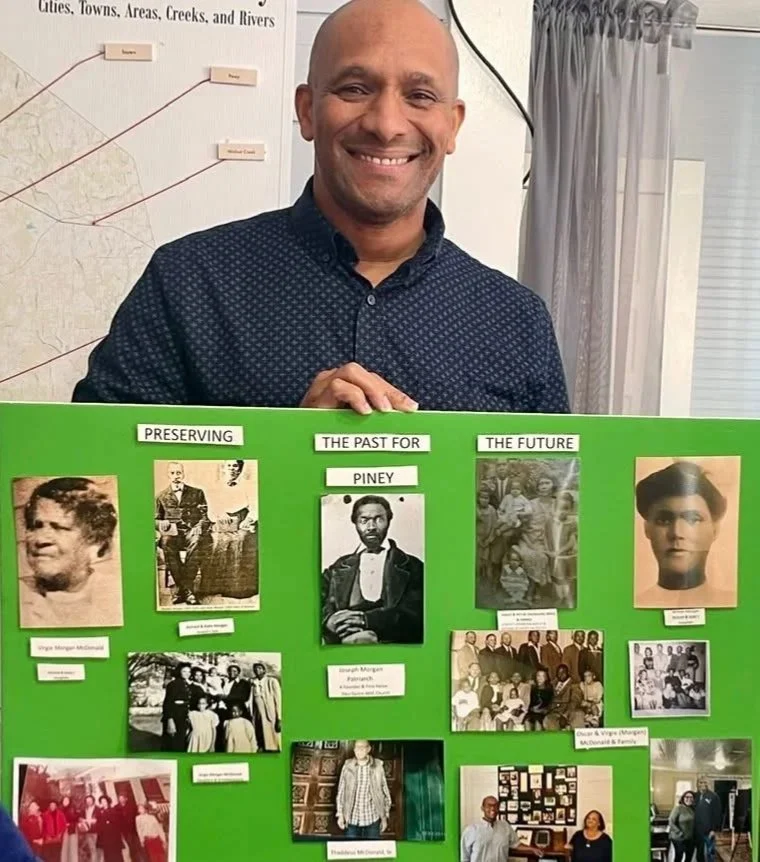
Piney/Cedar Creek
“She lived a unique life—enslaved, but allowed to come and go freely. Reading her story taught me that every enslaved person’s experience was different, and every story matters.”
The final speaker, Les Grundy, brought a powerful perspective as someone born and raised in Compton, California—far from the rural land of his ancestors.
He recalled the moment a family friend told him, “You’re going back to your roots,” when he moved from Los Angeles to Texas. Only then did he learn that his grandmother was born in Bastrop.
His journey into genealogy began with meeting relative Belinda McDonald Davis through Ancestry.com and discovering photographs—some of relatives he had never known existed—left behind in his grandmother’s home after her passing.
Les’s lineage connects deeply to Piney and Cedar Creek through the Morgan, Bryce, Russell, and Coulter families. One ancestor, Amanda Ayers Bryce, was interviewed in the federal slave narratives—a rare and invaluable historical record.
Les described walking Main Street in Bastrop and imagining her footsteps:
“She lived a unique life—enslaved, but allowed to come and go freely. Reading her story taught me that every enslaved person’s experience was different, and every story matters.”
His research also uncovered family members who migrated to Los Angeles during the early Great Migration, including bootlegger David Bryce, whose escape from Texas during Prohibition ultimately relocated an entire family branch.
Les spoke passionately about why this work matters:
“Truth will always reveal itself. And when you know the truth of your history, you stand differently—you love differently—you live differently.”
He now shares his family’s stories openly so younger generations will never feel the absence he felt when elders passed before he could ask questions.
A Community Bound by Memory, Land, and Love
As the program concluded, the room felt fuller—not just with people, but with connection. The storytellers’ memories, laughter, truths, and wisdom had breathed life into the quilts, maps, and photographs surrounding them.
Board members, museum founders, and community leaders acknowledged the growing momentum of the Freedom Colonies Museum and the importance of these storytelling gatherings.
Attendees were invited to:
a January community feast & resource fair,
a February mosaic workshop, and
ongoing opportunities to join the Museum as members and volunteers.
Before leaving, guests mingled, shared their own family names, and captured photos with the exhibit walls that held pieces of their past.
If one message summed up the day, it was spoken in different ways by all four storytellers:
Family is foundation.
Land is legacy.
And telling the truth of where we come from is a gift to every generation still to come.