

In the Studio with Stanton Pittman: Where Art, Memory, and Meaning Take Shape
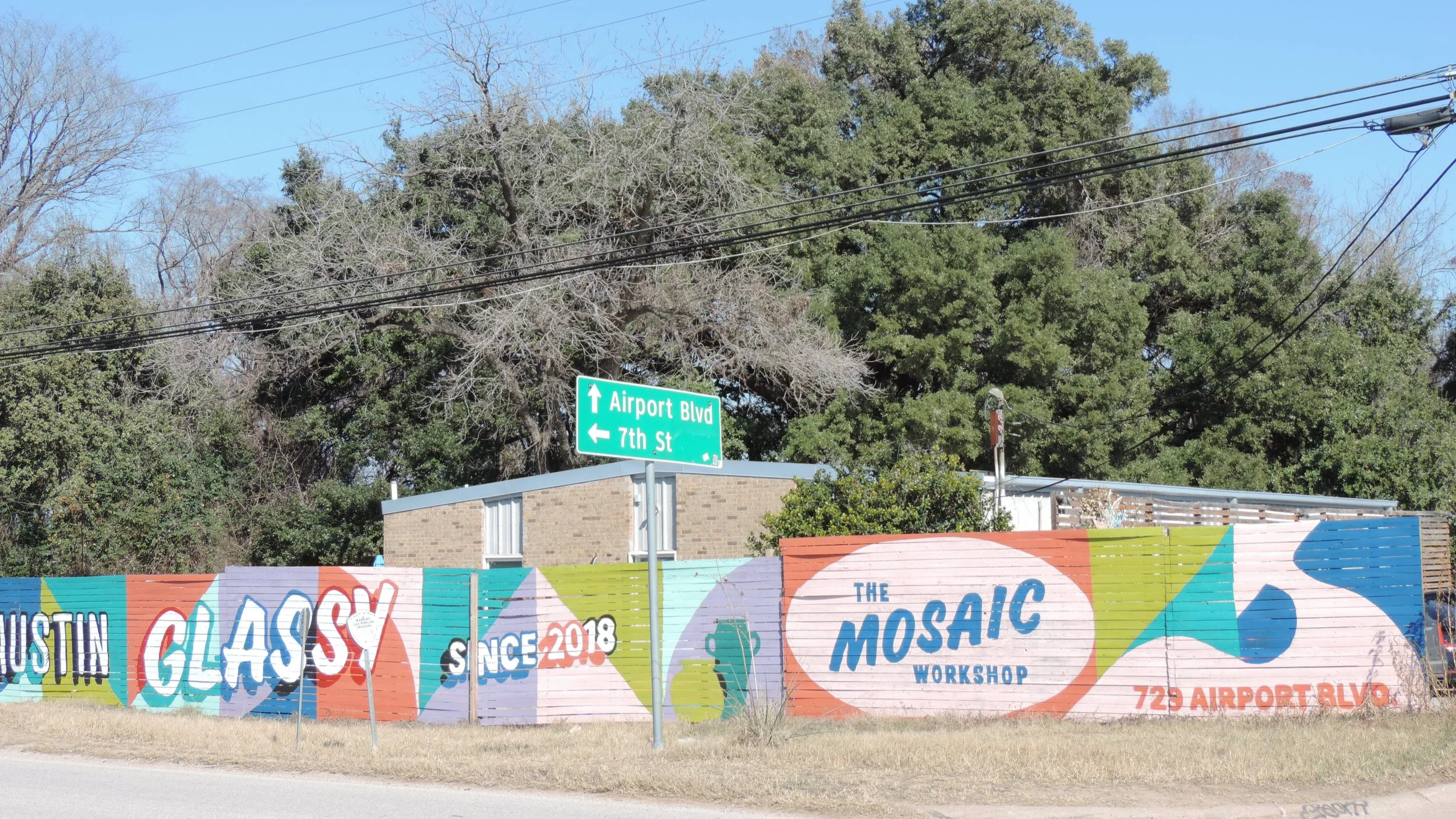
A roadside invitation into creativity—Austin Mosaic Workshop’s colorful entrance at 729 Airport Blvd welcomes artists, learners, and storytellers alike, reminding passersby that art lives in everyday places and begins the moment you choose to step inside.
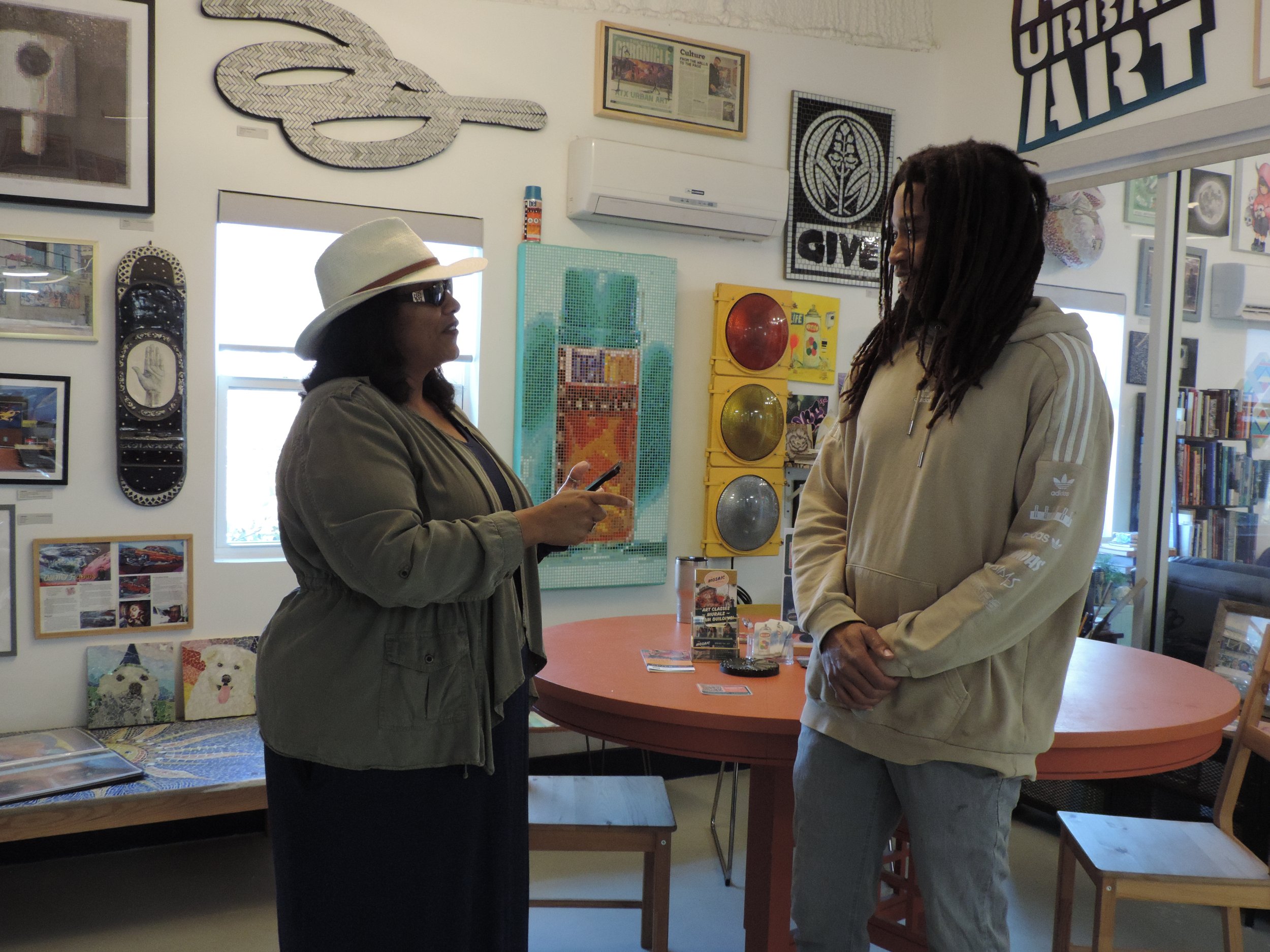
A Studio That Invites You In
Tucked away in a quiet stretch of Austin—so hidden, Pittman jokes, that people often get lost trying to find it—the Mosaic Workshop feels less like a business and more like a working sanctuary. On the morning of my visit, the space was already alive: trays of stained glass and ceramic pieces spread across tables, the soft clink of materials being sorted, and the hum of an intro class just getting started.
This was my first extended visit with Stanton Pittman, mosaic artist and one of the creative forces behind the upcoming Freedom Colonies mosaic workshop in Bastrop. What began as a studio tour quickly unfolded into something deeper—a conversation about art as preservation, storytelling, healing, and responsibility.
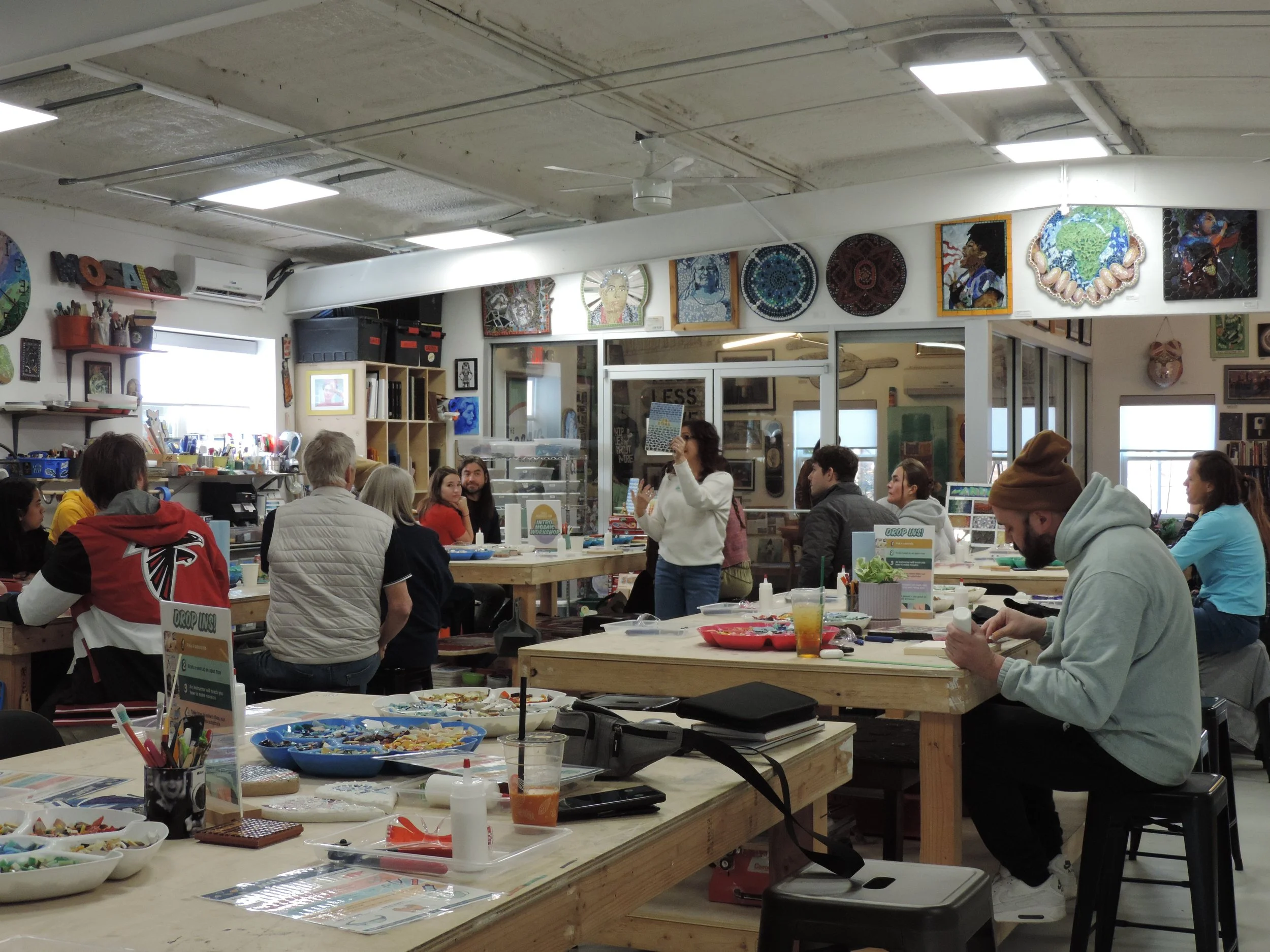
An instructor leads the room through safety guidelines and creative instruction as participants prepare to design personal mosaic pieces—some arriving with a clear vision, others taking time to explore the space, materials, and process before creating works meant to be kept, shared, or gifted.
Walking into the Mosaic Workshop, it’s immediately clear why mosaics demand space. Glass, ceramic, stone, shells, mirrors—materials in every texture and color imaginable line the walls and fill trays. Pittman explains that this is part of what makes mosaic art both powerful and inaccessible to many: it requires tools, room to make a mess, and a willingness to work slowly.
“Mosaics aren’t fast,” he explains. “That’s part of the point.”
As we sat among participants in the introductory class that day, we learned the basics—how to choose a substrate, cut glass safely, and think about spacing so grout can later bind the piece together. Pittman moved easily between instruction and encouragement, offering guidance without hovering. Mistakes, he reminded us, are part of the process.
Once decisions about color and material were made, the work became quieter—almost meditative. Pittman smiled when I noticed it.
“That’s when it turns therapeutic,” he said. “The hardest part is choosing. After that, it’s plug and place.”
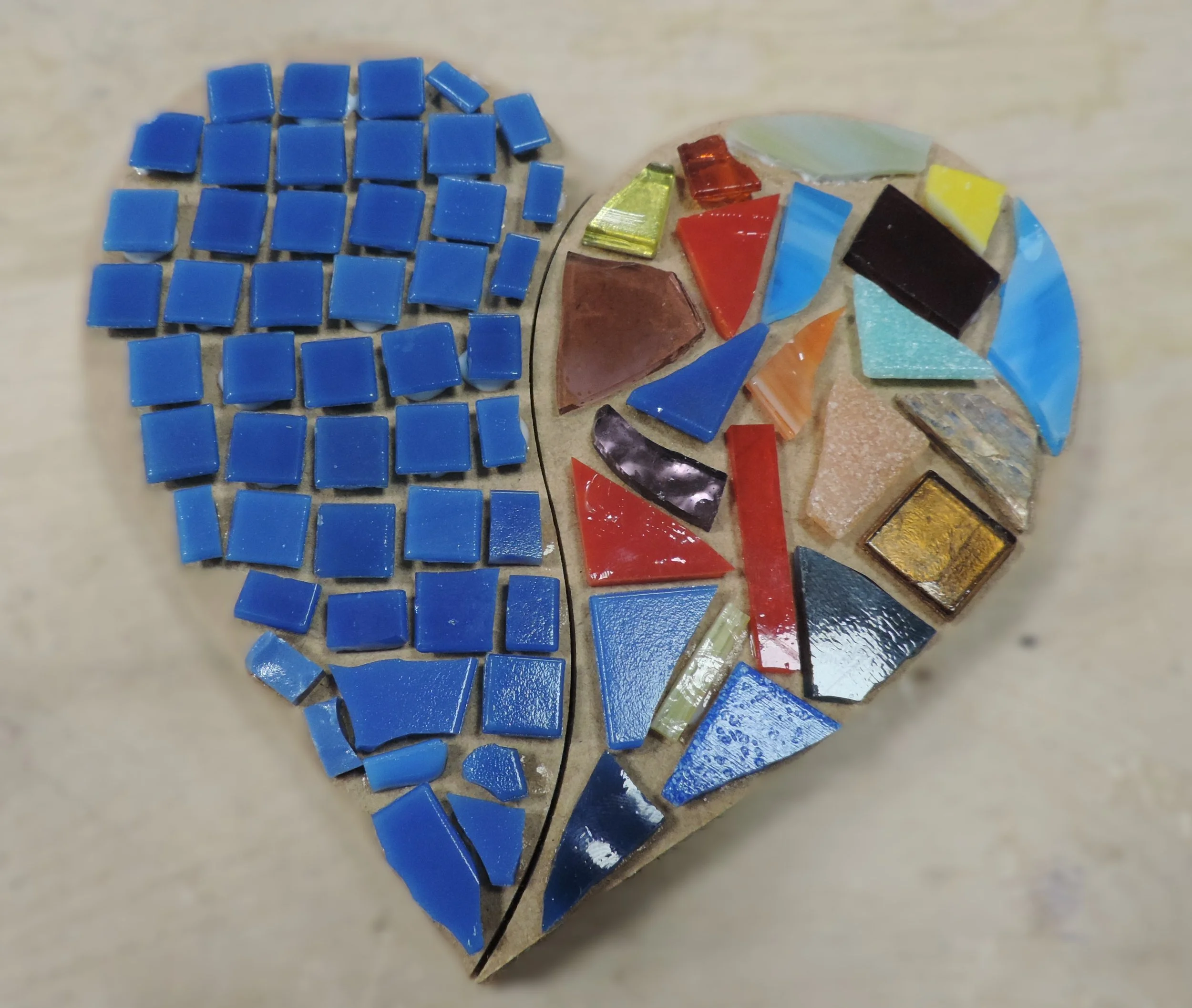
Two halves, one heart
This mosaic—created together—reflects our distinct rhythms and styles: structure beside spontaneity, calm blues meeting bold color. Separate in design yet united in form, it holds space for both individuality and connection, a shared expression of who we are—together and on our own.
By LaMonica & Lueella Shelton
Art That Lasts—and Why That Matters
As we talked, Pittman shared why mosaics resonate so deeply with him, especially in the context of history work. Archaeologists are still unearthing mosaics thousands of years old. Books decay. Buildings collapse. But mosaics endure.
That sense of permanence is exactly why he was drawn to the Freedom Colonies project. The panels he’s preparing—some of which were visible in the studio—depict Bastrop landmarks, buildings, and spaces that carry layered meaning. These aren’t abstract designs. They are memory made tangible.
“Stories die when people stop telling them,” Pittman reflected. “That’s the second death.”
It’s a quote he carries with him—borrowed from a song, but rooted in truth. The first death is burial. The second is silence.
Perspective, Healing, and Seeing Differently
The studio conversation drifted—naturally—into memory, family, and perspective. Pittman spoke thoughtfully about how art allows space for multiple truths to coexist. The same person, the same place, the same story can be seen entirely differently depending on who’s looking.
“That doesn’t mean one version is wrong,” he said. “It means we’re all working from different vantage points.”
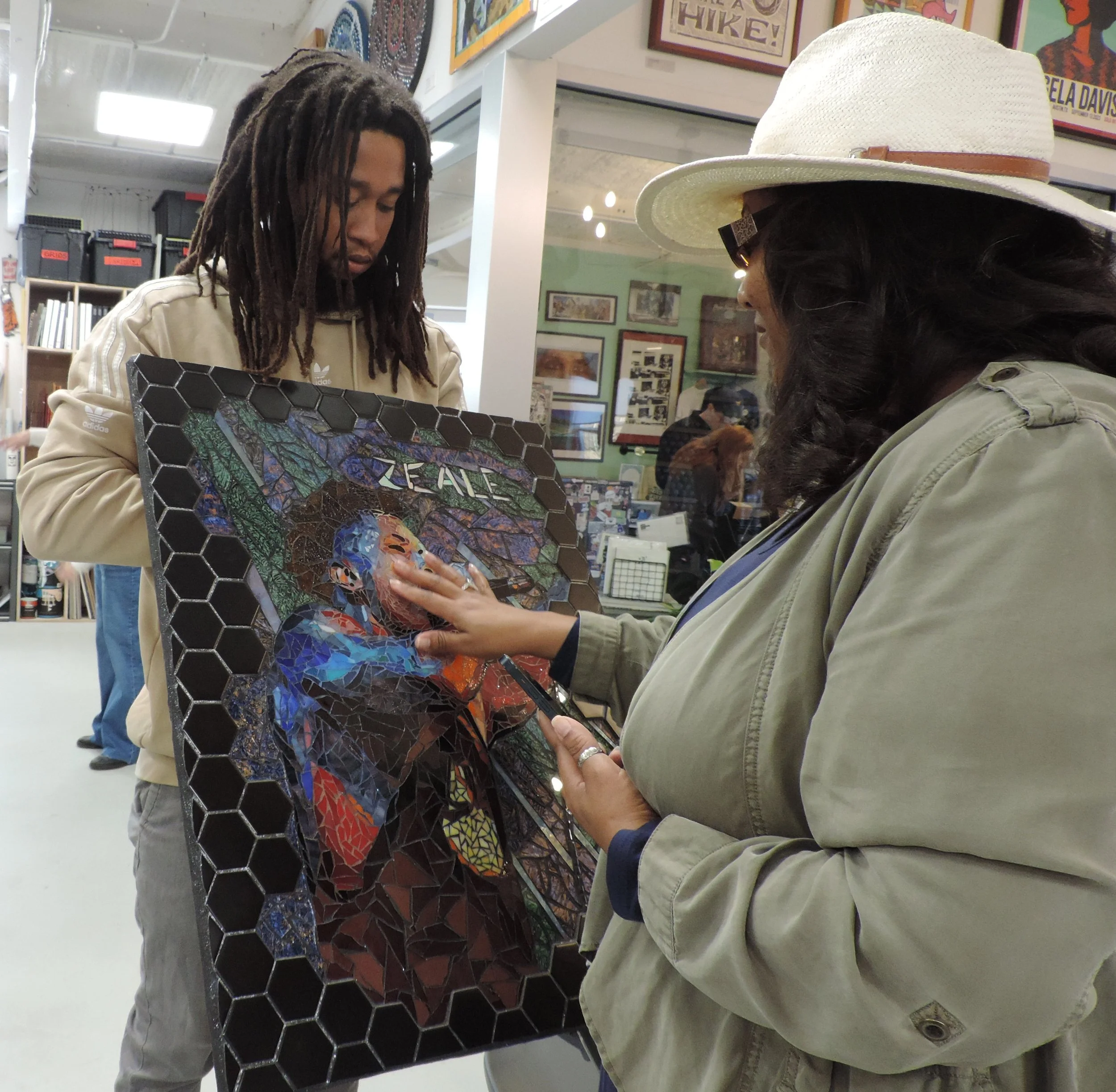
ZEALE by Stanton Pittman
Pitman explains how the mosaic comes to life, inviting touch as part of the learning process. He holds the work securely, the textures reveal their story, turning instruction into a shared, tactile experience.
It’s a philosophy that shows up clearly in his work. One piece—a globe held by hands in varying skin tones—represents unity and shared responsibility. Africa, he notes pointedly, is rendered at its correct scale. Another piece features a medium known as andamento, referring to the flow and movement that bring the work to life. The technique reflects the varied ways materials are laid—evoking patterns of hair, brickwork, and walls—to capture distinct textures and aesthetics.
Some of his mosaics take months to complete. Others evolve as he works, changing direction mid-process. Pittman is comfortable with that uncertainty. He plans carefully, but he also leaves room for discovery.
Teaching, Community, and the Work Ahead
Beyond the studio, Pittman is clear-eyed about the role of community engagement. Awareness, he says, has to come first—especially for art forms that aren’t widely accessible or familiar. That’s why workshops matter. Why pop-up events matter. Why bringing art directly into community spaces matters.
The February 7 workshop in Bastrop will do just that. High school students will work alongside community members on large mosaic panels, with Pittman guiding the process. One student’s clean, architectural style will be matched to structured panels; another’s abstract instincts will shape a more expressive piece. Everyone else will be invited in—to place tiles, add texture, and literally leave their mark.
The studio is where the work is happening. Where stories are being shaped by hand. Where strangers become collaborators. Where history is not just talked about, but built—piece by piece.
As I left the Mosaic Workshop, one thing was clear: this is not just art for display. It’s art with intention. Art that asks something of you. Art that insists memory should not be silent—and that if we want stories to last, we have to place them somewhere solid enough to endure.
