

Hopewell Honors Elder C. E. Shelton With Celebration Musical Marking Nearly Seven Years of Pastoral Service
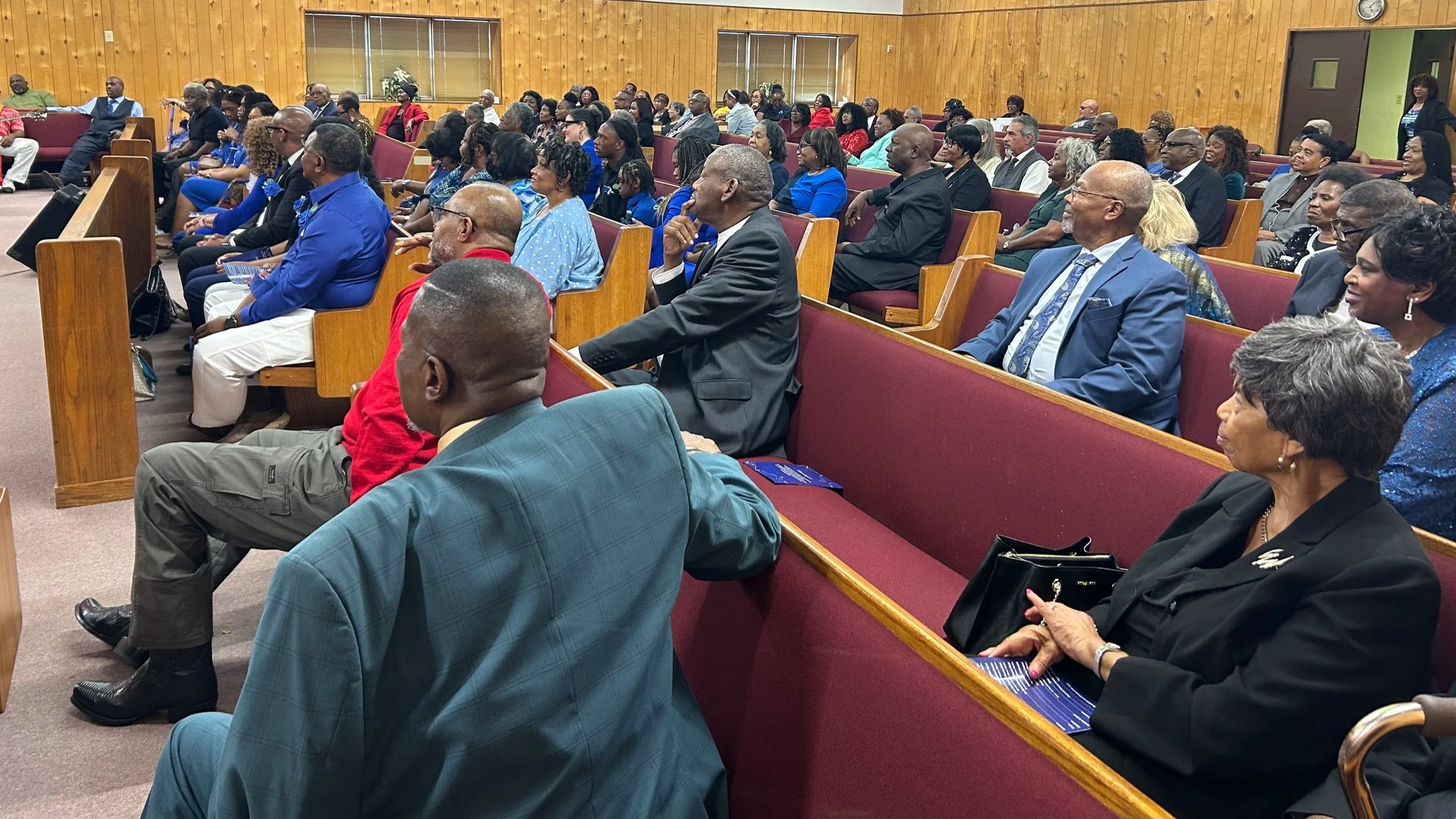
The sanctuary was filled with representative members and honored guests from approximately eight congregations across the county and beyond, a testament to the far-reaching impact of Elder C. E. Shelton’s ministry and the deep collective respect for his years of faithful service.
CEDAR CREEK, Texas — Dec. 27, 2025 — Hopewell Primitive Baptist Church filled with praise, gratitude, and testimony on the final Saturday of 2025 as the congregation honored the retirement of Elder C. E. Shelton during a heartfelt Celebration Musical featuring tributes, soloists, choirs, and a packed worship program designed to honor both time and legacy.
The celebration was hosted at the Providence District Association building—an organizing body established in 1872 in Cedar Creek, with the program guided by the Historic Hopewell Primitive Baptist Church—and led through the evening with steady warmth by Deacon Roderick Emanuel, serving as master of ceremony.
From the start, the tone of the service was clear: this was not merely a program—it was a thank-you offering. Family members and honorees were seated near the front as the sanctuary welcomed a gathering of pastors, district leaders, visiting churches, and longtime community supporters.
A Processional of Honor
One of the evening’s most moving moments came early when Elder Shelton and First Lady Ella Shelton were formally escorted into the worship center by Deacon Elroy Williams and Mother Delois Baker, a public gesture of honor that drew visible emotion and deep respect across the room.
The opening devotion carried the congregation into worship through song and scripture, including a reading from Psalm 34—“I will bless the Lord at all times…”—followed by prayer that named the evening for what it was: a celebration of service, endurance, and love.
“A Small Congregation, But a Congregation With Love”
Throughout the night, a consistent theme emerged—Hopewell may be modest in size, but it is rich in devotion. In words that captured the spirit of the church he served, Elder Shelton described Hopewell as “a small congregation but a congregation with love.” The line landed like a summary of nearly seven years: steady shepherding, quiet labor, and faith made visible through community care.
Music as Ministry
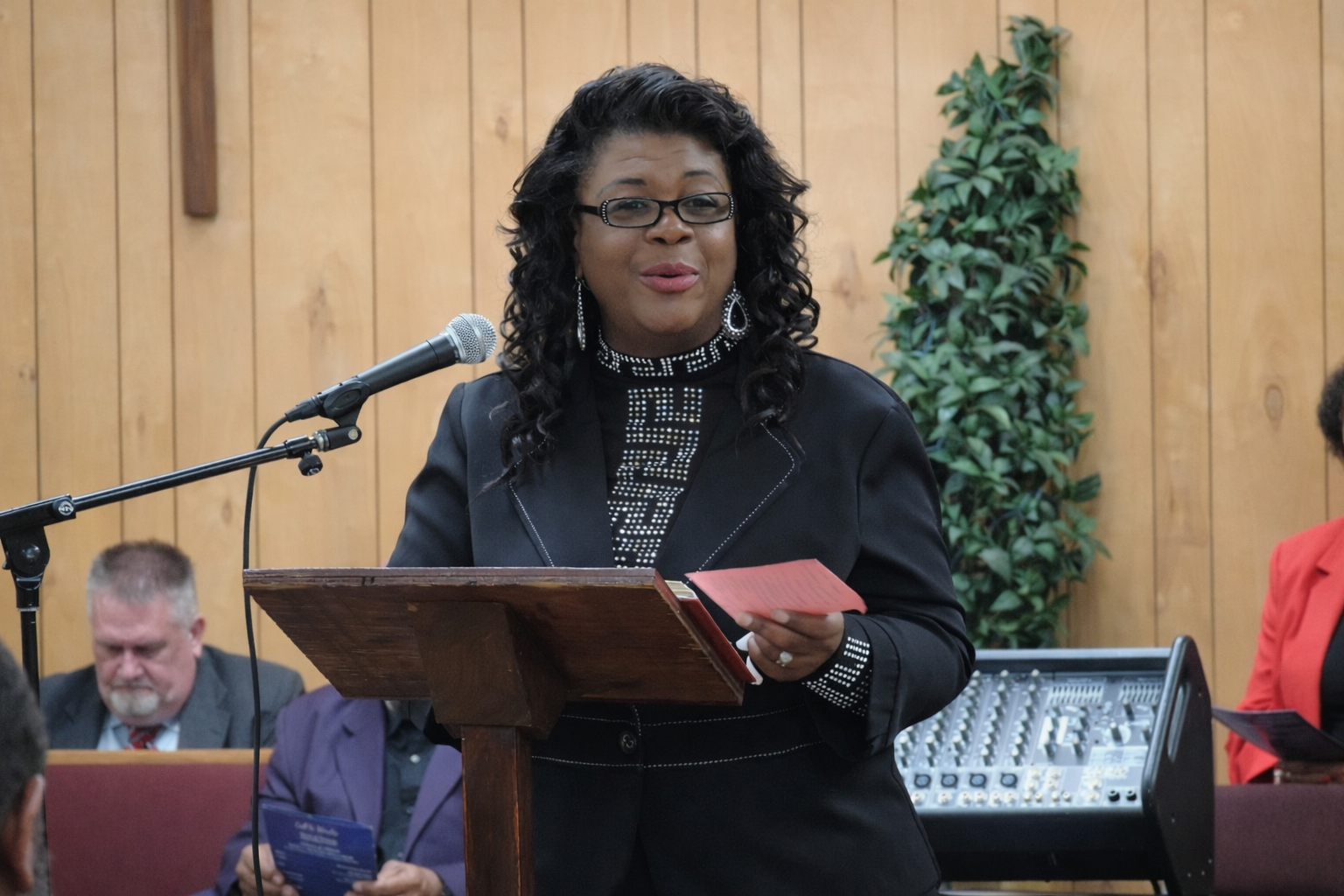
The Celebration Musical included more than ten musical selections, with each visiting choir asked to render one selection each out of respect for time, a protocol repeated throughout the evening to keep the program moving while still making room for every church that came to honor the pastor.
Among the featured moments:
The evening opened with a solo by Chevalya Barnett, whose moving rendition of “Without God I Could Do Nothing,” made famous by Mahalia Jackson, set a reverent and worshipful tone for the celebration.
Shiloh Primitive Baptist Church lifted the room with a powerful selection that set the tone for the night’s musical offering.
Sister Bernice Wyatt delivered a moving solo, “Speak for Me,” a heartfelt reminder of the way faith intercedes when words run out.
Pleasant Hill Baptist Church offered “Blessed Assurance,” drawing congregation-wide participation as voices rose across pews and aisles.
Lone Star Baptist Church contributed “Grateful,” turning the room toward thanksgiving as the evening continued.
Between songs, the congregation responded the way Hopewell always has—through participation. Hands clapped, voices answered, and praise flowed freely, with moments that felt less like performance and more like a community breathing together in worship.
A Tribute That Named the Work
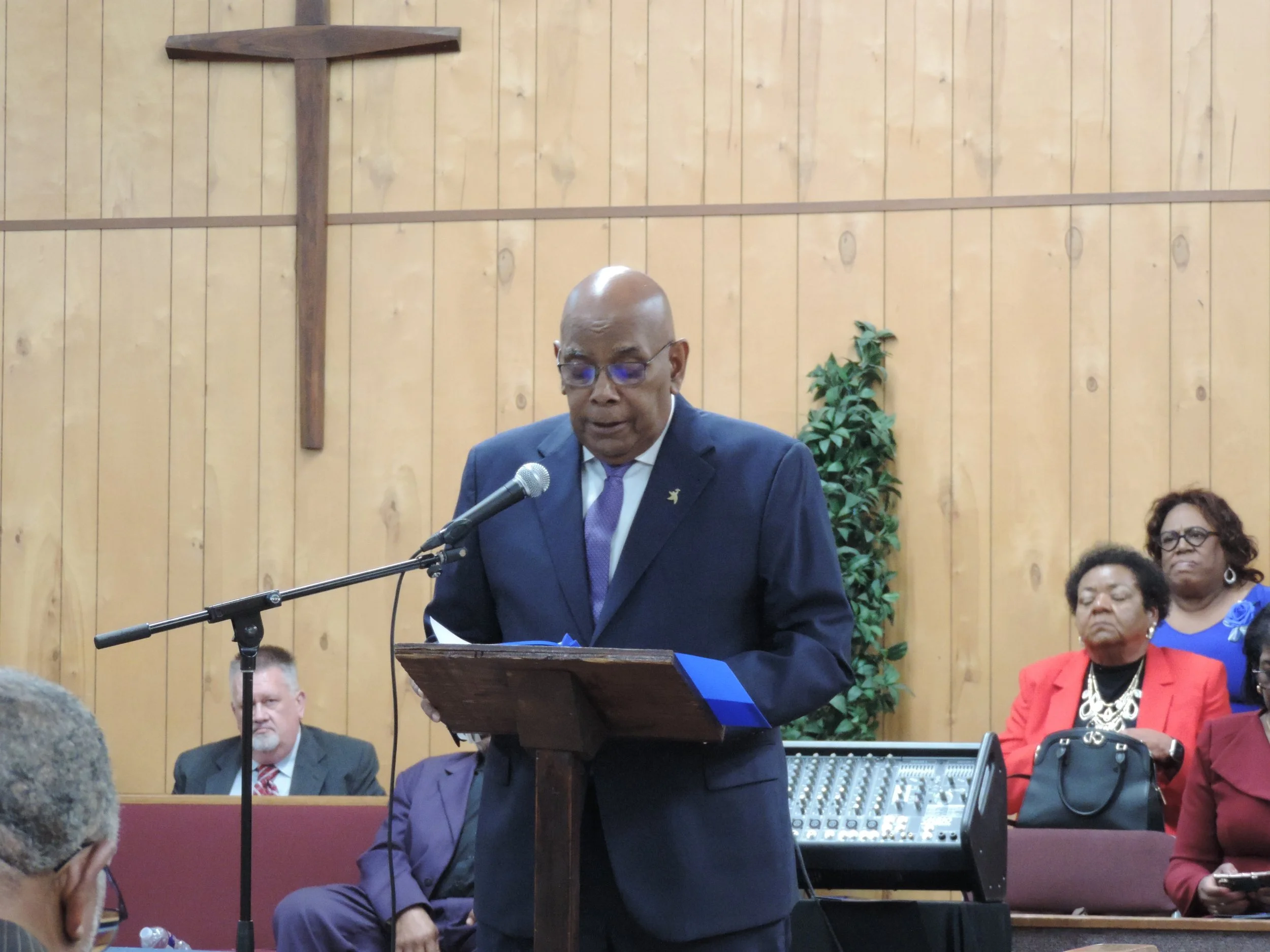
As the program moved forward, tributes arrived not as formality, but as lived testimony. Dr. Ira Bell offered a deeply reflective tribute rooted in Proverbs 11:25, describing Elder C. E. Shelton as a generous and faithful shepherd whose ministry was defined by service, humility, and love. He emphasized that Pastor Shelton’s work was never simply a role, but a calling—marked by late nights of preparation, quiet prayers, and an unwavering presence through seasons of joy and hardship. Dr. Bell noted that Shelton’s sermons planted lasting seeds of faith, his counsel reflected scriptural wisdom, and his leadership modeled a faith lived daily, not just preached on Sundays. Framing retirement as a new season rather than an ending, he affirmed that Pastor Shelton’s influence would never retire, declaring his ministry a living testimony whose legacy will continue to bear fruit for generations to come.
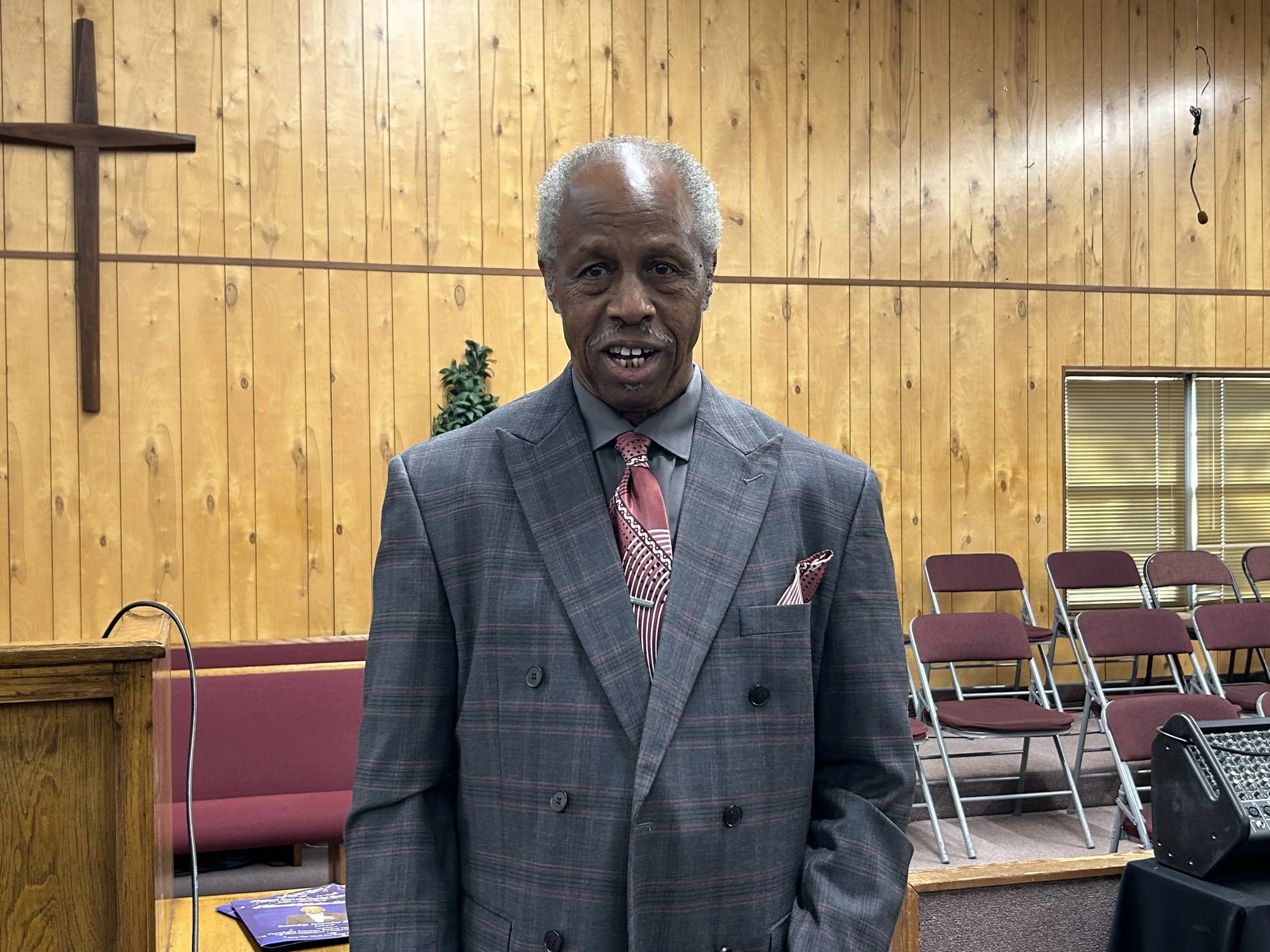
Alvin McDonald followed with a featured tribute that spoke to Elder Shelton’s impact beyond the pulpit, acknowledging the way his leadership extended across relationships, districts, and everyday life. McDonald highlighted Shelton’s steady presence, accessibility, and willingness to stand with people where they were, reinforcing the pastor’s role as both a spiritual leader and a trusted community figure.
Later, district leadership formally expressed gratitude on behalf of the Providence District Association, recognizing Elder Shelton’s faithfulness and responsiveness—returning calls, offering counsel, and consistently standing in the gap whenever he was needed.
A Pastor’s Testimony: Called Early, Confirmed in Time
When Elder Shelton rose to speak, he did what he has always done—he told the truth plainly and gave God the credit.
He reflected on the early awareness of his calling, recalling childhood words that now sounded like prophecy. He shared that, even as a boy, he wanted to be “a loud mouthed preacher,” and he affirmed with a quiet nod what many already knew: he had been called early, shaped over time, and guided by God through every season.
He spoke of the late Norman Carl Shelton, naming him as an early influence and grounding the testimony in family and memory. He recalled the moment an evangelist stopped mid-message, walked from the pulpit, and called him out directly—an experience he described as unmistakable confirmation.
From Augusta to Austin, from ministry without a building to leadership that found him when he wasn’t seeking the spotlight, Elder Shelton’s story carried a consistent thread: obedience.
He described arriving at Hopewell in what he called a sacred, unexpected way—invited to speak, then invited to stay—eventually becoming pastor of a church with deep roots and a strong identity. The role could have been intimidating, he admitted, but the strength of Hopewell was never just history—it was heart.
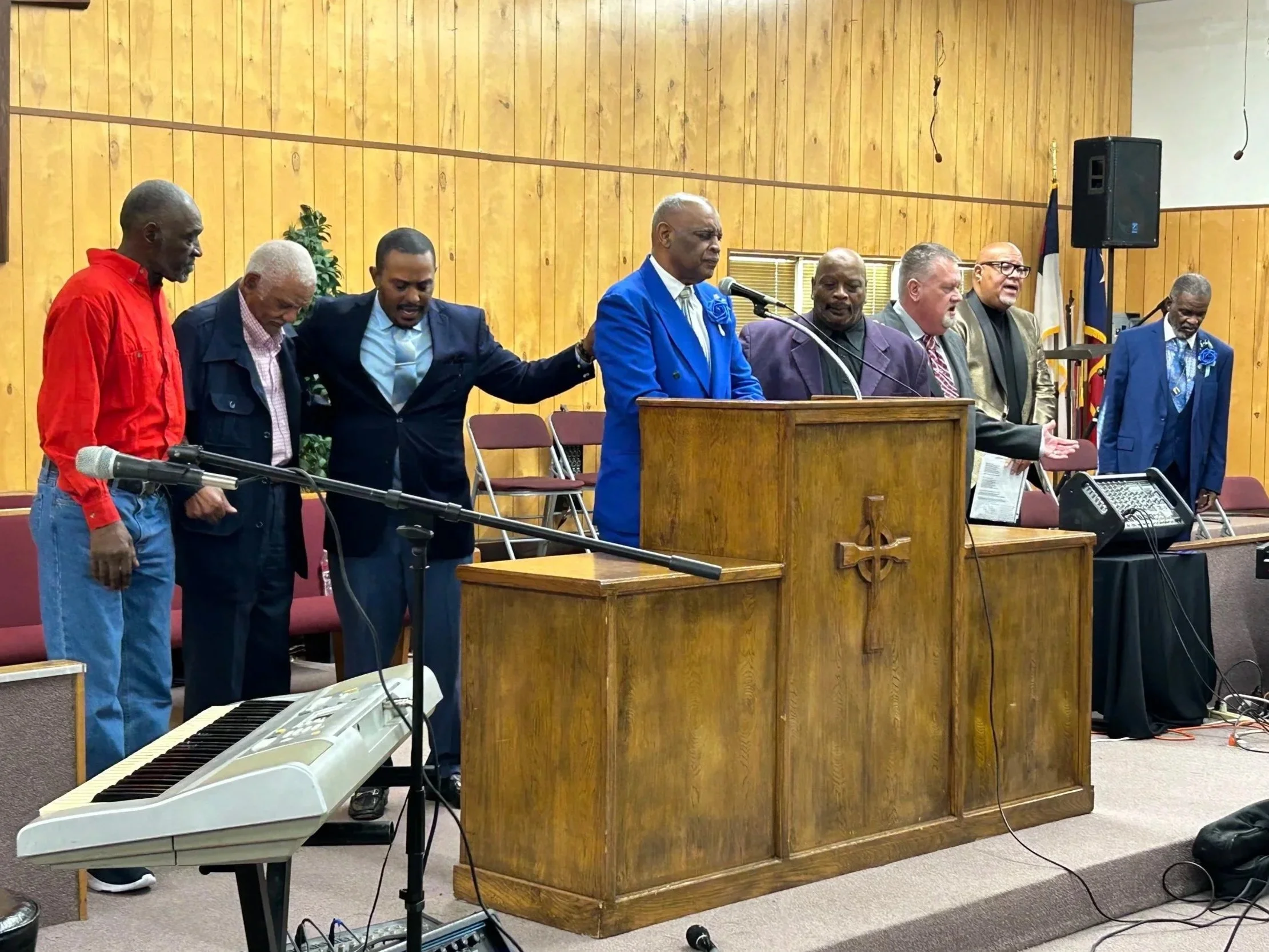
Surrounded by fellow ministers and leaders, Elder C. E. Shelton offers the Benediction, closing the celebration with prayer as brothers in faith stand beside him in unity, reverence, and gratitude for a ministry marked by service, love, and steadfast leadership.
Honoring Lady Ella Shelton
The celebration also paused to honor First Lady Ella Shelton, recognized for her tireless service, leadership, and the love she pours into the church and its children. Speakers acknowledged her many hats and her steady commitment, including her role supporting ministries that extend beyond Hopewell into Bastrop, Austin, and surrounding communities.
The Women of Hope, a ministry connected to her leadership, was named as part of that legacy—one more way the Shelton’s’ service reached beyond the pulpit into everyday discipleship.
“Your Influence Will Never Retire”
As certificates and framed recognitions were presented, the language of the evening remained consistent: retirement may close a chapter, but it does not end impact.
One tribute described Elder Shelton’s work as “a living testimony,” reminding him that the measure of ministry is not found in numbers, but in lives transformed, faith strengthened, and hope renewed.
And as the service closed, the final blessing sent the congregation out with the same tone that carried them through the night—reverence, gratitude, and community.
In the fellowship that followed, families gathered for photos, embraced visiting friends, and shared food prepared “from the heart”—the kind of ending that felt less like a goodbye and more like a continuation.
Because at Hopewell, a retirement is not an exit—it is a legacy being recognized while the family still has time to say thank you.
