

Angels Weeping for Those Washed Away: A Night of Remembrance, Music, and Spiritual Witness
On a hushed December evening, Calvary Episcopal Church became sacred ground for memory, mourning, and transformation as Angels Weeping for Those Washed Away: Katrina–Kerrville unfolded before a full house. The work—composed by Hannibal Lokumbe—offered not a concert in the traditional sense, but a spiritual testimony shaped by grief, survival, and enduring love.
The evening opened with a warm welcome from the Reverend Amy Minke of Calvary Episcopal Church, who expressed deep gratitude for the community gathered and for the long-awaited realization of a production years in the making. Her words framed the night as a shared experience—one to be received together, in stillness and openness.
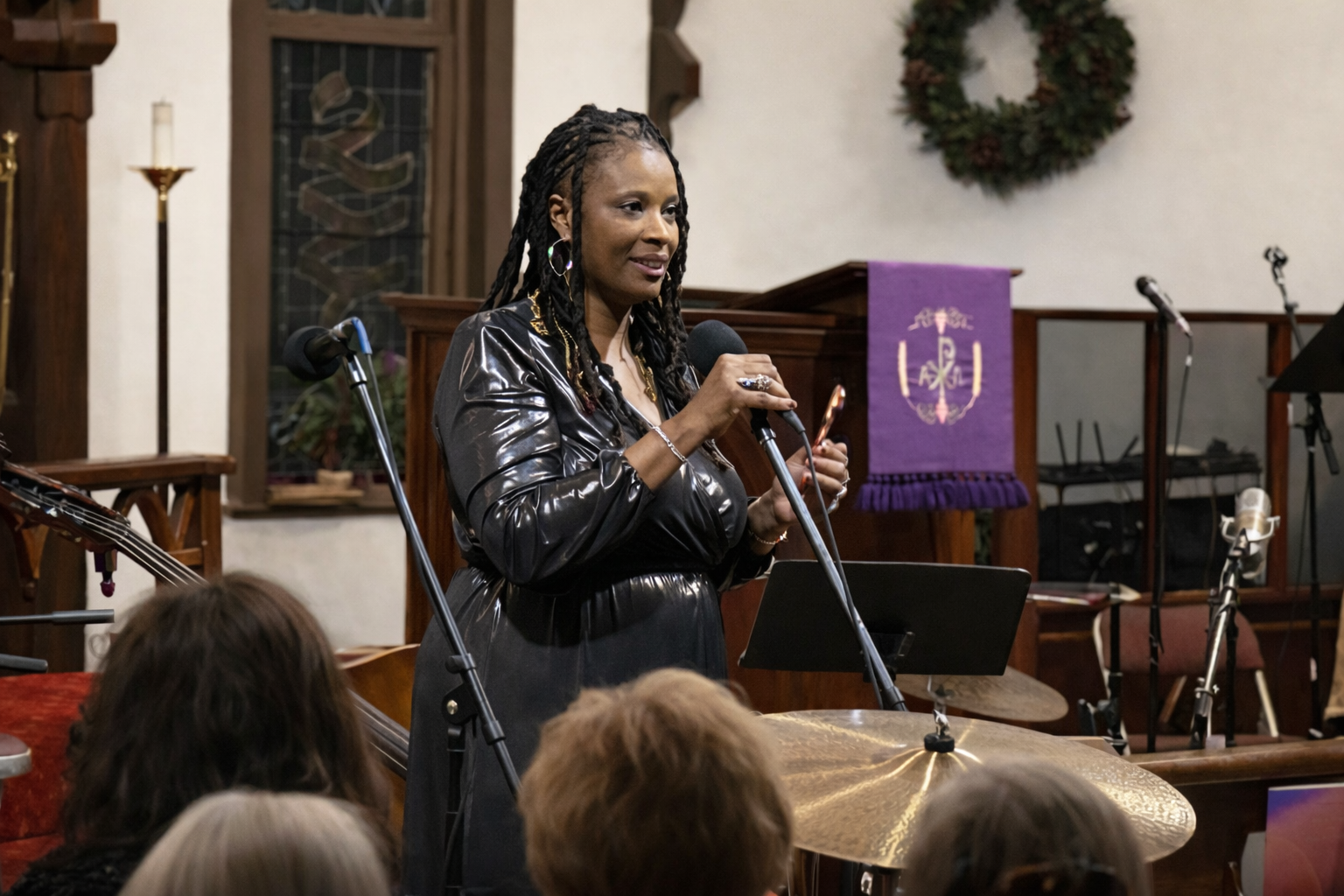
Samai Lokumbe followed with a prayer that grounded the space in gratitude and collective care. She spoke of safety, of community, and of Bastrop as a place where family, connection, and love converge. Her prayer invoked blessing over the music, the musicians, and all present—especially those whose lives were forever altered by Hurricane Katrina and by the devastating floods in Kerrville.
Music as Memory, Music as Witness
As the evening progressed, it became clear that Angels Weeping for Those Washed Away was born not only of catastrophe, but of lived experience. Lokumbe—an internationally acclaimed composer and spiritual visionary—shared the deeply personal origins of the piece during a pre-performance conversation with his son, Heile Selassie Lokumbe, who served as interviewer. Together, they reflected on evacuation, displacement, fear, and survival during Hurricane Katrina, recalling the narrow escape that spared their family while so many others were lost.
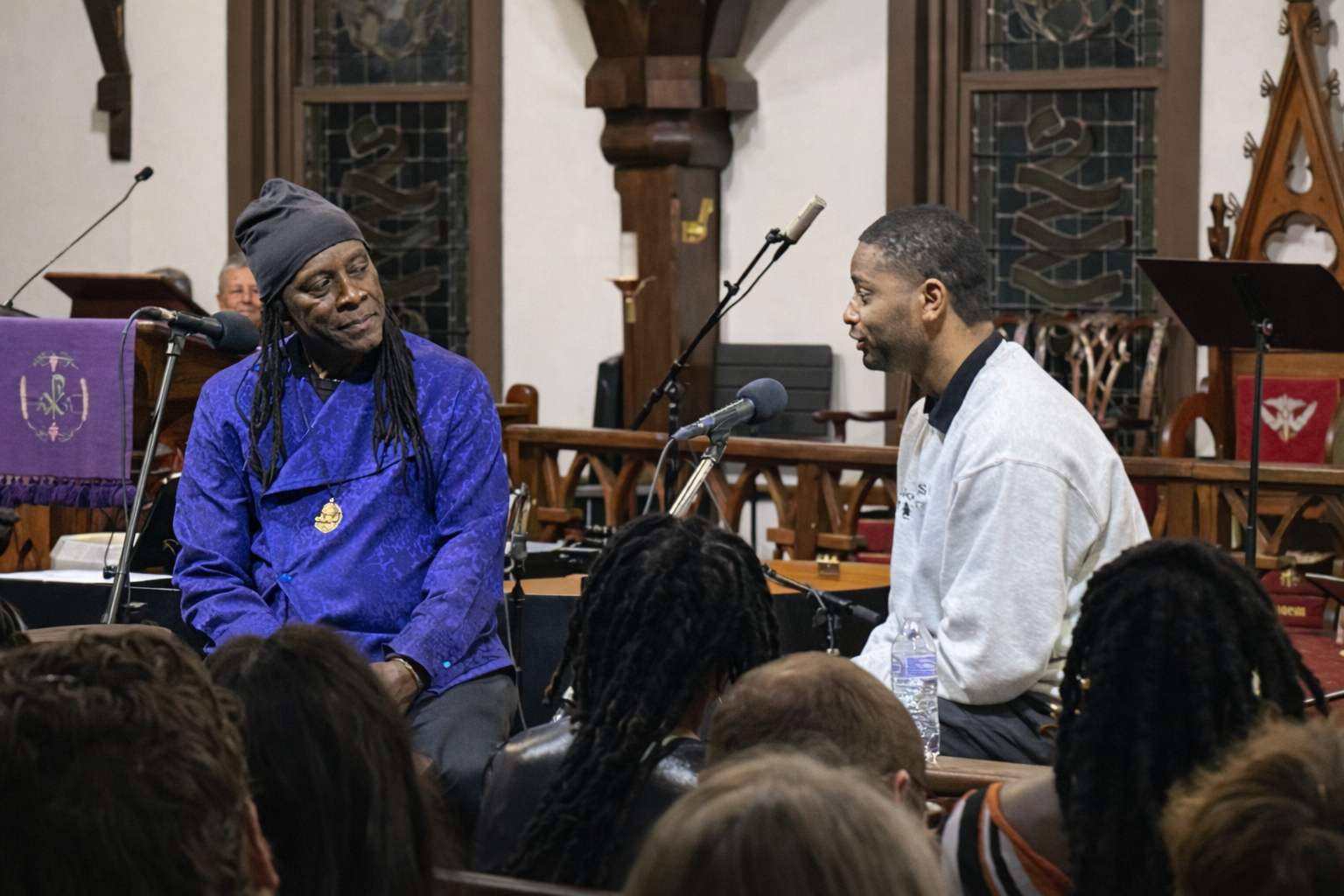
Composer Hannibal Lokumbe listens as his son, Heile Selassie Lokumbe, interviews him prior to the live performance of Angels Weeping for Those Washed Away, offering the audience an intimate glimpse into the personal history and spiritual origins of the work before the music began.
Lokumbe spoke candidly of leaving New Orleans just one hour before highways closed, of refugees lining the roads, of families stranded without fuel or shelter. He recalled moments of unexpected grace—complete strangers placing food, water, and money into his truck simply because they saw Louisiana license plates. These acts of kindness, he said, shaped the soul of the work as much as the suffering did.
The composition is dedicated to those washed away by water—those lost to Katrina, to the Kerrville floods, and to every disaster in between. It asks listeners not only to grieve, but to remember the humanity that emerges even in devastation.
A City Honors Memory Through Art
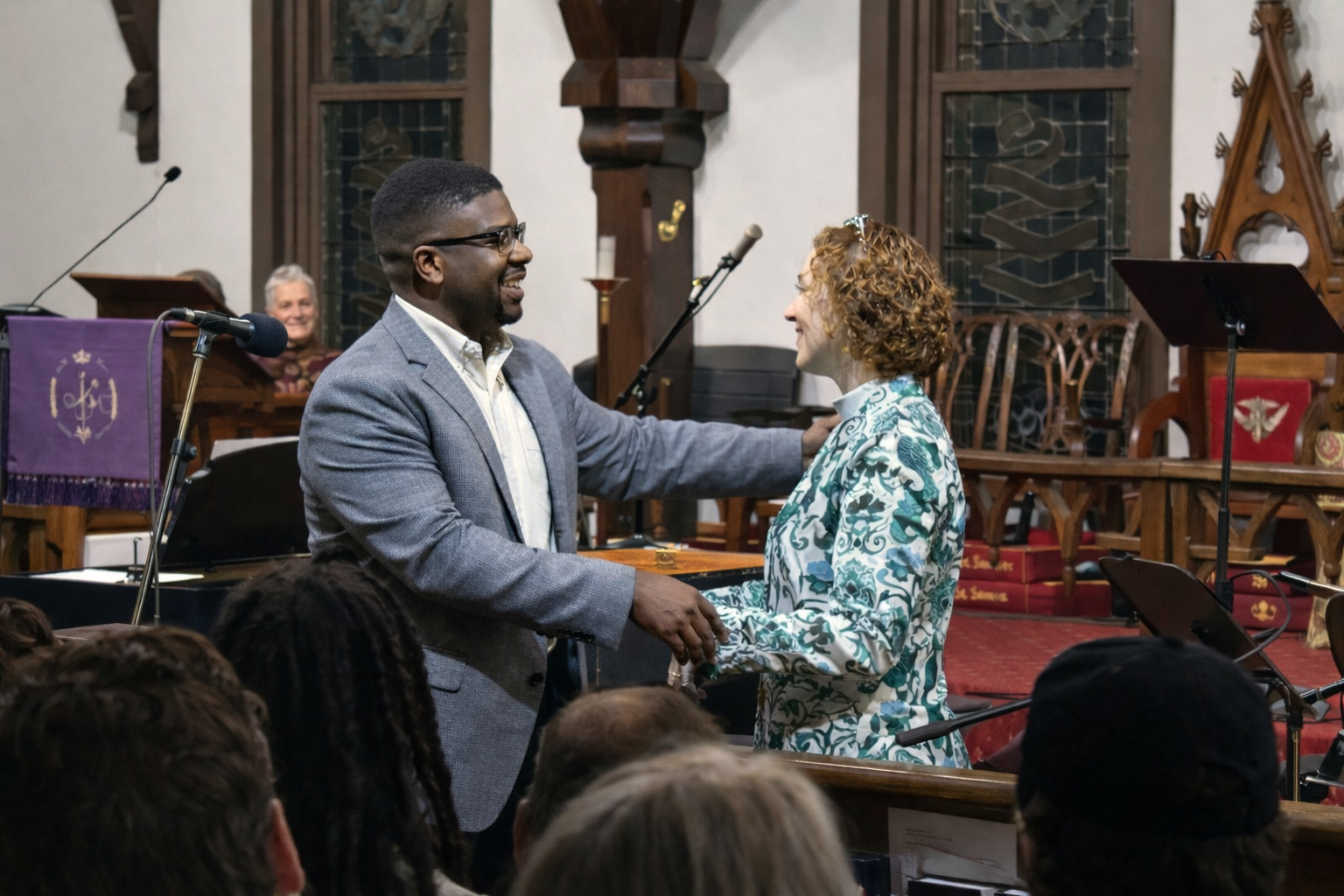
The City of Bastrop formally recognized the significance of the evening through a proclamation presented by Mayor Ishmael Harris, declaring December 19, 2025, as a day honoring Calvary Episcopal Church’s role as a cultural and artistic anchor in the community. The proclamation acknowledged the church’s concert series and its commitment to making world-class music accessible to the public.
The honor was dedicated to those who envisioned the series from its inception, affirming that spaces like Calvary are essential not only for worship, but for healing, reflection, and cultural remembrance.
Spiritual Alchemy on the Stage
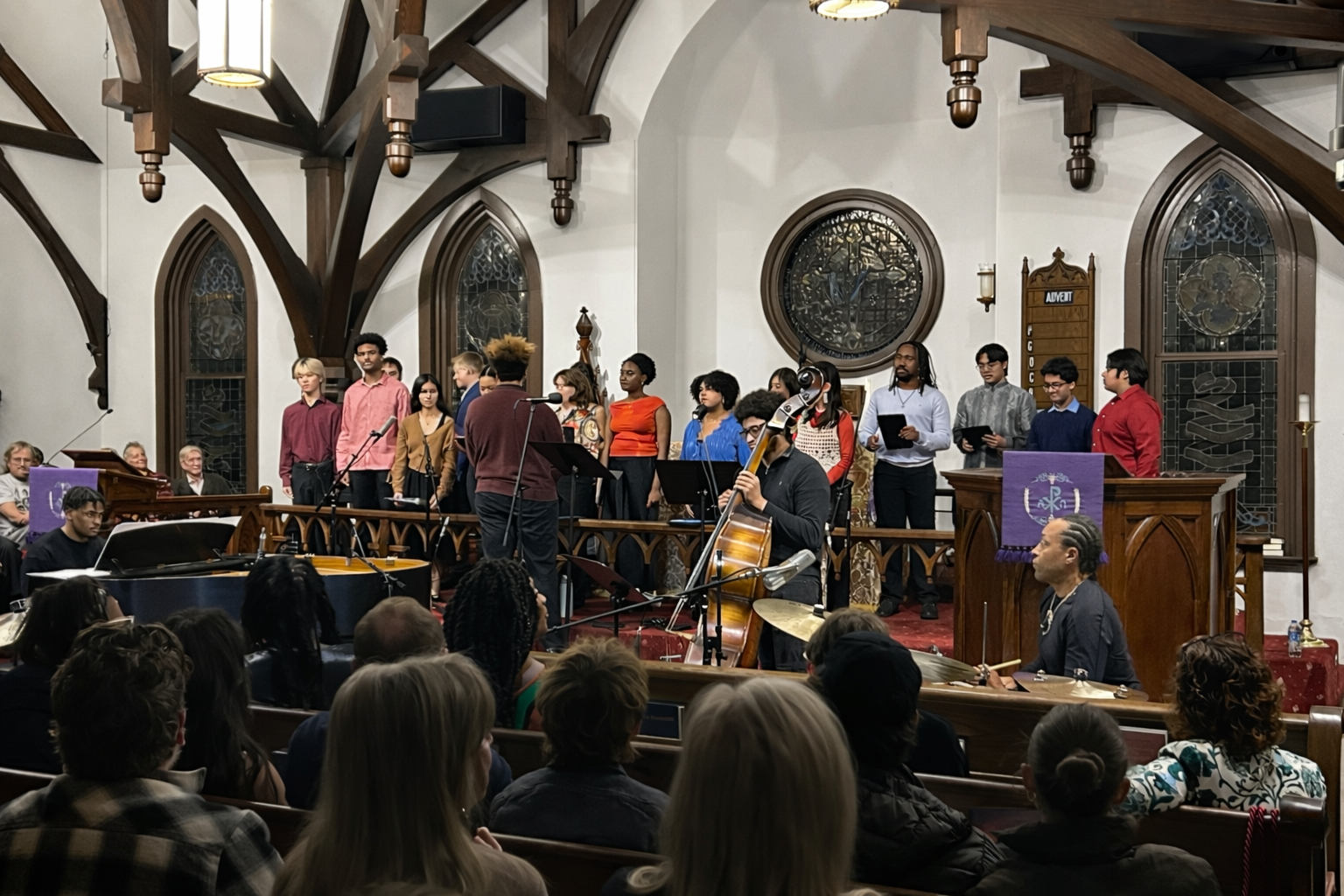
At the heart of the evening was Lokumbe’s philosophy of “spiritual alchemy”—the transformation of pain into beauty, sorrow into sound, grief into grace. He spoke of music as the force that saved him from bitterness and violence in his youth, and as the discipline that continues to keep him anchored in love rather than rage.
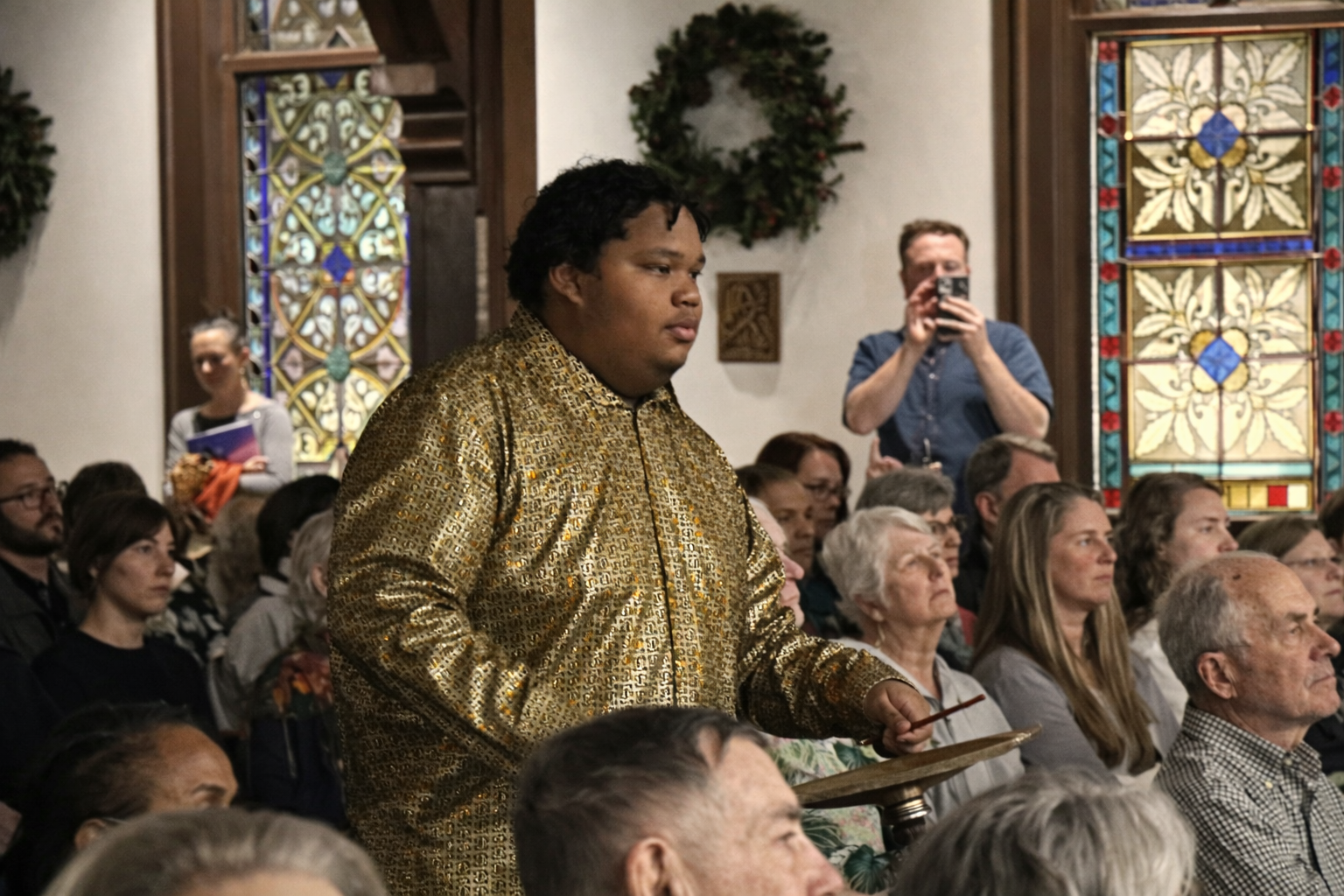
That philosophy took form on stage through a powerful ensemble of musicians, vocalists, and spoken word. Each note, each rhythm, and each silence carried weight. The work’s closing passages—lyrical, haunting, and deeply intimate—gave voice to parents and children separated by water, to souls lingering beyond the physical, to love that refuses to disappear with death.
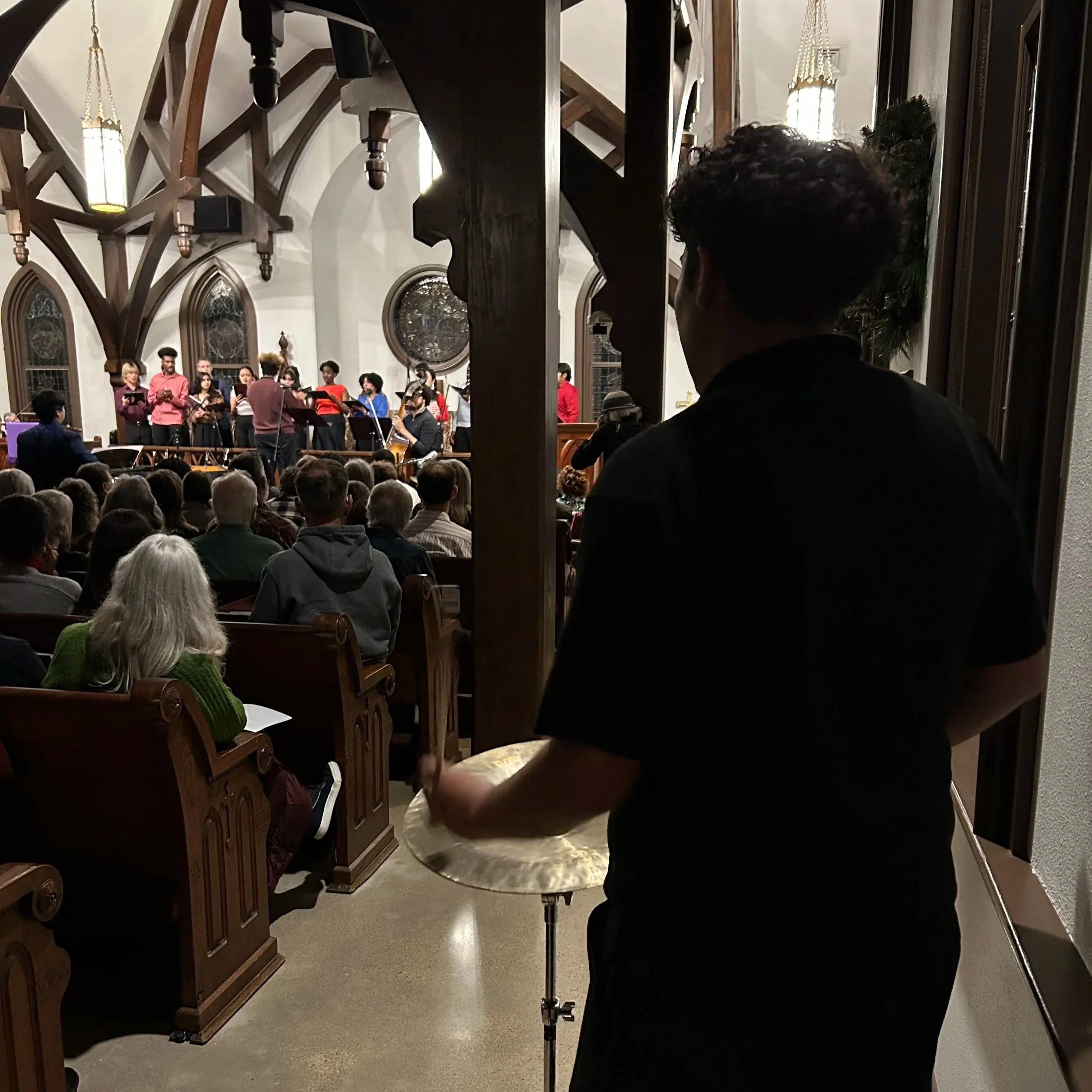
In one of the most moving moments, the narrative turned inward: a father speaking to a child, a child responding from beyond, assuring presence in wind, moonlight, butterflies, thunder, and laughter. The audience sat in collective stillness, many visibly moved, as the piece affirmed that love, once formed, is never erased.
Leaving Changed
Angels Weeping for Those Washed Away did not offer resolution. It offered truth. It reminded those present that catastrophe leaves scars, but also reveals courage; that grief can paralyze, but music can carry it; and that remembrance is itself a form of love.
As the final notes faded, the silence that followed felt intentional—an unspoken agreement to carry the evening forward, changed, more attentive, and more compassionate.
In that sacred space, music did what words alone could not: it held the dead with dignity, honored the living with honesty, and reminded the community that even when waters rise, the human spirit endures.
