

A Code of Protection: Faith, Fatherhood, and the Work of Holding the Line
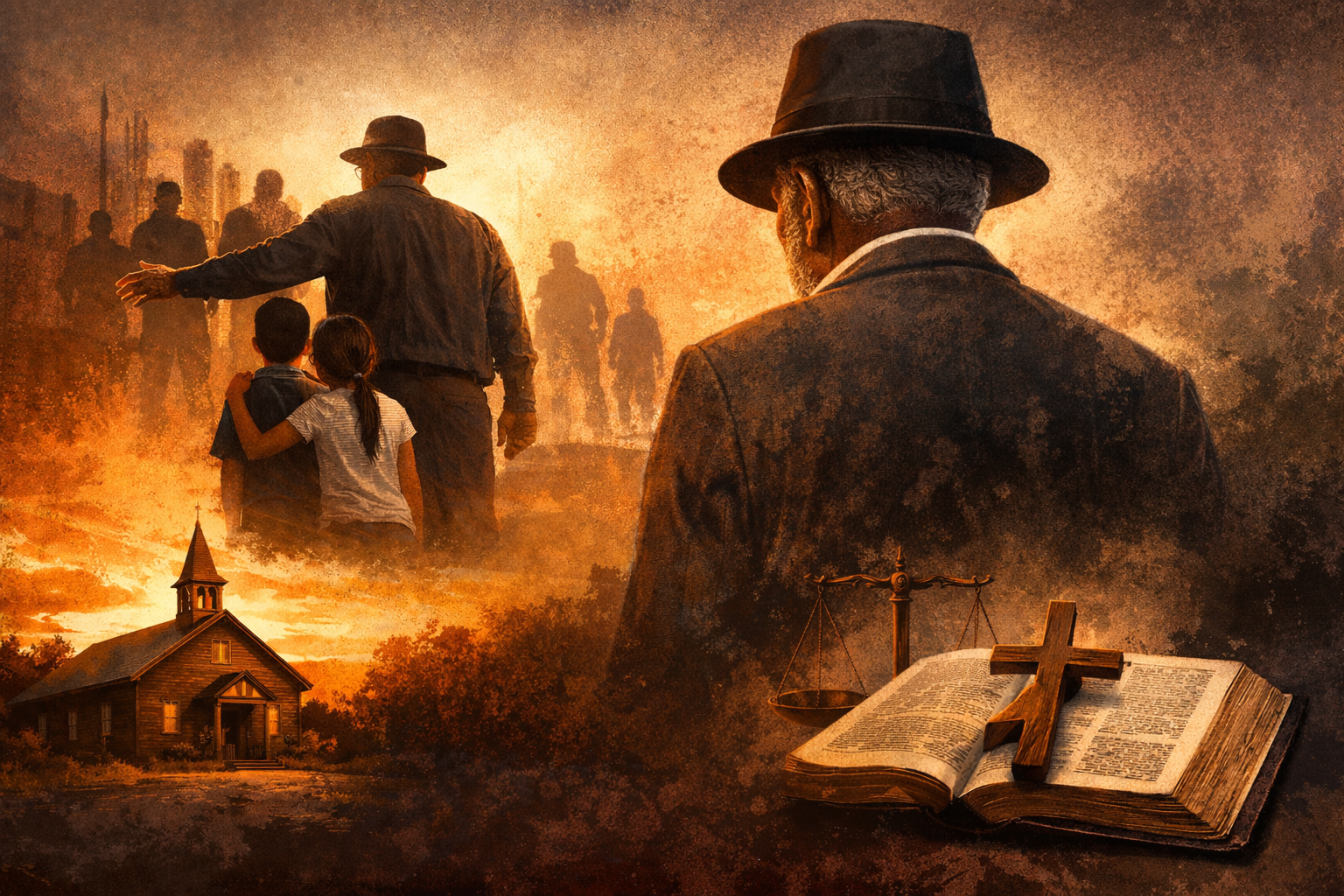
Image Title: Protector in the Face of Adversity
He never called it activism. He called it responsibility.
For one longtime Bastrop County elder, Mr. Joel Roy Reed, being a man—being a father, a deacon, a protector—meant understanding that dignity is not something you wait for. It is something you defend.
“I don’t play with my children,” Mr. Reed said plainly. “I don’t play no game.”
That code—quiet, unyielding, and rooted in lived experience—runs through every story he tells. It shapes how he sees faith, family, and the work elders must still do in a world that too often asks them to step aside.
A father’s line: “You don’t disrespect my child”
Throughout the conversation, Mr. Reed’s voice returned again and again to one truth: protection is not theoretical.
He spoke of moments when he had to stand between his children and harm—times when words failed, when systems failed, and when restraint was tested. Not because he sought conflict, but because he understood what happens when nobody intervenes.
“You don’t disrespect older people… and you don’t disrespect my daughter,” Mr. Reed said. “That’s where my mama did me.”
He described how his parents corrected him immediately—no waiting, no ambiguity. Discipline, in his upbringing, wasn’t cruelty. It was clarity.
And clarity, he believes, is what many young people are missing now.
“The elders not talking anymore”
When asked what he believes is at the root of so much unraveling among youth today, Mr. Reed’s answer was direct.
“That’s right,” he said. “The elders not talking anymore.”
He spoke of courtrooms, of watching the same young people cycle through trouble because no one intervened early enough. He described stepping in—not as a lawyer or official—but as someone willing to speak for kids who didn’t yet know how to speak for themselves.
“Somebody gotta talk for ’em,” Mr. Reed said.
To him, silence is not neutrality. Silence is abandonment.
Faith as practice, not performance
Mr. Reed’s faith is not ornamental. It doesn’t live in slogans or occasional attendance. It lives in accountability.
A deacon for more than two decades, he sees faith as something proven through consistency, not convenience.
“How can you call on Him whom you don’t serve?” he asked.
For him, church isn’t just a place you visit during crisis. It’s where you learn how to carry yourself when nobody is watching. Where you absorb values that shape how you treat people when the law isn’t present.
He believes many people misunderstand grace as permission. He was taught it is responsibility.
Protection doesn’t retire
Though age has slowed him physically, it has not softened Mr. Reed’s resolve.
He spoke candidly about moments when his restraint was the only thing preventing irreversible consequences—moments when fear, anger, and love collided. He does not glorify those moments. He remembers them as warnings.
“I’m too old to play now,” Mr. Reed said. “I don’t want no trouble.”
But he made one thing clear: when children are threatened, protection is not optional.
That stance, he believes, is missing from too many spaces where adults should be leading.
“I been Black all my life”
Mr. Reed’s understanding of identity is forged through experience, not abstraction.
He recalled growing up in a time when violence was expected, when names were used as weapons, and when survival required readiness. Integration did not mean safety. Service did not guarantee respect.
“I been Black all my life,” he said. “I don’t like waiting a whole year to celebrate something.”
His resistance to symbolic gestures is rooted in his belief that dignity must be practiced daily, not compressed into holidays or parades.
The cost of not holding the line
Mr. Reed described how easily things fall apart when values are not enforced—when adults excuse behavior instead of correcting it, when systems prioritize convenience over justice, when elders withdraw because the fight feels endless.
But he refuses to withdraw.
Even now, he sees his role as standing between chaos and consequence—not with violence, but with presence.
“I try to be an example,” Mr. Reed said. “I’m not perfect… but I don’t use that as an excuse.”
Why his story matters
This is not a story about anger. It is a story about guardianship.
About men and women who were taught that love includes correction, that faith includes discipline, and that community includes intervention.
In a time when many are searching for solutions in policies and programs, Mr. Reed’s message is older—and simpler:
Children need elders who will speak.
Families need adults who will stand.
Communities need people willing to hold the line—even when it costs them comfort.
And if that code disappears, what replaces it will not be kinder.
“The race ain’t given to the swift,” Mr. Reed said, quoting what he’s carried for decades. “But to the one that endure to the end.”
For him, endurance is not passive.
It is the daily, deliberate work of protection.
